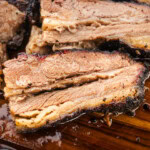
Smoked Beef Belly
Smoked low and slow, this beef belly delivers tender slices, crispy bark, and rich, beefy flavor in half the time of brisket.
Servings 6
Calories 747kcal
Ingredients
- 4-5 lb beef belly
- 4 tbsp ultimate brisket rub might vary depending on the size of the meat
Instructions
- Preheat your smoker to 225°F.
- Trim off any hanging or hard pieces of fat from the beef belly.
- Using our homemade brisket rub or your favorite beef rub, season the meat generously on all sides.
- Place the beef belly in the top rack of your smoker, and place a grill-safe dish below to catch the drippings. Smoke at 225°F for six hours or until the internal temperature reaches 170°F.
- Remove the meat from the smoker and increase the temperature to 275℉.
- Place the beef belly on a piece of butcher paper and pour the rendered fat drippings over the top. Wrap it in the butcher paper and return it to the smoker.
- Smoke at 275°F until the internal temperature reaches between 198°F and 200°F.
- Remove it from the smoker and let it rest for 30 minutes before slicing.
Notes
Pellets - I used a blend with hickory, oak, and mesquite. A pellet blend works great because the mesquite and oak will give the beef belly a great smoke ring and bark; however, the hickory's slight sweetness will add an incredible flavor.
If using a traditional smoker, I recommend using charcoal to get a bed of coals going, then adding wood chunks to smoke the beef belly throughout the rest of the cook.
For a deeper smoke ring and more intense flavor, you can run it at a lower and slower temperature of 200°F for eight hours.
Wrapping the beef belly - It's essential to consider not only the internal temperature but also the appearance. You don't want to wrap a protein if it doesn't have a visible bark. Wrapping too soon will cause the bark to sweat off the protein, which will affect its overall BBQ flavor and appearance.
Braising - A crucial step, as it allows the fat to break down, resulting in a juicy and mouthwatering bite. I recommend not braising at temperatures above 325°F, as this may cause the beef belly to shrink and result in a tougher texture.
Nutrition
Calories: 747kcal | Carbohydrates: 2g | Protein: 72g | Fat: 50g | Saturated Fat: 22g | Polyunsaturated Fat: 3g | Monounsaturated Fat: 24g | Cholesterol: 217mg | Sodium: 185mg | Potassium: 970mg | Fiber: 0.3g | Sugar: 0.1g | Vitamin A: 123IU | Vitamin C: 0.3mg | Calcium: 51mg | Iron: 7mg
