
25 Costly Griddle Mistakes You Don’t Realize You’re Making

SmokedBBQSource is supported by its readers. We may earn an affiliate commission at no extra cost to you if you buy through a link on this page. Learn more.
So you bought a Blackstone because it looked simple. Then your eggs turn black, the burgers boil in their own gray juices, and the cook top starts to look like something you’ve permanently ruined.
These are the mistakes that cost griddle owners the most, counting down to the one that trips up almost every new owner.
25. Trusting what the knob says
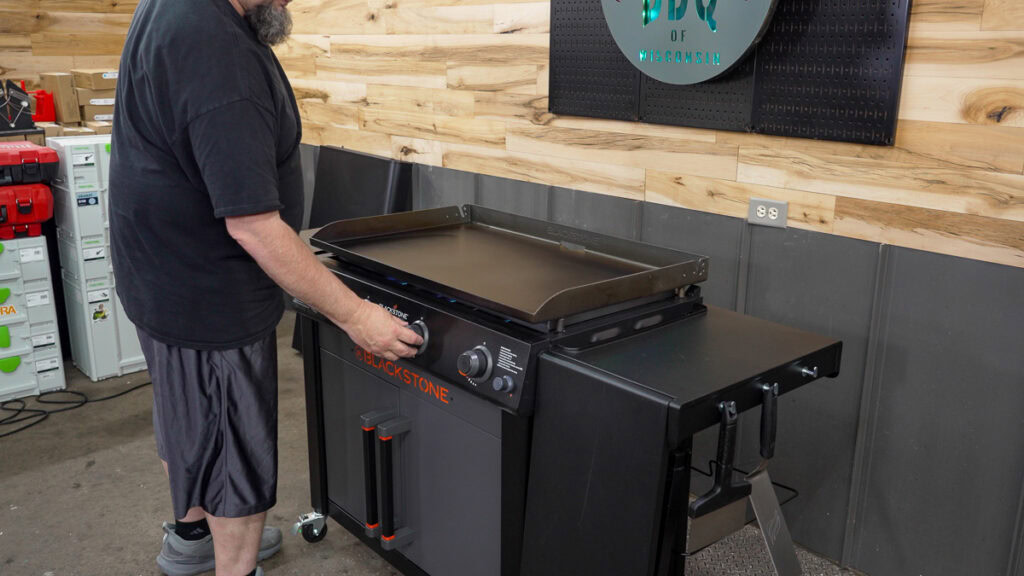
Low, medium, and high are valve positions. They aren’t temperatures, and you don’t want to stick to them religiously.
Low on your griddle in July is nowhere near low on the same griddle in October. Burners are also built to run hotter than you would expect, because a flame that a gust of wind can put out doesn’t pass safety testing.
The surface also continues to climb while you cook. That is how you end up with black eggs on a griddle set to low.
24. Cooking hot because hotter feels faster

Almost everyone new to griddle cooking runs them too hot, and most of the commonly cooked foods wants less heat than people give it.
Eggs and omelets want 300°F to 325°F. Pancakes, bacon, potatoes and regular burgers sit happily between 350°F and 400°F.
Only searing, steaks and smash burgers, needs 425°F and up.
Always cooking with the burners cranked is how you get chicken that is dark outside and raw through the middle.
23. Treating four burners as a single pan

A four burner griddle is four separate cooking zones. Treating it as one surface is the fastest way to waste it.
Set a sear zone at one end and a low zone at the other, then move food between them instead of standing over the knobs.
On most griddles, the edges, the corners and the back strip run cooler than the rest of the plate. That is free holding space for anything that finishes before the rest of the meal.
22. Only using it for breakfast and smash burgers

Most griddles get bought for pancakes and smash burgers and then never asked to do anything else.
A flat top is a large, evenly heated steel surface with more usable area than any pan you own. Steak sears on it better than people expect, because there are no grates and no flare-ups, just full contact. Salmon skin comes off crisp. Fried rice, fajitas, quesadillas, smashed potatoes, cheesesteaks, even popcorn under a dome.
Two things unlock most of it. Zones, so you can run a sear area and a finishing area at once, and a dome, so you can steam and melt.
If you’ve had yours a year and it has only ever cooked breakfast, that’s the mistake.
21. Filling every inch of the surface
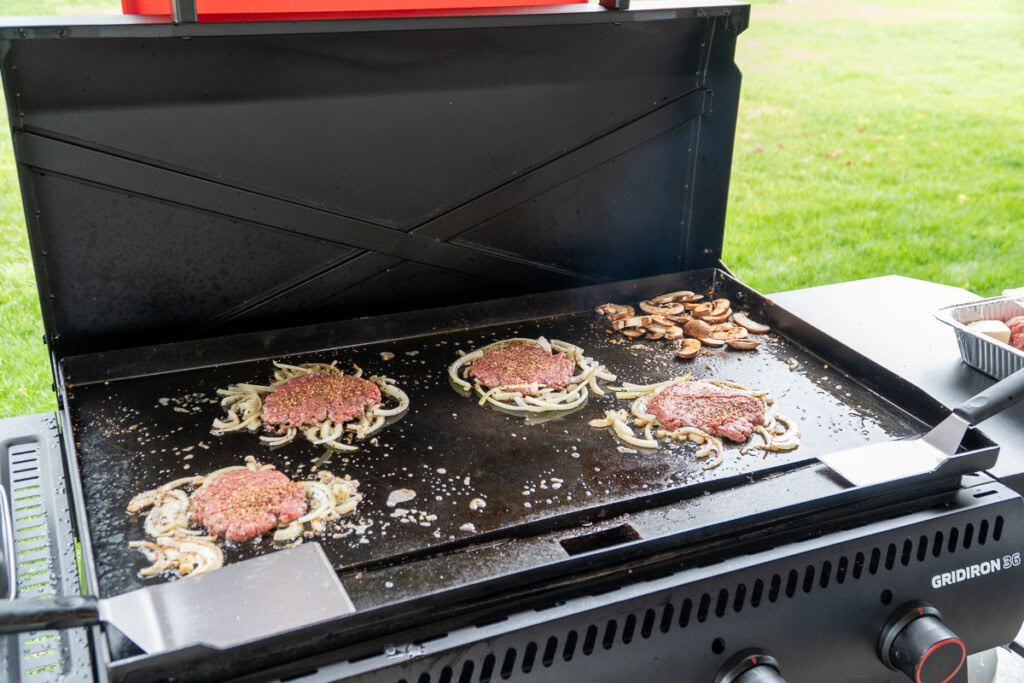
A big griddle looks like an invitation to cook everything at once.
Crowd it and the food releases moisture faster than the plate can drive it off. The surface temperature drops, liquid pools, and you steam instead of sear.
Gray burgers, limp onions, sad potatoes.
Leave gaps and cook in two rounds, holding the first round on a cool corner. Two good batches beat one crowded one.
20. Blaming the burner when it’s the propane tank

Weak flames across every burner, a griddle that won’t climb past 300°F, and a tank you know is full. Most people decide the unit is faulty.
It’s almost always the regulator. Open the tank valve quickly with the burner knobs on and the excess flow valve reads it as a leak, then throttles the gas back to a trickle.
That is a safety feature doing its job, not a fault.
To reset it, turn every burner off, close the tank, and wait thirty seconds. Then open the tank slowly, a quarter turn at a time, before you light anything.
Do it in that order every time and it stops happening.
19. Laying food on cold steel

Steel has real mass, so it takes ten to fifteen minutes to come up to temperature, not three.
The sizzle is the tell. If the food goes down quiet, you rushed it.
You pay for that in food that sticks, browning that never gets going, and a steak that comes off gray instead of crusted.
18. Cooking blind instead of reading the surface
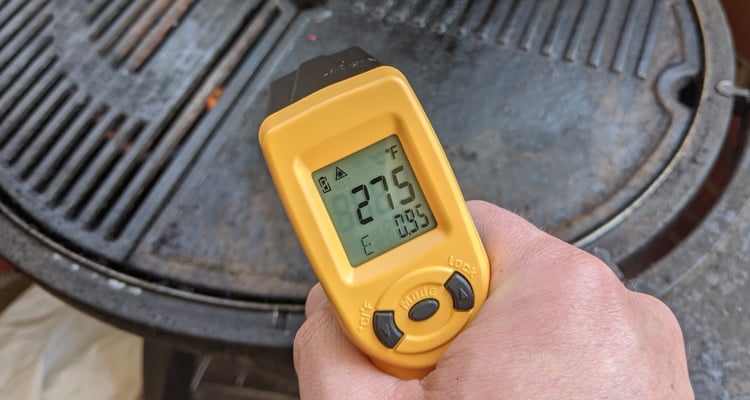
Most of what’s gone wrong above this point comes back to a number you can’t see, and about thirty dollars fixes it.
An infrared thermometer tells you how hot the steel is, in about a second. An instant-read probe tells you how done the food is.
Between them you stop guessing about the only two things that decide whether dinner works, and the knobs go back to being what they actually are, a rough way to nudge that number up and down.
The finger poke test is fine for a steak you have cooked a hundred times. It is not fine for chicken.
17. Setting the burners once and never touching them again
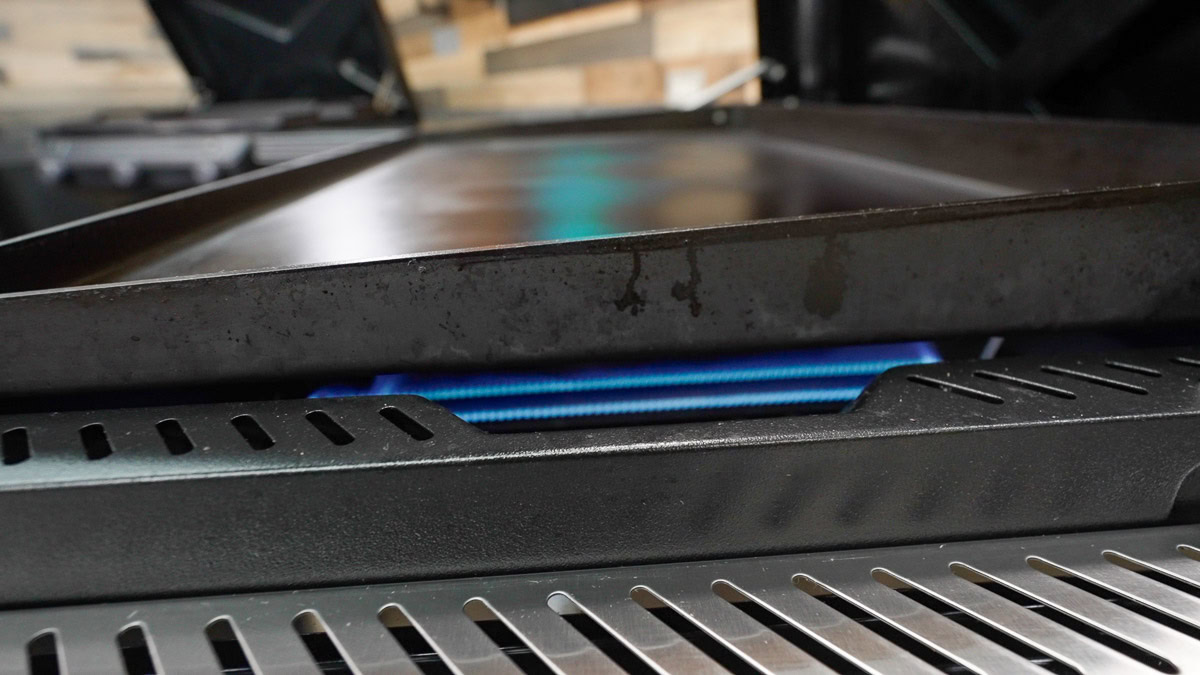
A griddle doesn’t hold a temperature. It climbs.
The burners were never designed to idle gently, so even on low they keep feeding heat into a plate that is already hot. Ten minutes into a cook the surface can be a hundred degrees past where you started.
Cycle them. Turn burners down, turn them off, let the plate give some heat back, then bring them up again.
Griddle cooking is closer to steering than to setting a dial and waiting.
16. Hoping the cheese will melt on its own
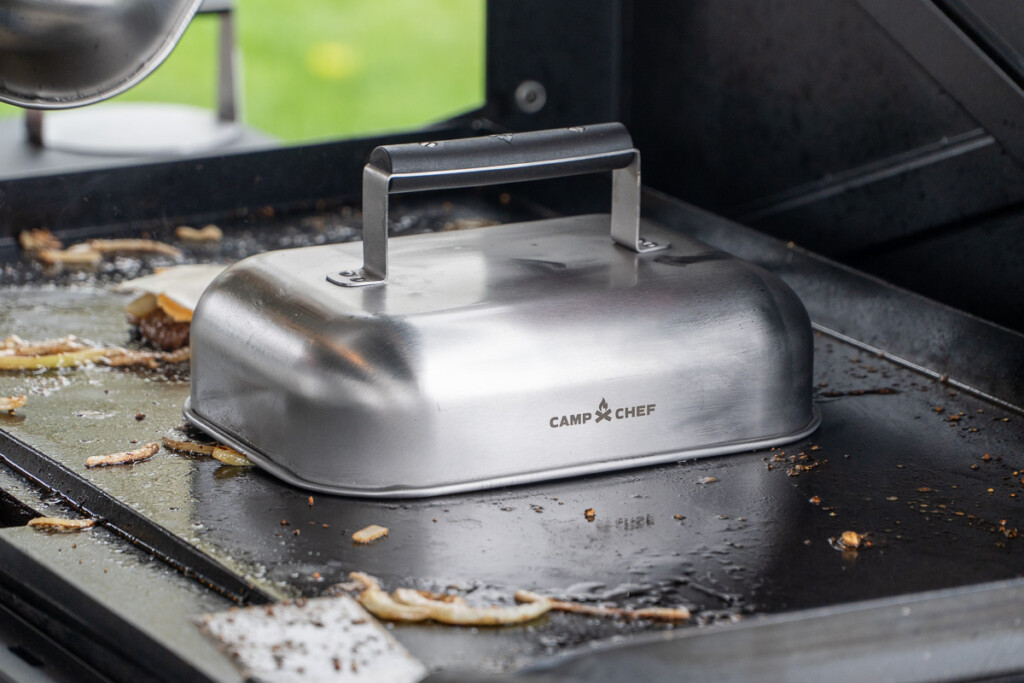
A griddle is a flat plate with no lid, so nothing holds heat around the food. Cheese sits there. Onions stay crunchy. A thick omelet browns underneath before the top sets.
A basting dome fixes all three, and a squirt of water under it turns the whole thing into a steamer for about forty seconds.
Steaming is half of what a griddle does well, and plenty of people cook on one for a year without trying it.
15. Fussing with the food
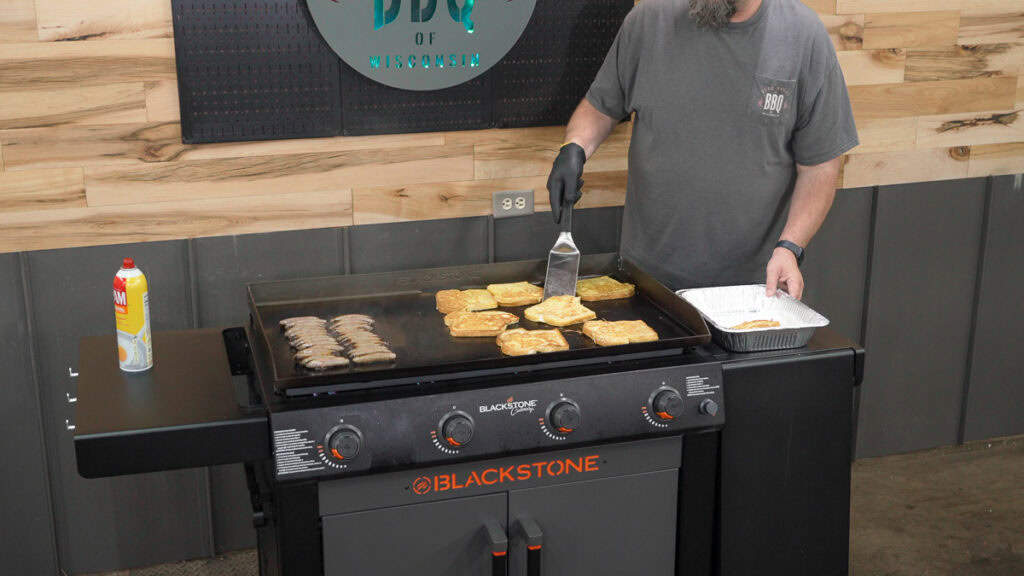
Browning happens where food sits still against hot steel. Every time you lift, slide or rearrange something, you start that process over.
Potatoes suffer worst. So do pancakes, steaks and smash burgers, which need one long contact period to build a crust before anything else happens to them.
Working two spatulas like a hibachi chef is genuinely fun, and it belongs to fried rice. It does not belong to a hash brown.
14. Forgetting the grease catch until it overflows
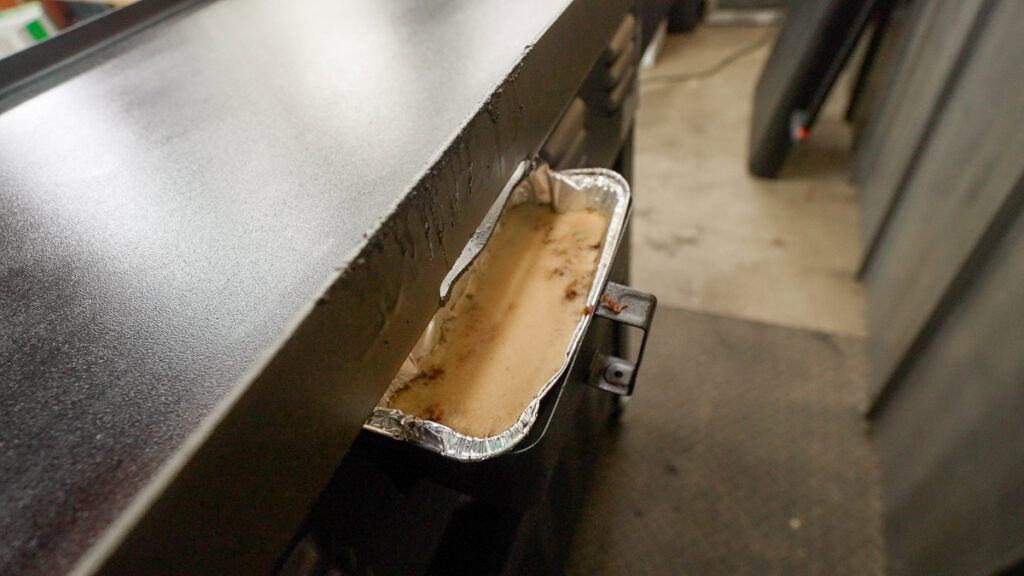
Some griddles come with small catches that fill faster than you would think. And let’s be honest, you never remember to check it before the cook.
When it overflows it creates a greasy mess at best, and at worst it can create a pool of hot fat directly underneath a running burner. That is how most griddle fires actually start.
Check it before every cook rather than after, and empty it at half full. Scrape toward the drain as you go instead of letting grease sit and cook onto the plate.
13. Going too big on the burger ball
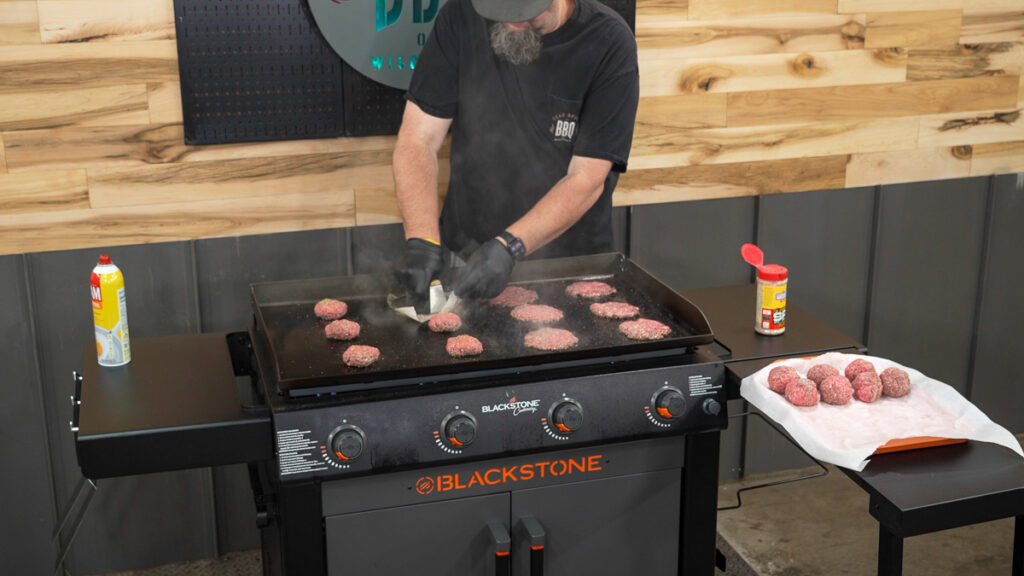
Smash burgers fail for two reasons, and they are connected. The ball is too heavy to press out thin, and the press is too polite to get it there anyway.
Two and a half to three ounces is the target, which is a pound of beef split six ways.
Press hard enough that you can see light through the thin spots around the edge. You want it thin and lacy, not neat.
If you want a bigger burger, stack two.
12. Trusting the side shelves with plastic

The side shelves sit inches from four burners and they run hotter than anyone expects.
Squirt bottles slump. Prep bowls warp into the shape of whatever they were resting on.
Nearly everyone loses something plastic in the first month, and plenty lose a second thing after they already know better.
Keep bottles and containers at the far end of the shelf, or set up a folding table and stage everything off the unit entirely.
11. Starting with butter instead of finishing with it

Butter burns at around 320°F. That is below almost every temperature you cook at on a griddle, and nowhere near what you sear at.
Put it down first and the milk solids scorch, the surface turns bitter, and you get black flecks through everything that follows.
Use ghee or clarified butter if you want that flavor at heat, since both run closer to 480°F. Or cook in a neutral oil and drop a knob of butter on at the end, which is what diner cooks do.
10. Not keeping it level

A griddle top is built to drain in one direction, and it only does that if the unit is sitting level.
On a sloped patio or soft grass, oil creeps to one corner, grease pools instead of running to the hole, and food on the low side cooks in a puddle while the high side dries out.
Check it across both axes before the first cook, then again any time you move it. Some models like the Camp Chef Gridiron come with a leveling tool to adjust the surface on the fly.
If your patio has a fall to it, shimming one pair of legs takes five minutes and fixes a problem most people spend months working around.
09. Seasoning a new top with bacon
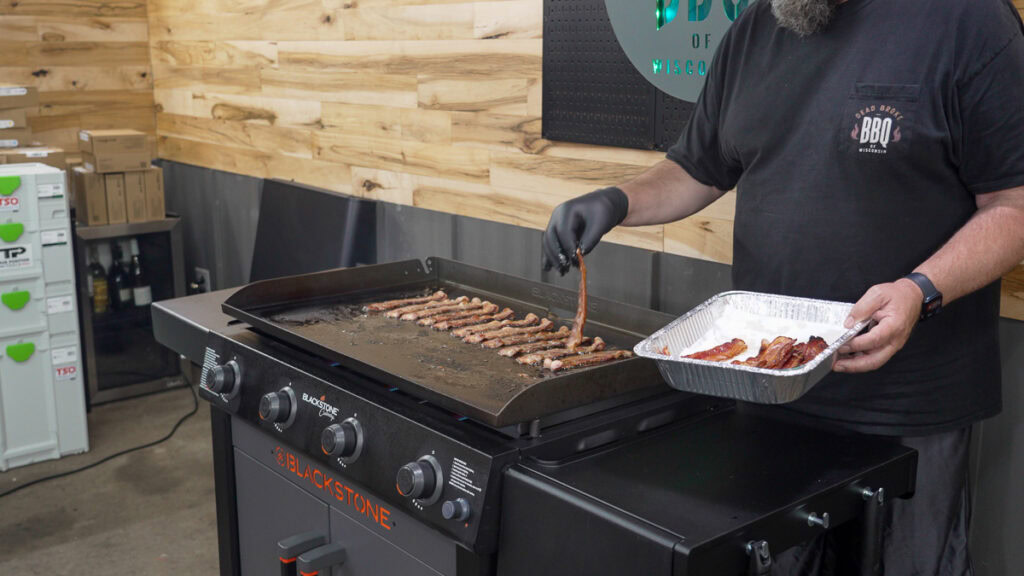
Cooking a pound of bacon on a brand new griddle is one of the most repeated pieces of advice online, and it is the wrong way to build a base layer.
Bacon brings cure and sugar along with the fat. What it leaves behind is soft, uneven and inclined to flake off in patches later, which people then blame on their seasoning technique.
Season with a neutral, high smoke point oil first. Canola and avocado both work.
Cook the bacon afterward as a first meal, not as the foundation.
08. Never learning where your griddle runs hot
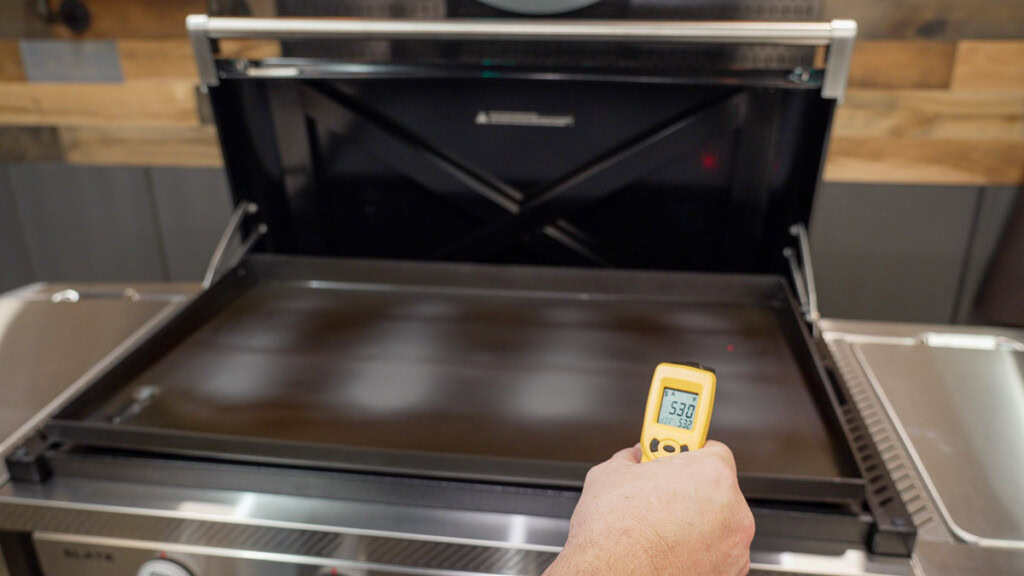
Every griddle has its own quirks, and no two are identical even off the same line.
Find yours with a bag of cheap bread. Lay slices across the whole surface on medium low, leave them ten minutes, then flip the lot.
What you are looking at is a browning map of your own griddle. Remember it and you will stop wondering why one corner burns everything while another can’t crisp a potato.
07. Pouring oil like it’s a fryer

A seasoned griddle needs a film, not a puddle.
Excess oil sits on the surface, smokes, turns bitter, and bakes onto the plate as a thick layer that never bonds properly. When it chips off weeks later, people assume the seasoning failed.
It didn’t fail. It drowned.
A light spritz, or a squirt bottle and a paper towel, covers most cooks. You will be surprised how little you actually need.
06. Washing it like a pan
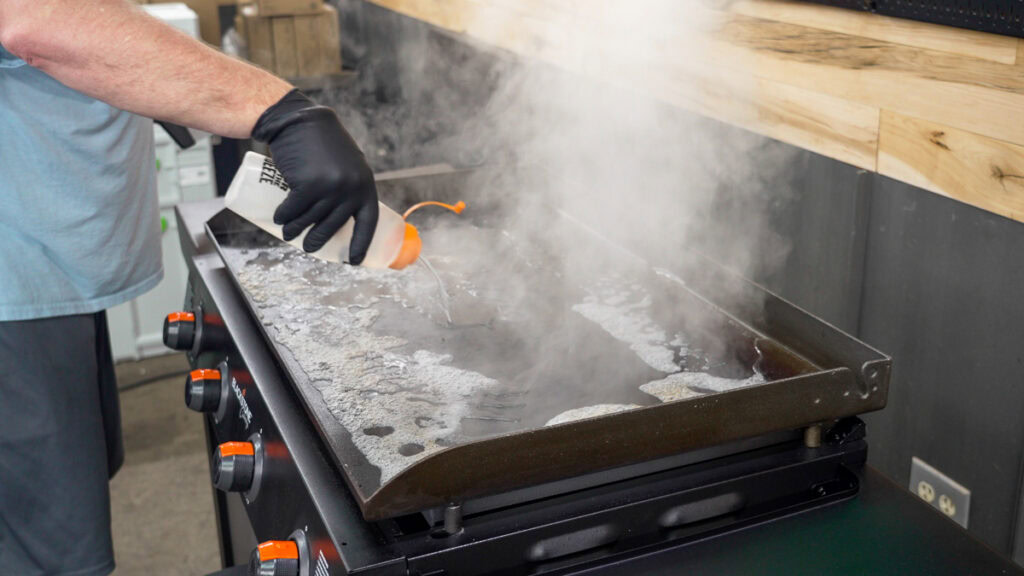
Soap and a scrubber remove exactly what you spent four coats building.
Clean it hot instead. Burners to low, squirt water on, scrape the debris into the grease hole, wipe it dry.
Squirt, don’t pour. Dumping a bucket of cold water on hot steel is a warping risk in its own right.
Then oil it. A thin coat while it is still warm, every single time, because water left standing on a bare griddle overnight is rust by morning.
05. Leaving it uncovered because it’s just one night
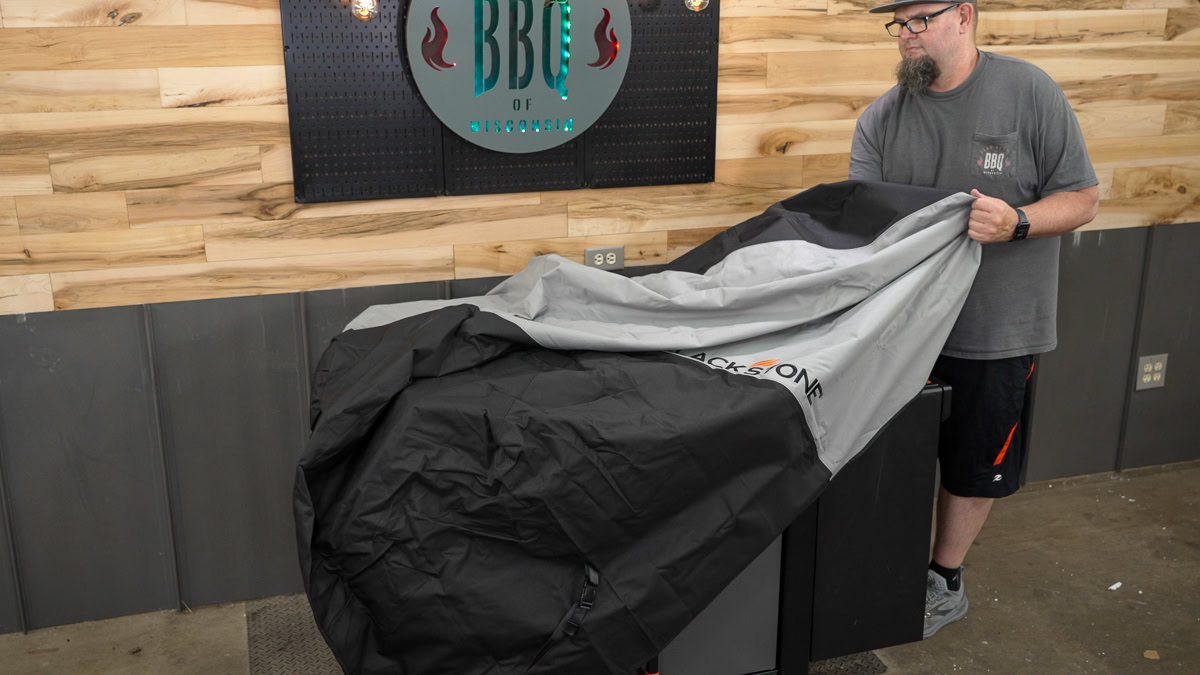
Rust doesn’t need a season. Humidity and one night with the lid open is enough to freckle a bare top.
Hard cover first, soft cover over the top of it if the griddle lives fully outdoors. The order matters more than people think, because a soft cover on its own traps moisture against the steel.
One thing to avoid: never cover a griddle that is still warm.
It sweats underneath, and you will lift the cover off to find the exact problem you were trying to prevent.
04. Writing off a rusty top
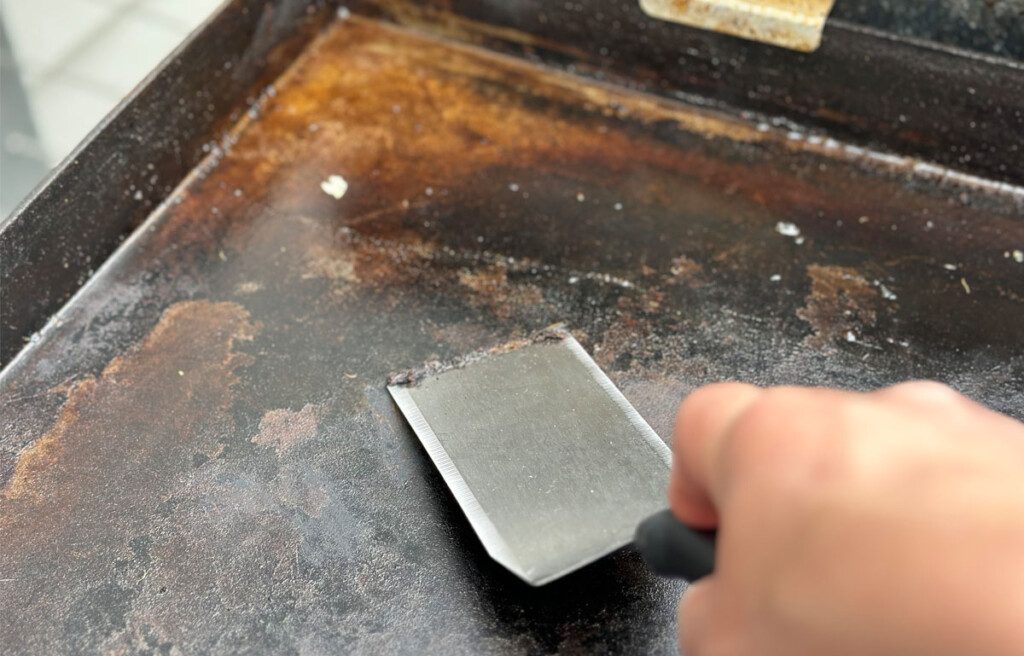
Carbon steel rusts on the surface. It doesn’t rot, and a rusty top is almost never a dead griddle.
Some of what looks like rust isn’t. Heavy oil buildup that never bonded properly looks near identical, and Blackstone publishes a repair process specifically for it.
Either way, start gentle. A griddle stone or pumice block and a little oil lifts most of what people reach for a drill and a wire wheel to remove, and stripping back to bare steel buys you four coats of seasoning you didn’t need to do.
Tops left outside uncovered all winter have come back with nothing more than a scrub and a re-season. It’s also why a rusty griddle going cheap on Marketplace is one of the better deals in backyard cooking.
03. Closing the lid like it’s a gas grill
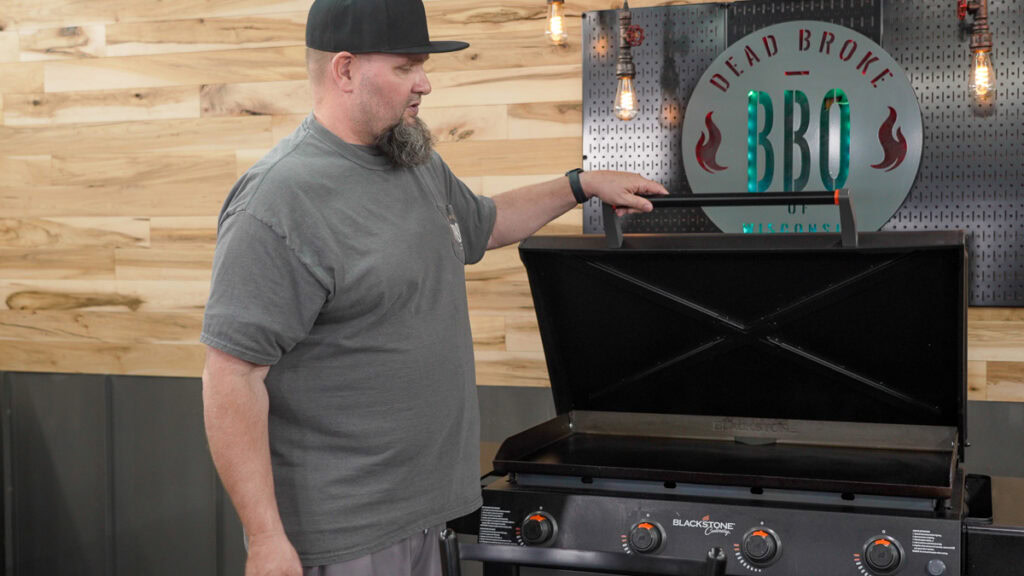
The hard lid on a griddle is a cover, not a hood. It’s there to keep rain, dust and insects off the flat top between cooks.
Most manufacturers say not to close it while the griddle is running. Trapped heat can discolor the paint, distort the lid, and bake grease vapor onto the underside.
Check your own manual, because a few newer models ship with hoods that are rated for cooking. The default is not.
When you do need to trap heat around food, that’s what a basting dome is for. Cheese melts and onions soften.
02. Preheating on high

This is the one that can permanently cost you a griddle top.
Steel expands as it heats, and it expands unevenly when one part of the plate races ahead of the rest. Preheating on high opens that gap faster than anything else you can do, which is why most manuals tell you not to.
High has one job on a griddle, and that is burning off oil during the initial seasoning.
Every cook after that starts on low or medium low. Ten minutes, read the surface, come up from there.
If yours already has a dip in the middle, don’t write it off. Let it cool completely first, because a mild warp often relaxes back out on its own.
01. Putting the eggs down too early
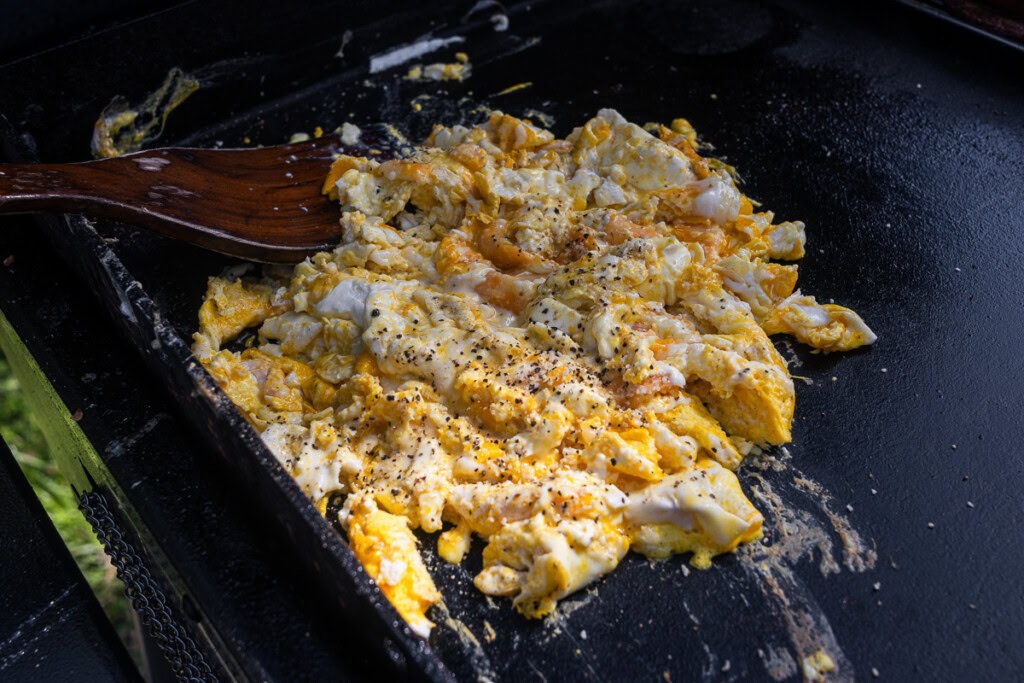
The most common complaint in griddle cooking is some version of “my eggs came out black and the griddle was on low!”.
Eggs want 300°F to 325°F, lower than anything else on the plate, and low on a griddle burner usually sits well above that.
Then there’s what’s already on the steel. Eggs go on last, after the potatoes, the meat, the pancakes and the toast, and pale eggs show every burnt speck those left behind.
So scrape the area clean, wipe it, and cook them on a burner you have switched off. Residual heat is plenty, and off is the only setting that stops climbing.
If you need that cool spot sooner, squirt a little water on it, wipe it dry, and go.
Getting More Out of Your Griddle
That is the list. Most of these aren’t skill problems.
They are habits nobody warns you about when you buy the thing, and they cost people food, time and occasionally a griddle top.
Fix the temperature ones first. A dozen other items here stop happening on their own once you are reading the surface instead of the knob.
Now that you know what mistakes to avoid, put your knowledge to work with our griddle recipes.

About Your Pitmaster
Joe Clements is the founder and editor-in-chief of Smoked BBQ Source, a leading barbecue resource that has helped tens of millions master grilling and smoking. Growing up in a vegetarian household, his love for barbecue was unexpected. Determined to master the craft, he launched Smoked BBQ Source in 2016 to document his journey from amateur to pitmaster.
Joe leads a team of expert barbecue creators and oversees the largest collection of in-depth grill reviews and a library of tested, foolproof recipes. Whether he’s firing up a pellet grill or charcoal kettle, he’s passionate about making barbecue approachable and enjoyable for all.
Well done, Joe, especially the tip about the regulator. You really covered everything in great depth. Thanks so much!