
How to Smoke Turkey on a Pellet Grill


SmokedBBQSource is supported by its readers. We may earn an affiliate commission at no extra cost to you if you buy through a link on this page. Learn more.

Smoking a turkey on a pellet grill gives you juicy meat, crisp golden skin, and a clean wood-fired flavor with almost no babysitting.
This recipe uses a simple brine and compound butter, then smoke roasts the bird at 325°F for about three hours. The result is tender meat, crispy skin, and balanced smoke that complements your Thanksgiving sides instead of overpowering them.
Why this pellet grill turkey method works
Pellet grills make turkey day easy, but not every method delivers crispy skin and juicy meat.
The number one complaint I hear about smoked turkey (or any poultry, for that matter) is rubbery skin. Many people try smoking their turkey low and slow around 225°F, which takes anywhere from four to six hours. This produces great smoked flavor, but the turkey won’t have that crispy skin we know and love.
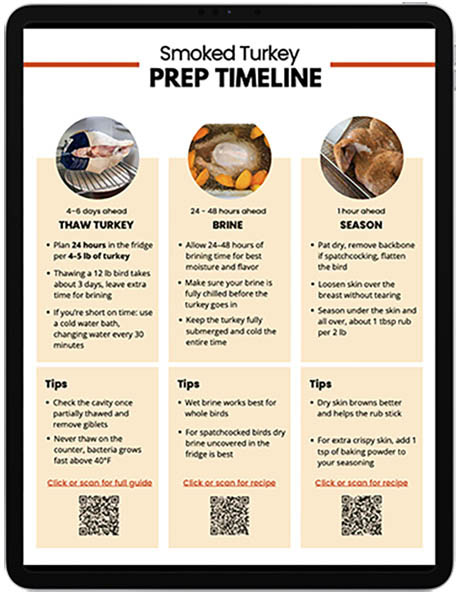
Do not risk a dry turkey this year
Download our free step-by-step turkey smoking cheat sheet.
Inside, you’ll find clear timelines, prep guides, and pro tips that you can follow on any smoker, ensuring your holiday bird comes out juicy, evenly cooked, and stress-free.
After testing different temps and brining techniques, this approach proved the most consistent. It starts with a simple overnight wet brine. This is key to keeping the meat juicy all the way through the smoke.

Before it hits the smoker, the turkey gets coated in a compound butter mixed with a savory herb rub of rosemary, sage, garlic, and paprika. The butter helps the skin crisp while the rub adds a balanced, aromatic flavor that pairs perfectly with the gentle wood smoke.
Then the bird goes into the smoker, hotter than usual, resulting in crisp skin and a balanced, wood-fired flavor in about three hours.
Ingredients you’ll need

- Whole turkey – A fresh or thawed 10-14 lb turkey. I used a 14 lb organic turkey.
- Turkey brine – Our homemade turkey brine uses fresh citrus, and herbs to bring out the natural flavors of the turkey. This step is key to producing a juicy turkey!
- Turkey rub – Our homemade turkey seasoning uses simple ingredients yet puts out amazing flavor. However, feel free to use your favorite store-bought turkey rub.
- Butter – We use room temperature salted butter to make our compound butter for the turkey. I suggest using a high-quality butter like grass-fed.
- Aromatics – The aromatics are what we use to stuff the turkey with to enhance the flavor and the texture of the turkey. In this recipe, I use onion, celery, carrot, garlic, orange, rosemary and thyme
Equipment you’ll need
- Pellet smoker – I used my Traeger Timberline XL, but any pellet grill will work for this recipe.
- Pellets – I like using hickory, oak, and or mesquite pellets for turkey. I used a hickory, oak and mesquite blend of pellets.
- Carving knife – You’re going to want a sharp knife with ridges to carve your turkey. I like to use our 12″ slicing knife.
- Wire rack and baking sheet – I used a cast-iron baking sheet with a fitted wire rack for
- the turkey to roast on. This will keep your pellet smoker clean and you can use the drippings to make gravy or pour over the sliced turkey before serving.
- Meat thermometer – I recommend a probe thermometer for this recipe to accurately track the temperature of the turkey. I used my new Meater Pro.
- Butchers twine – To tie back the wings and the legs, also known as “trussing the turkey”.
- Brine container, bucket, cooler, or brine bag – I used a food safe 5 gallon Yeti bucket to brine my turkey. You can add ice to your container for an overnight brine, or remove a shelf in your refrigerator to put the container in.
- Food service safe disposable gloves – It’s very helpful to use gloves when handling the turkey and using disposable gloves will keep your hands clean!
How do you keep turkey moist in a pellet smoker?
I highly recommend wet brining your turkey for at least 12 hours before cooking. This is the key to producing an incredibly flavorful and juicy turkey.
When using a wet brine, your fresh turkey sits in water flavored with salt, herbs, and other seasonings for up to 24 hours.

Dry brining is when you salt and season the protein with no liquid so that the salt breaks down the muscle fibers and traps in the natural juices. For poultry, I will always prefer a wet brine.
If you’re short on time, consider injecting instead, like we did in our Cajun-style Smoked Turkey. Injecting salty broth and butter will help keep the bird moist.
Some turkeys actually come pre-brined in a solution. Look at the ingredients closely and avoid artificial ingredients. I always recommend a homemade brine with natural ingredients.
Smoked turkey FAQs
For this pellet smoked turkey recipe, I recommend smoking to temperature, not time. This is because the cook time can vary depending on the turkey’s size and your particular grill.
We recommend using a good leave-in thermometer like the MEATER and taking the turkey off the pellet smoker once the internal temperature reaches 165°F.
The 14 lb turkey I smoked was done in three hours.
For this recipe, I used cherry wood pellets from Bear Mountain. However, you can’t go wrong with any of the common smoke woods, such as pecan, maple, or apple.

Some people like to use oak or mesquite, although the latter can pack a bit more punch. We have a whole article on the best wood for smoking turkey if you want to learn more.
A big question is, “When do I thaw my turkey?” The answer depends on the weight. I always allow 24 hours for every 4-6 pounds of turkey when thawing in the refrigerator.
Thawing the turkey in the refrigerator is the best way to allow the bird to reach a safe temperature without shocking the protein. So, for this 14 lb turkey, I moved it into the refrigerator three days before brining. If you’re in a pinch, you can also brine the turkey in cold water, which usually takes 30 minutes per pound.
I have always followed a simple rule to estimate the size of the turkey I need.
The weight of the turkey in pounds will typically produce the same number in average servings of turkey. I used a 14 lb turkey that yielded 14 smaller servings and roughly 10-12 larger servings.
I like to think about who I am feeding and give myself an estimate based on that. For example, my husband’s best friend is a bodybuilder, so I know he will eat three servings of turkey!
When picking out the turkey, I suggest searching for a symmetrical turkey with a wider shape to ensure a more even cook, better presentation, and more breast meat.
How to smoke a turkey on a pellet grill
1. Brine the turkey
Prepare your turkey for brining by removing the giblets and neck from the inside of your thawed turkey. You can save the neck and giblets to make homemade turkey stock by simmering them in a pot of water for 12 hours.
I slightly modified our turkey brine recipe. It’s really easy to make, the most important thing is that you have a large enough container to fit the turkey and brine solution.

Prepare the brine by bringing water to a boil on the stovetop and adding the Kosher salt, brown sugar, black pepper, orange or lemon wedges, rosemary, and or thyme. Cut the heat and let cool.
You’ll notice we don’t add all the water to the boiling stage. This allows us to cool the brine down by adding the remaining water at the end along with the turkey. If you’re not refrigerating the brine container, then add 5 lbs of ice as well.
I don’t recommend brining your turkey for more than 24 hours, as it will be too salty, and the muscle fibers will break down too much.
You can also make the turkey rub (step 4) at this stage if you want to save some time the next day.
2. Fire up your pellet grill
The next day, after the turkey has brined for at least 12 hours, preheat your pellet smoker to 325°F, using hickory, oak, mesquite pellets or a pellet blend. For this Traeger smoked turkey I used my Timberline XL, however, any pellet grill will work for this recipe.
Your pellet grill should fully heat in 15-20 minutes, which is enough time to prepare the turkey and the seasoning.
3. Prepare the turkey for seasoning
The prep work for a turkey is more work than the actual cook! It takes a little effort, but in just a few steps, your turkey will be ready for smoking.
Begin by taking it out of the brine and washing it with cold water. This is an optional step, and depending on the type of rub you plan on using, you might not need to rinse it.
Because I’m using a rub with plenty of salt, I like to rinse the brine solution so it doesn’t taste too salty.
Stretch out the skin and push back the membrane between the skin and the breasts.

Try not to pierce the skin. Using food-safe gloves for this step will help avoid breaking the skin and keep your hands clean.
4. Make the homemade turkey rub
Make the homemade turkey rub by combining all the ingredients and mixing well. This batch makes a little over half a cup; you’ll probably have some leftover to use on your sides!

This homemade turkey rub has an herb-forward flavor and is packed with savory spices to bring out the turkey’s natural flavors.
Feel free to tweak or substitute based on your personal preferences.
5. Seasoning the turkey
When it comes to seasoning the turkey, let the butter do the work!
My secret for crispy skin is adding the turkey rub to room-temperature butter.

Mix about a quarter of a cup of seasoning with room temperature butter.
Cover the turkey in the compound butter, getting under the skin and inside the cavity.
Applying rub directly to a turkey will result in dry skin. Using the butter as a hydrating agent will create that beautiful golden brown and crispy skin.
6. Trussing the turkey
Truss the turkey by cutting three strands of butcher twine about two feet long each. Bring the legs back to cross each other and tie them together. Tie each wing and pull them back, connecting the twine to the legs.
You can tie a butcher’s knot/slip knot or follow the old saying “if you can’t tie a proper knot, tie a lot”.
Tying the wings back isn’t completely necessary, however the wings will cook faster if not tucked back. You can also clip the wing tips, some turkeys come that way already.
7. Stuffing the turkey and inserting the thermometer
Stuff the turkey with celery, carrots, onion, rosemary, orange wedges, and garlic. You can use any vegetables or herbs you have on hand.
The goal is for the turkey’s inside cavity to be full of fresh vegetables and herbs to enhance the flavor yet also block the airflow, which will keep the turkey hydrated from the inside.

Place the turkey on the wire rack on the baking sheet and sprinkle about a tablespoon of the turkey rub over it. Insert your probe thermometer into the lower part of the breast. I recommend a probe thermometer for this recipe to accurately track the temperature of the turkey.

I used my new Meater Pro, which allows me to track the temperature from the Meater App on my phone. The app also connects to my Traeger app, which allows me to control and monitor the grill.
8. Smoking the turkey
Place the turkey in the pellet smoker and roast at 325°F for three hours or until the internal temperature reaches 165°F.
Pro Tip: Use a roasting rack or cooling rack over a sheet pan to allow heat to circulate evenly, while catching the drippings. Layer sliced onions, carrots, and celery with some broth underneath the bird to create a flavorful gravy.

You can periodically spray the turkey with cooking oil or spritz it with melted butter to enhance the flavor and texture of the turkey skin.
7. Resting and Carving the turkey
Let the turkey rest for at least 25 minutes until carving.

Carve the turkey by separating the legs and thighs first, then remove the wings. Cut out each breast as close as you can to the breastplate and slice against the grain.
For more detailed instructions, see our post on how to carve a turkey, and you’ll be set!
Strain the drippings and pour them over the sliced turkey, or use the drippings for gravy.


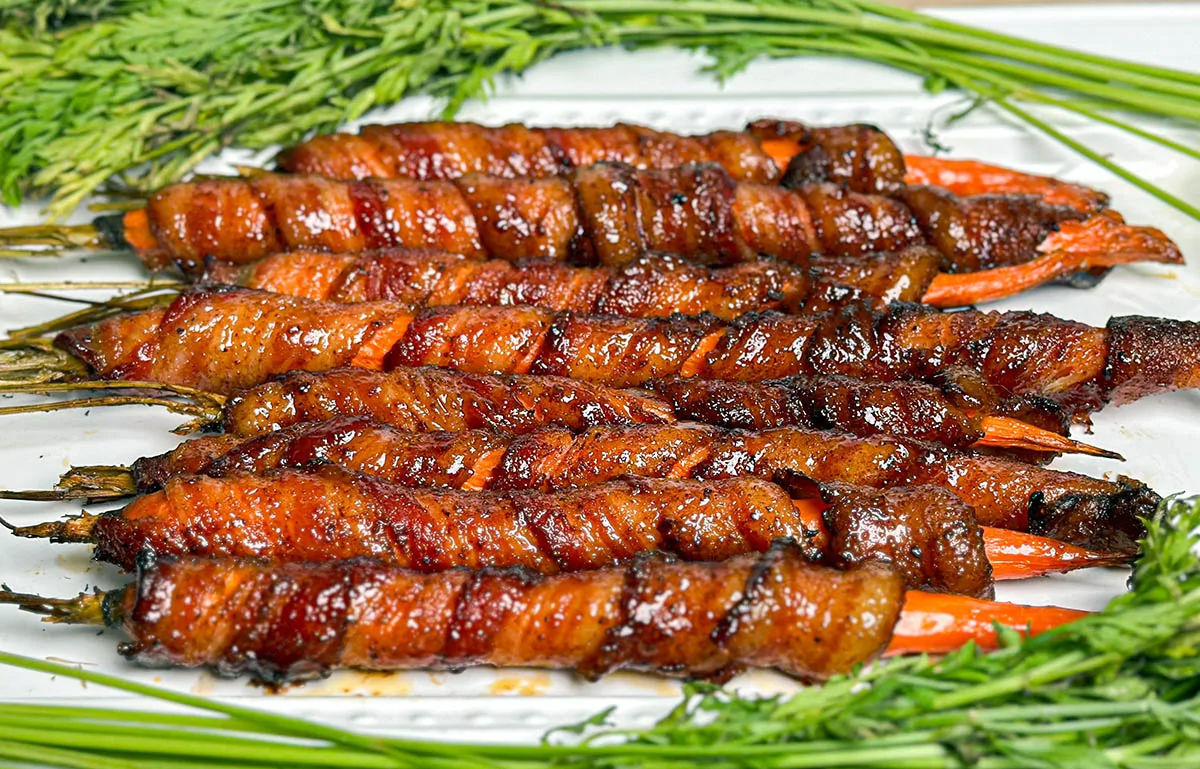
Traeger Smoked Turkey Recipe
Follow this recipe, and you’ll have a perfectly smoked pellet grill turkey that’s juicy, flavorful, and sure to impress. By smoke roasting at a higher temperature, you’ll also get nice crispy skin. If you find this recipe helpful, please leave a 5-star rating, and leave a comment if you have any questions.

Pellet Grill Smoked Turkey

Ingredients
- 12 lb turkey - See note 1
- 2 sticks butter - salted, room temperature
- 6 sprigs rosemary - fresh
- 1 orange - cut into quarters
- 2 stalks of celery - cut in half
- 2 carrots - cut in half
- 1 onion - quarterd
- 6 cloves garlic
Smoked turkey rub
- 1 tbsp salt
- 1 tbsp black pepper - freshly ground
- 1 tbsp garlic flakes - ground garlic will also work
- 1 tbsp rosemary
- 1 tbsp sage
- 1 tbsp cumin
- 1 tbsp dried minced onion
- 1 tbsp paprika
- 1 tbsp white pepper
For the brine
- 2 gallons water - Less if you plan on cooling down with ice
- 1 cup Kosher salt
- 1 cup brown sugar
- 3 tbsp black pepper
- 2 oranges - cut into wedges
- 5 garlic cloves
- fresh rosemary - a few sprigs
- fresh thyme - a few sprigs
Instructions
To brine your turkey
- Remove the giblets and neck from the inside of your thawed turkey.
- Bring ½ gallon of water to a boil. Add Kosher salt, brown sugar, and black pepper. Remove from heat and let cool.
- Place the turkey in the brine container and add 1 ½ gallons of water, followed by the brine mixture. Add four orange wedges, garlic cloves, and rosemary. Either add 5 lbs of ice to the brine container or store in the refrigerator overnight.
To smoke your turkey
- Preheat your pellet smoker 325°F, using hickory, oak, mesquite pellets or a pellet blend.
- Remove the turkey from the brine and wash it with cold water. Dry with paper towels.
- To prepare the turkey for seasoning, stretch out the skin, and push back the membrane between the skin and the breasts.
- Add ¼ cup of turkey rub to the butter and combine well. Cover the turkey in the compound butter, getting under the skin and inside the cavity.
- Truss the turkey by cutting three strands of butcher twine about two feet long each. Bring the legs back to cross each other and tie them together. Tie each wing and pull them back, connecting the twine to the legs.
- Stuff the turkey with celery, carrots, onion, rosemary, four orange wedges, and garlic.
- Place turkey on a wire rack on a baking sheet and sprinkle about one tbsp of the turkey rub. Insert your meat probe thermometer into the lower part of the breast.
- Place the turkey in the pellet smoker and smoke the turkey at 325°F for three hours or until the internal temperature reaches 165°F. You can spray the turkey periodically with cooking oil or spritz with melted butter to enhance the flavor and texture of the turkey skin.
- Let the turkey rest for at least 25 minutes until carving. Carve the turkey by separating the legs and thighs first, then remove the wings. Cut out each breast as close as you can from the breast plate, and slice against the grain.Strain the drippings and pour over the sliced turkey.
Smoked turkey rub
- Combine all the ingredients.
Notes
Nutrition
Nutrition information is automatically calculated and should be used as an approximation only. If you’re worried you could always add a side of kale.

About Your Pitmaster
Rosalie Bradford, is a recipe developer and grilling expert specializing in bold, approachable barbecue. She has created recipes for Grill Masters Club and Snake River Farms and partners with Traeger to share expert grilling techniques.
Rosalie also runs barbecue classes at Heights Meat Market in Tampa, helping home cooks master restaurant-quality results. Whether she’s crafting recipes or teaching techniques, she’s passionate about making great barbecue accessible to all.
Thanks for all the advise…… Ive not had my Z pellet grill that long. My problem is getting the temperature up high, during our cold November days here in the UK… Someone should make a heat resistant jacket to be able to cover the grill and help get the Temps up….
Yeah, that’s a problem with cheaper grills. Thinner metal and lower capacity make for difficulty maintaining temp. I have a Recteq and it doesn’t have a problem in our cold Nevada winters.
I have a Z Grills 700D and use a 4’ x 6’ welding blanket wrapped in half to cover my smoker on long cooks overnight and on cold days. It was less expensive than the insulated Z Grills covers that seem to be on back order constantly anyway.
If you search online you will find several companies that make heat proof blankets specifically to cove pellet grills.
🤤
This looks easy and delicious!