
The 15 Best BBQ Binders Ranked From Worst to Best


SmokedBBQSource is supported by its readers. We may earn an affiliate commission at no extra cost to you if you buy through a link on this page. Learn more.
A BBQ binder is supposed to do one job. Help seasoning stick to meat.
Somehow, that simple idea has turned into one of the loudest arguments in barbecue. From yellow mustard to mayo to skipping binders entirely, everyone has an opinion. Some you’ll want to avoid, some are surprisingly useful when used correctly. We ranked them anyway.
15. Water
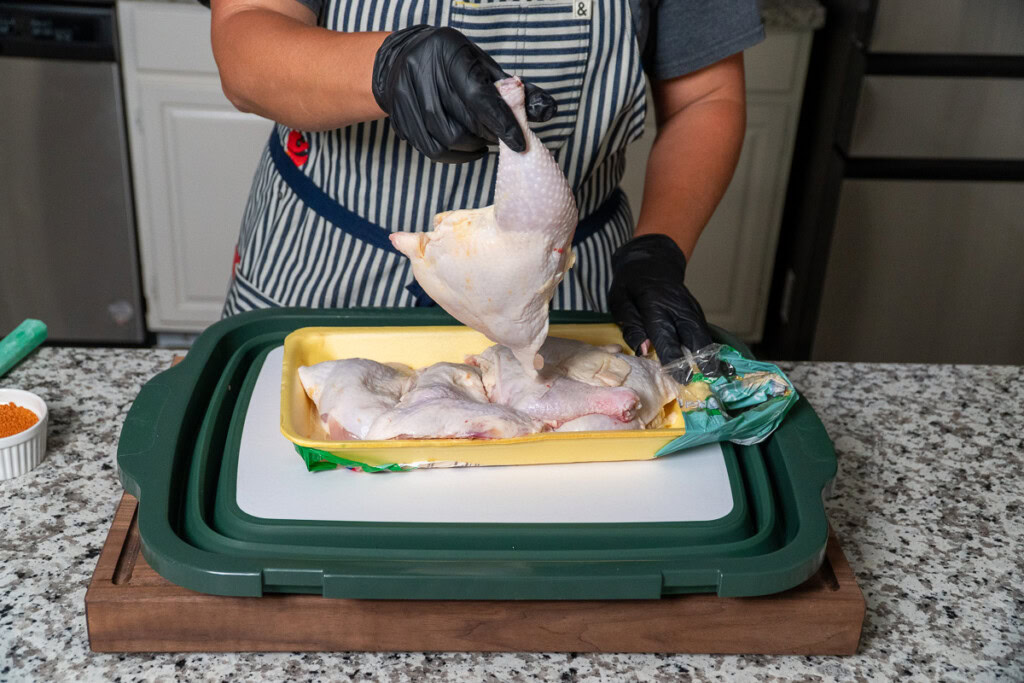
Water is not a binder. It is a delay. It might hold rub in place for a few seconds, but the moment heat hits the meat, it evaporates and leaves your seasoning exposed. It does nothing to protect the surface, does nothing to help bark set, and does nothing to improve the final result.
On poultry, it is actively working against you. Surface moisture is the enemy of crisp skin, and starting with water guarantees you are chasing dryness later in the cook.
Best use cases: Spritzing brisket and beef ribs if you don’t have anything else to use
If water is your binder, it’s time to restock the pantry.
14. Ketchup

Ketchup smells incredible early on, but the sugar can burn, and the surface turns pasty, with even less payoff at the end.
There are better options out there, so save it for hot dogs.
13. Honey or Maple Syrup

These stick better than almost anything, and that is exactly the problem. Like ketchup, sugar browns fast, then burns, then dominates everything else. You end up managing caramelization instead of cooking meat.
- Best use cases: Hot and fast poultry or late-stage glazing or in the wrap
High reward if timed perfectly, high risk everywhere else.
12. BBQ Sauce
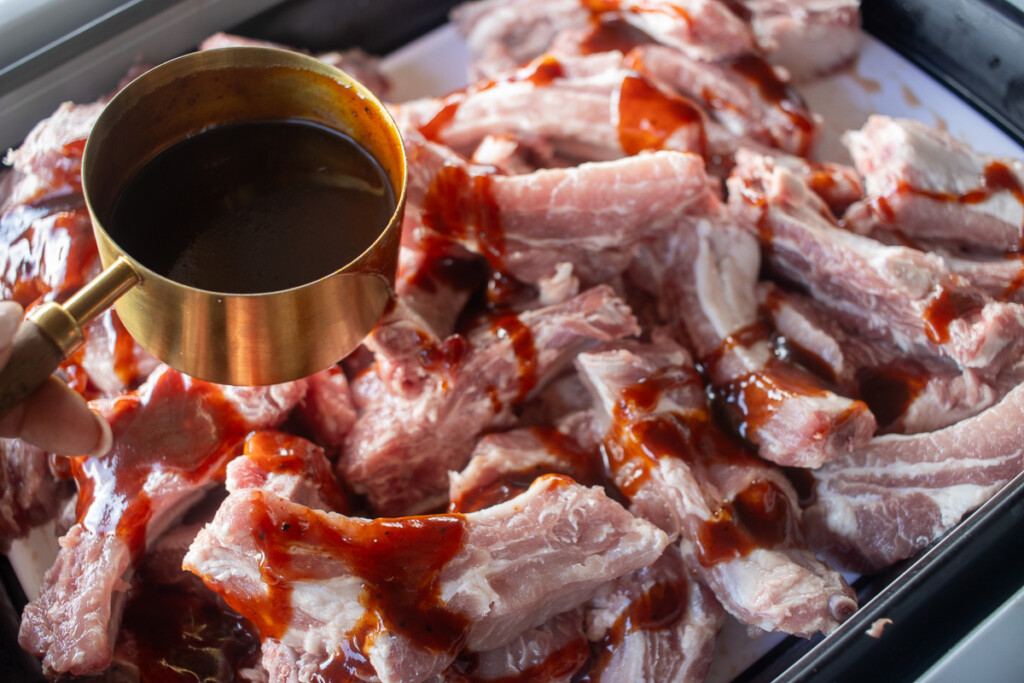
BBQ sauce feels intuitive, which is exactly why it gets misused. Like ketchup and honey, the sugar caramelizes long before bark has a chance to form, sealing the surface and blocking smoke.
On long cooks, that usually means scorched sugar and a flat, one-note exterior.
On shorter cooks like party ribs, a thin coating can deliver a quick, sticky crust with good color and texture. In those cases, you are not building traditional bark, you are going for caramelization and bite.
Best use cases: party ribs, short cooks, glazing in the final 20 to 30 minutes.
Great sauce when timed right, a liability when used too early.
11. Vegemite
If you’re reading this from down under, you already know where this is going.
Vegemite is concentrated umami in paste form, and in the right hands, it can make beef taste deeper and richer than you’d expect. It does almost nothing for adhesion and everything for flavor. This is not about helping rub stick, it’s about adding a serious savory backbone.like B
The trick is restraint. You can thin it with warm water or oil, then apply it sparingly. Used correctly, it boosts savory depth and darkens the surface.
This is not a stunt. It works best on beef that can take the hit, especially cheaper cuts where extra umami actually improves the final bite.
Best use cases: chuck roast, brisket flat, burgers.
Powerful, divisive, and easy to mess up if you get cocky.
10. Italian Dressing
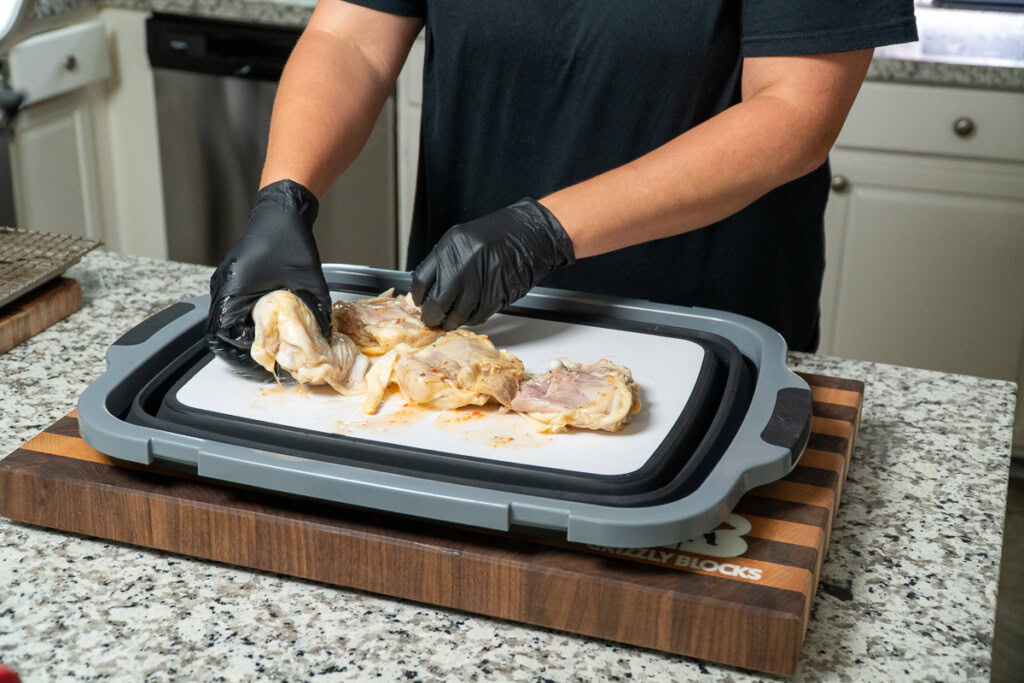
Italian dressing works because it pulls double duty. It brings oil for adhesion, vinegar for bite, and enough seasoning to carry flavor without taking over. Used correctly, it acts as both an easy marinade and a binder.
Where it really shines is on smoked chicken thighs. Let the chicken marinate then pull it out and apply your rub without wiping it dry. The dressing left on the surface helps the seasoning stick and promotes browning.
Best use cases: chicken thighs, drumsticks, short to medium cooks.
The risk is overdoing it. Too much dressing or a long marinade can soften the surface and mute bark, especially on longer cooks. This is about restraint, not soaking.
09. Soy Sauce

Soy sauce delivers salt and umami immediately, which is both its strength and its risk. Thinned and used lightly, it darkens the surface quickly and reinforces savory notes.
It shines most outside traditional low-and-slow barbecue. On chicken wings, especially with Asian-style flavors, soy sauce works as both binder and seasoning. It also pairs well with honey or maple syrup, where salt balances sweetness and drives browning.
A light coating of Bachan’s Japanese BBQ sauce can work in place of straight soy sauce, adding depth without overpowering, but the same restraint applies.
- Best use cases: Chicken wings, and pork on short to medium cooks, sweet-savory profiles.
Powerful in small doses, unforgiving when layered with salty rubs.
08. Olive Oil

Olive oil does the job quietly and adds a subtle layer of flavor. Compared to neutral oil below, it brings aroma and character, but sacrifices some bark potential on long cooks. It works best where flavor matters more than crust.
- Best use cases: Chicken, lamb, short cooks.
A grilling tool more than a traditional barbecue one.
07. Neutral Oil (Canola or Grapeseed)

Neutral oil is olive oil without the flavor. It does less, which is often an advantage. It helps rub stick and stays completely out of the way, letting the meat, smoke, and rub do the talking. On long cooks, too much oil softens the surface just like olive oil does, only without the aromatic upside.
- Best use cases: Steaks, chicken, direct heat grilling.
Reliable, unremarkable, easy to overapply.
06. Hot Sauce (Vinegar-Forward)
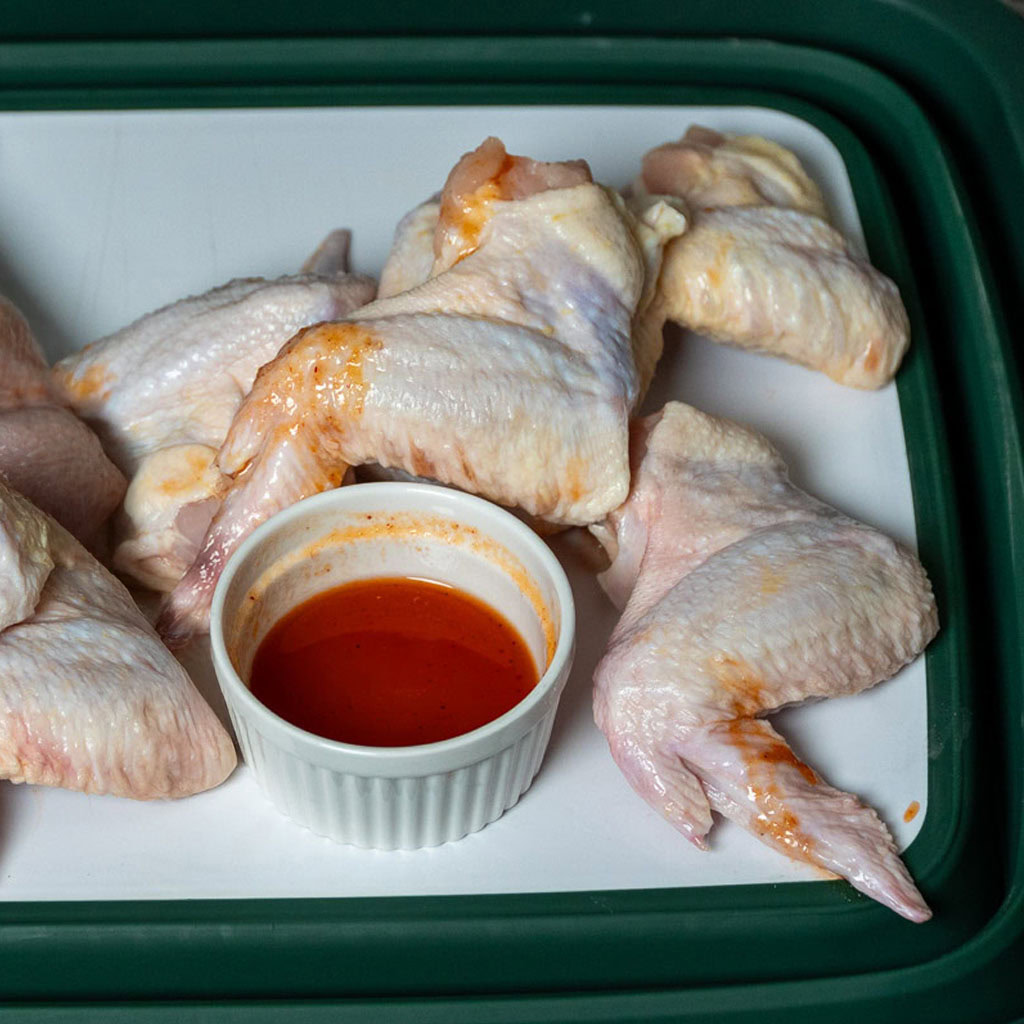
Vinegar-forward hot sauce behaves like a thinner version of mustard, with more edge and less forgiveness. It helps seasoning grip the surface and adds acidity that mostly cooks off. Compared to mustard at the top of this list, coverage is less even and mistakes show faster.
- Best use cases: Pork ribs, pork shoulder, chicken.
Good adhesion with a narrow margin for error.
05. Beef Tallow

Beef tallow works because it aligns with the meat instead of competing with it. Compared to oils earlier on this list, it reinforces richness rather than staying neutral. Used lightly, it behaves like an extension of the fat cap. Used heavily, it softens bark and dulls texture.
- Best use cases: Brisket, beef ribs, chuck roast.
Intentional when restrained, sloppy when overused.
04. Worcestershire Sauce
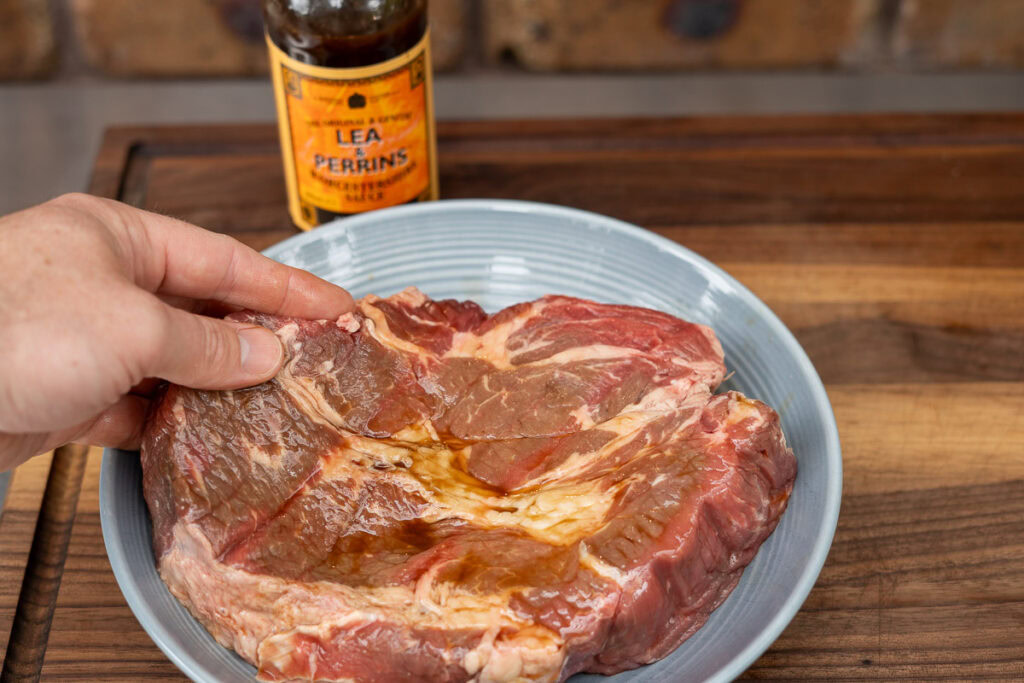
Worcestershire sauce, or “wash your sister sauce” if you’re like me and can’t seem to say the name right, brings salt, acidity, and a savory note.
It shines on smoked and pulled beef, where that extra savory depth carries through shredding and mixing. It also works well on pork butts, adding complexity without fighting traditional pork flavors. This is less about building bark and more about layering flavor that survives a long cook.
Best use cases: smoked beef, pulled beef, pork butt, short to medium cooks.
Savory, versatile, and easy to overdo if you forget how salty it is.
03. Mayonnaise

Mayonnaise is one of our favorite binders because it changes how the surface cooks, not just how the meat tastes. It promotes even browning and improved heat transfer, making it especially effective wherever skin matters.
It’s our go-to for poultry, especially turkey skin, which is thick and slow to render. A thin coating of mayo helps drive browning and prevent patchy, rubbery skin. It consistently outperforms butter, which tends to melt off too early.
It also works well for hot searing, where even surface contact matters more than added flavor. Use it thin.
Best use cases: whole turkey, spatchcock poultry, chicken with skin, hot-seared steaks.
Excellent for skin and color, neutral for low and slow.
02. No Binder at All
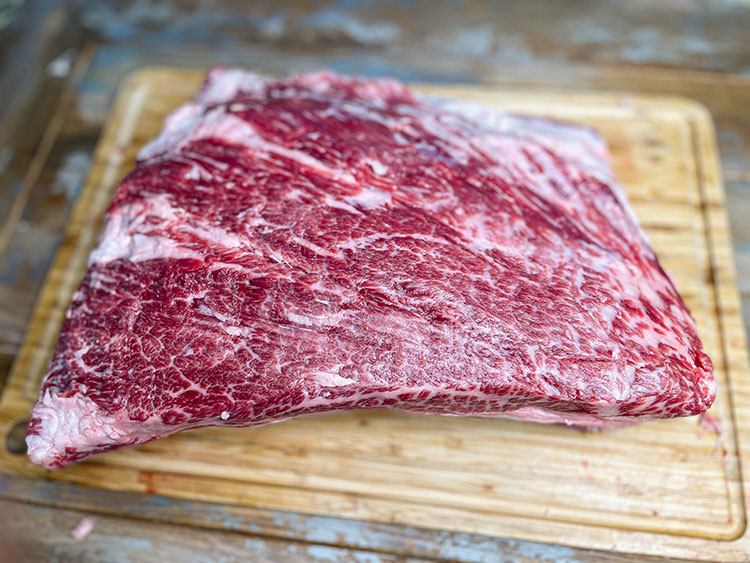
If watching mustard go on a brisket makes your eye twitch, this is your move.
Skipping a binder is about principle as much as outcome. You want to taste meat, seasoning, smoke, and nothing else. You trust your palate, maybe a little too much, and you are not interested in shortcuts.
With fresh meat and even seasoning, surface moisture is already there. Let it sit, let it sweat, and the rub will hold. On long cooks like brisket or pork shoulder, this approach delivers exactly what purists are chasing, a clean expression of the meat and the rub without anything extra in the way.
Best use cases: brisket, pork shoulder
Pure, intentional, and completely intolerant of anything yellow.
01. Yellow Mustard (The Undisputed King)

If you were nodding along to the no-binder argument a moment ago, sorry to upset you but yellow mustard is the undisputed king of BBQ binders.
Mustard offers the best balance of adhesion, forgiveness, and neutrality. It spreads evenly, holds rub in place, and then disappears during the cook without burning, blocking smoke, or showing up in the final bite.
This is not a backyard myth or a social media trick. It has been used for decades by cooks across the spectrum, from competition teams to pitmasters like Malcolm Reed and Aaron Franklin. Not because it is exciting, but because it is predictable and hard to screw up.
Mustard does not make your brisket taste like mustard. It makes your cooking more consistent, especially when conditions are less than perfect.
Best use cases: brisket, pork shoulder, ribs.
Boring for a reason, and still the benchmark.
So, Which BBQ Binder Should You Actually Use?
Binders are a tool, not a shortcut. Some help with adhesion, some add forgiveness, and a few just create more problems than they solve. What matters most is understanding why you are using one and when you are better off skipping it entirely.
If we missed your go-to binder or if you swear by something that deserves a spot here, drop it in the comments. Just be prepared to explain why it works.

About Your Pitmaster
Joe Clements is the founder and editor-in-chief of Smoked BBQ Source, a leading barbecue resource that has helped tens of millions master grilling and smoking. Growing up in a vegetarian household, his love for barbecue was unexpected. Determined to master the craft, he launched Smoked BBQ Source in 2016 to document his journey from amateur to pitmaster.
Joe leads a team of expert barbecue creators and oversees the largest collection of in-depth grill reviews and a library of tested, foolproof recipes. Whether he’s firing up a pellet grill or charcoal kettle, he’s passionate about making barbecue approachable and enjoyable for all.
Good report, I thought so but it’s good to hear about using mystard
Creamy horseradish for brisket
Mayo over Mustard 😉 and Head Country Marinade over everything 👊🔥💯‼️
I use Italian dressing with sliced bell peppers and sweet onions and I remove seeds from all the different colors of bell peppers, then I wrap in foil after I’ve smoked both sides of my brisket usually takes 4 hours fat up 2 hours fat down in my off set smoker with mesquite wood at 250°F then I wrap in foil with fat down and all ingredients bottom and top an pout 1 to 2 bottles of Italian dressing and wrap. Then I smoke brisket another 6 hour or til internal temp is 205°F. Comes out juicy and tender.