
Types of Beef Ribs: Each Cut Explained


SmokedBBQSource is supported by its readers. We may earn an affiliate commission at no extra cost to you if you buy through a link on this page. Learn more.


While pork ribs get a lot of attention, beef ribs deserve just as much love.
Located near the ribeye, beef ribs are full of connective tissue and marbling, making them ideal for low and slow cooking.
Beef ribs can be confusing to buy, so if you don’t know your back ribs from your chuck ribs, keep reading because I’m going to break down the main types of beef ribs and what to order when you get to your butcher.
Beef Ribs for Beginners
Beef ribs can get confusing due to the regional variation between butchers as to how long to leave the bones, and how much meat they leave on them,
For instance, some butchers will leave the “cap” or the muscle called the “spinalis dorsi” on, while others will remove it.
Especially when you are new to cooking ribs, this variation can be baffling, as the ribs you get from one supplier may look different from another despite technically being the same cut.
However, getting to know your way around the ribcage of a steer will help ease this confusion, so let’s look a little closer at how the rib is broken down.
We have an in-depth recipe for Smoked Beef Ribs, which you can check out.
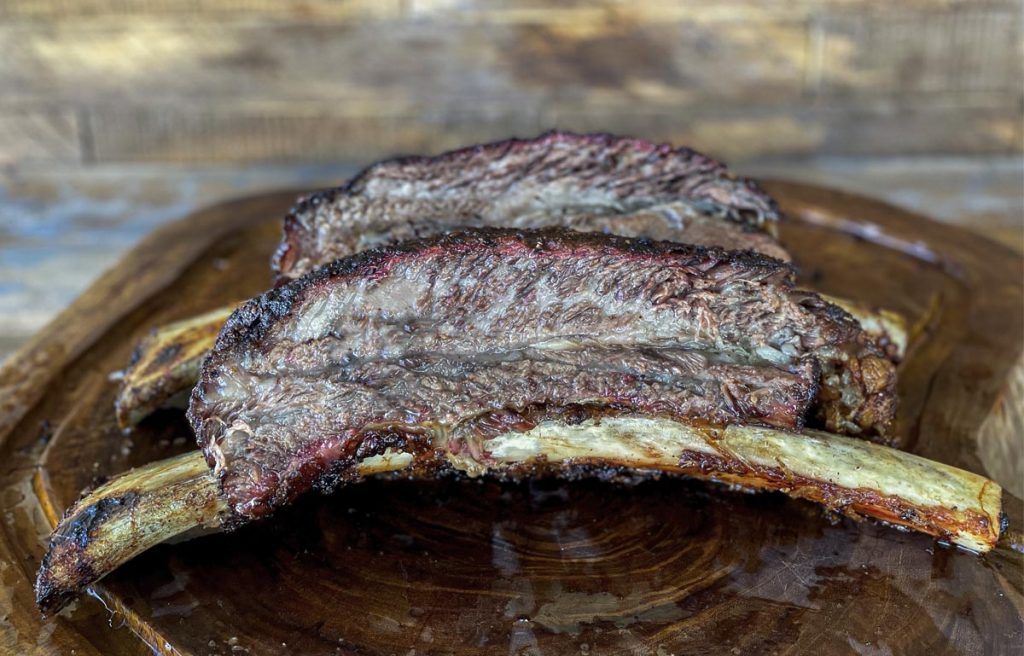
The three types of beef ribs
The 13 ribs that make up a whole side of beef are broken up into three main parts:
- Plate Short Ribs
- Back Ribs
- Chuck Short Ribs
Let’s take a more detailed look at each of the main types of beef ribs.
1. Plate Short Ribs
These are the ribs you will most likely see when you turn up at a Texas barbecue joint. This cut is big, meaty, and tender.
Perfect for barbecue.
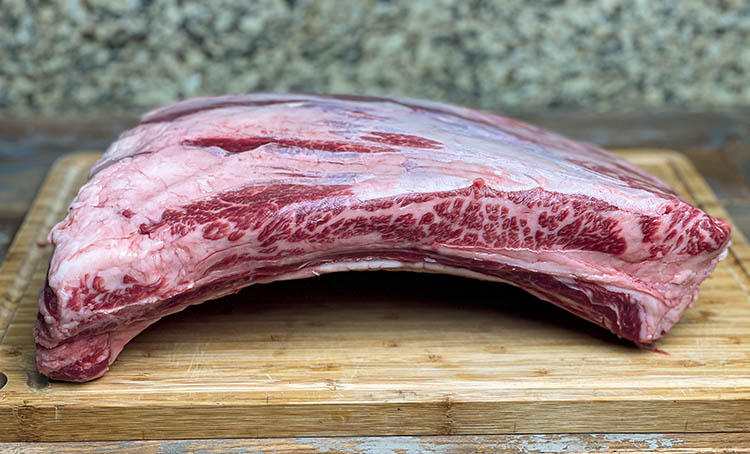
They usually come in a set of three ribs, being the sixth, seventh and eighth. Just one of these bones can weigh 1 – 1.25 pounds!
These ribs also pack a punch when it comes to flavor. There is a lot of fat and connective tissue in this meat, so when it is cooked down you get a rich, beefy taste.
You can often find them sold as single ribs, but I find the whole slab works best otherwise, the meat can dry out during cooking.
Often they are only available from commercial suppliers or specialty butchers.
Best Way to Cook: Cooking these ribs is sometimes compared to cooking brisket, as there is a similar fat content.
The best way to cook them is low and slow, allowing the fat to break down while the meat remains moist.
A simple Texas-style rub with equal parts pepper and kosher salt is a great option, or try our ultimate brisket rub for a little more complexity.
However, it is entirely up to you to decide whether you stick with tradition or try out some other flavors.
2. Back Ribs
These ribs come from higher up the beast, towards the spine. This is where the prime rib roast originates.

The prime rib roast is one of the priciest cuts, so in most cases, the butcher will take most of the meat from this area to sell as part of the roast.
While these ribs might have less meat on them, you will still find some pretty good meat between the ribs.
Best Way to Cook: There is less meat on these ribs, so they will not take as long to cook as some of the meatier rib cuts.
If you want tender, smoky, fall-off-the-bone beef back ribs, our Smoked Beef Back Ribs recipe delivers bold flavor, perfect bark, and a simple, no-fuss cook that’s easy to master.
3. Chuck Short Ribs
Also called flanken ribs, these come from under the chuck and are generally comprised of the first to the fifth rib. Commonly you will find them sold in lots of four ribs.
They are probably the easiest rib to buy from the supermarket. They are nice and meaty, although they don’t quite compare to the plate short rib.
They will have a smaller bone than the plate short rib, and generally will have a block of meat at one end of the bone.
These ribs can tend to contain a fair amount of hard fat.
How Best to Cook: These ribs are great to grill, and are very popular in Korean cooking.
They also do well when marinated, braised or even stir-fried when the meat is cut off the bone.
While there is plenty of inventive stuff you can do with these ribs, they are still fine to smoke, just like you would short plate ribs.
Keep in mind that you will not need to smoke them as long as you would short plate ribs as there is less meat to cook.
Best Types of Ribs for Barbecue
Short plate ribs are hands down the best for barbecuing, but there is a sting in the tail. As we mentioned earlier, they may not always be easy to come by for the humble home pitmaster.
Understanding why they are the best, though, is handy if you can’t get your hands on any. Armed with some knowledge, you can look for the best alternatives that are available.
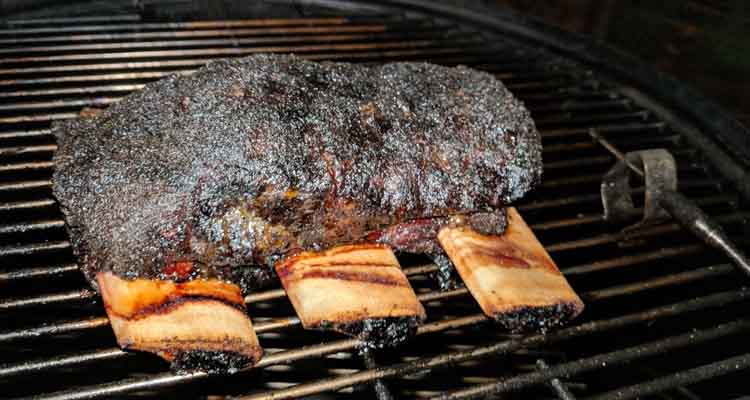
Short plate ribs are great because there is plenty of meat on the bone, and they are a good size.
Chuck ribs may not be quite as big as short plate ribs, but they will have more meat than back ribs, so good quality chuck short ribs can make a worthy replacement.

Short plate ribs are also popular due to the nice amount of fat and connective tissue that is in the meat which cooks down to create delicious flavors.
So if your best option is chuck ribs, look for a portion that contains enough fat to break down into great flavors.
In fact, if you are looking to break the ribs down into individual portions, the chuck ribs make a great choice, as their size makes them easy to break down into smaller portions.
However, a word of caution. Be sure to have a good look at all the meat in the pack you plan to buy. You don’t want them to be too fatty.
Sometimes, you may find a couple of good, meaty ribs on the top of the packet only to see that the others hidden behind these tasty looking specimens are mostly fat.
Difference Between Beef and Pork Ribs
I’m going to state the obvious first – we are talking about two completely different types of animals here – a hog vs. a steer.
But what are the characteristics of the meat that sets these two apart?
First things first, beef ribs will be bigger than pork ribs, thanks to the size of the animal they come from.
One other important distinction is the type of rub and sauce you serve with beef ribs.
While pork ribs go great with sweet rubs and sauce, beef ribs are best served simply.
You can read more about preparing pork ribs here.
If you would like to know about how the pork ribs are broken down in detail and the characteristics of each type, check out this article.
Wrapping it up
You should now be able to walk into your butcher’s and order beef ribs with confidence.
You can’t go wrong with beef short ribs on the smoker. There’s something primordial about picking up a huge beef short rib and taking a bite.
Let us know your favorite way to prepare beef ribs in the comments below.

About Your Pitmaster
Joe Clements is the founder and editor-in-chief of Smoked BBQ Source, a leading barbecue resource that has helped tens of millions master grilling and smoking. Growing up in a vegetarian household, his love for barbecue was unexpected. Determined to master the craft, he launched Smoked BBQ Source in 2016 to document his journey from amateur to pitmaster.
Joe leads a team of expert barbecue creators and oversees the largest collection of in-depth grill reviews and a library of tested, foolproof recipes. Whether he’s firing up a pellet grill or charcoal kettle, he’s passionate about making barbecue approachable and enjoyable for all.
Thanks, just what I was exactly for. I am a newbie with beef ribs. I only have cooked pork ribs.