
Perfect Smoked Prime Rib

SmokedBBQSource is supported by its readers. We may earn an affiliate commission at no extra cost to you if you buy through a link on this page. Learn more.


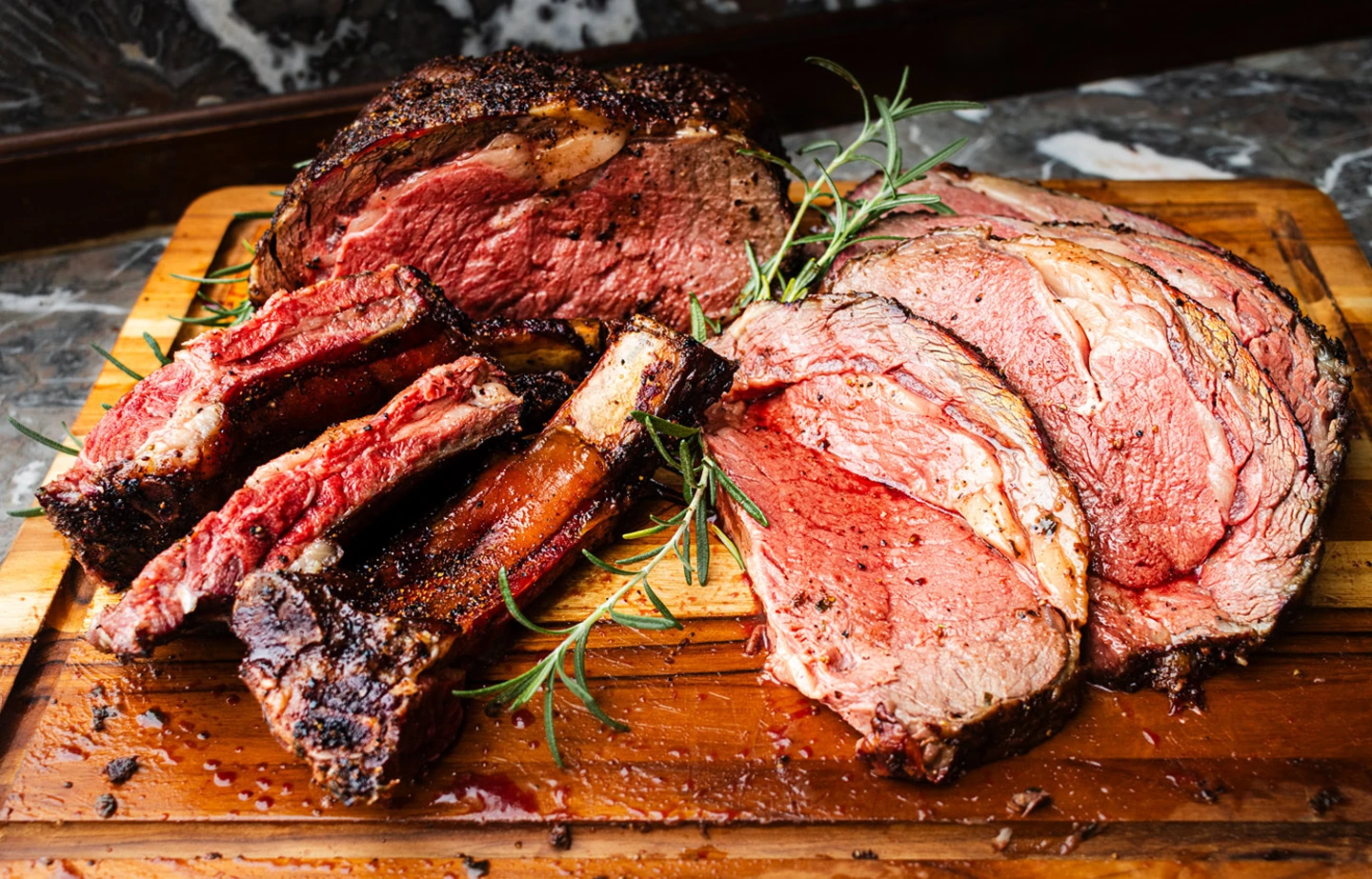
Prime rib is a holiday centerpiece for a reason, but it also makes people nervous. This recipe is built to remove that stress.
For best results, dry brine a bone-in prime rib overnight, season it with a simple pepper-forward rub, coat it in herb butter, and smoke it using my gradual “climb method.”
The temperature increases in stages, allowing the roast to cook evenly from edge to center while still developing a deep crust.
Testing the perfect smoked prime rib recipe
Most traditional prime rib recipes start with a hot sear followed by a long roast at a lower temperature. I’ve found this approach doesn’t work as well when smoking, and you risk overcooking the ribeye cap before the center is ready.
I also tested the classic reverse-sear method. It improved internal doneness, but finishing at very high heat still caused uneven results on larger, bone-in roasts.
After multiple test cooks, I changed the approach entirely and landed on what I call the Climb Method. Instead of jumping between low heat and extreme heat, the smoker temperature increases gradually throughout the cook. This allows the roast to pick up smoke early, then slowly render fat and build a crust without spiking the internal temperature.
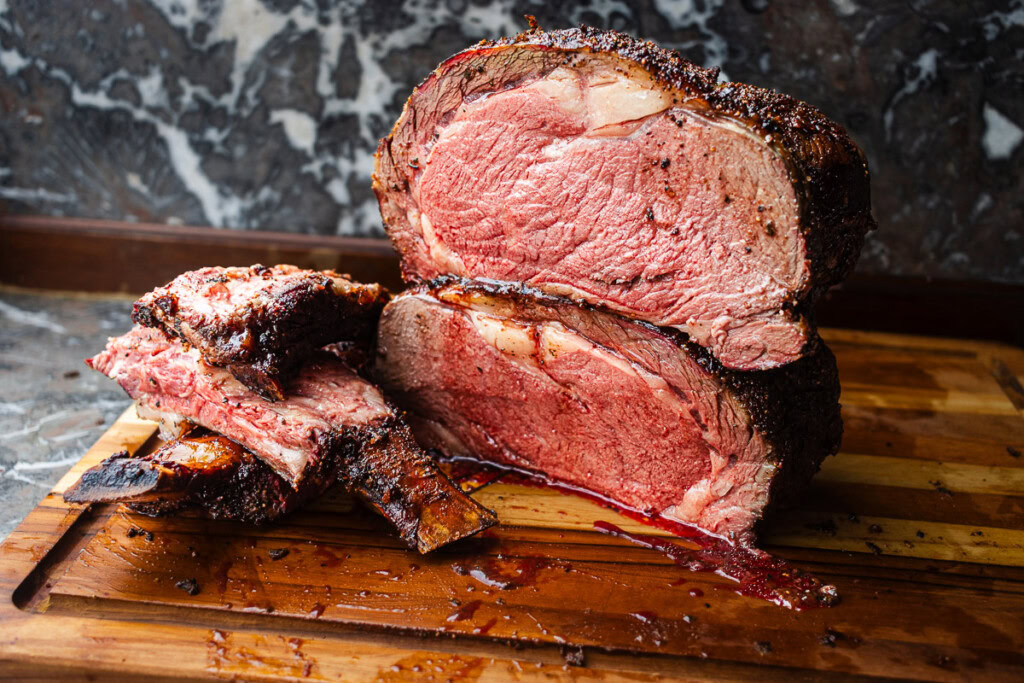
This method consistently produced a wall-to-wall medium-rare prime rib with a controlled crust and no scorched ribeye cap. For an expensive cut, this gave me the most repeatable results.
Ingredients you’ll need
- Bone-in rib roast – In this recipe, we used a 3-bone USDA Choice prime rib roast from Snake River Farms. It’s one of their more affordable prime rib options, although definitely still a treat.
- Kosher salt – is used to dry brine the roast overnight, removing excess moisture from the meat.
- Rub – it’s a simple combination of salt, cracked pepper, ground pepper, and garlic.
- Butter – we use room-temperature salted butter to make our compound butter for the prime rib.
- Fresh herbs – using minced fresh rosemary, parsley, and thyme in our simple compound butter will enhance the flavor and color of the roast.
Equipment you’ll need
- Filet or boning knife – a sharp and flexible knife is required to trim this roast. I used our 6-inch boning knife.
- Meat thermometer – I recommend a wireless probe thermometer for this recipe to track the temperature of the roast accurately. I used my new Meater Pro.
- Butcher’s twine – Butcher’s twine is used to tie the bones back on.
What is a prime rib roast?
Prime rib, also called a standing rib roast, comes from the rib section of the cow. It is a large cut that runs along the spine and includes up to seven ribs, though most butchers sell it in smaller portions.
Three- and four-bone roasts are the most common sizes you will find, and they strike a good balance between manageable size and even cooking.

Don’t be confused by the word “prime” in the name. Prime rib refers to the cut itself, not the USDA grading. You will commonly see Choice, Prime, and American Wagyu versions of this roast. Higher grades offer more marbling, but a well-marbled Choice roast can still produce excellent results.
When buying a prime rib, look for strong marbling throughout the meat and a well-developed ribeye cap, also known as the spinalis. That cap is where much of the flavor and tenderness comes from.
The ‘climb method’ for smoking prime rib
The Climb Method starts the roast low to establish an even internal temperature, then gradually increases the smoker temperature throughout the cook. Instead of jumping from low heat to extreme heat, the roast moves through controlled temperature stages.
I start at 225°F to allow the meat to absorb smoke. After the first hour, I increase the smoker temperature by 25°F every 30 minutes until the roast reaches an internal temperature of 125°F.
Beginning low builds flavor, while the gradual temperature increases render fat and develop the crust without shocking the meat. This approach works well on large, bone-in roasts where sudden heat spikes tend to overcook the ribeye cap.
I cap the smoker at 350°F. Higher temperatures add risk without improving the final result. Using this method, most three-bone roasts finish in about 3–4 hours, depending on size.
If you prefer a more hands-off approach, you can use a traditional reverse sear. Smoke at 225°F until the internal temperature reaches approximately 115°F, then rest the roast. Finish with a quick high-heat sear until you reach 130°F.
How to make smoked prime rib step by step
1. Trim
Trim off any hanging or hard pieces of fat. The top of your roast might have some lifted membrane, but you can peel that right off.

This next step is optional but makes for a great presentation. French the bones by cutting in between them, down about two inches. Trim off all of the meat around the bone tips.
Cut the rack of bones off the roast by slowly pulling the bones back and cutting towards them. Make sure to do this part slowly so that you keep your roast manageable. I like to do this now as it makes it easier to carve at the end, but I’ll tie the bones back on to help protect the meat as it cooks.

There’s also a pretty thick, hard piece of fat attached to the roast and under the tips of the bones. You can cut it out for a leaner look or keep the fat on if you prefer.
2. Season the roast
Season the roast and the bones with Kosher salt to prepare it for a dry brine. This will help pull the moisture out of the meat so that you can achieve a better sear at the end.

3. Tie the roast
Tie the bones back onto the roast by using butcher’s twine. I use about 2 feet of butcher’s twine per strand to have enough to work with, then I cut the excess off.

I tie a butcher’s knot between each bone to keep the roast together. You can tie a double knot in place of a butcher’s knot.

4. Overnight brine
Place the roast in the refrigerator, uncovered, overnight to dry brine.
5. Fire up the smoker
The next day, preheat your smoker to 225°F, using hickory, oak, cherry pellets, or a pellet blend. For this Traeger prime rib, I used my Timberline XL although, any pellet grill or smoker will work for this recipe.
6. Season
Make the homemade rub by combining cracked pepper, ground pepper, garlic, and salt.
Season the roast generously. Because of the dry brine, you can use less salt than you normally would for steaks and roasts.

7. Compound butter
Make the compound butter by adding minced rosemary, thyme, parsley, and the remaining rub to two sticks of room-temperature salted butter and mixing until combined.

Cover the roast completely with the butter, and don’t be shy!
8. Inserting the thermometer
Place the roast on a wire rack on the baking sheet and insert your probe thermometer into the very center of the roast.
A good rib roast will set you back $150 all the way up to $500, so I don’t like to mess around with cooking time estimates.
I used a Meater Pro Wireless Thermometer which tracks the internal temperature at 5 different points to give you a more accurate reading,to track the temp accurately throughout the cooking process.

9. Smoke using the “The Climb Method”
Place the roast on the smoker and smoke at 225°F for one hour. This will create a base temperature for the roast.

Then, after the first hour, increase the temperature to 25°F every 30 minutes until the roast reaches 125°F internally.
So it will go from: 225°F to 250°F to 275°F, to 300°F to 325°F and then 350°F. A 3-bone roast will likely reach 125°F right when you turn the smoker to 350°F.

If using a larger roast, make sure to never go past 350°F to protect the ribeye cap from overcooking.

Just keep it at 350°F until the internal temperature is 125°F for a medium rare closer to the rare-er side or 130°F for a classic pink medium rare.
10. Rest and carve
Let the roast rest for at least 15 minutes until carving.

Remove the twine and carve into ½ inch slices against the grain. Cut the rack of ribs into individual ribs and save them for your favorite people or keep them for yourself as an ultimate pitmaster snack.

Essential sides for prime rib
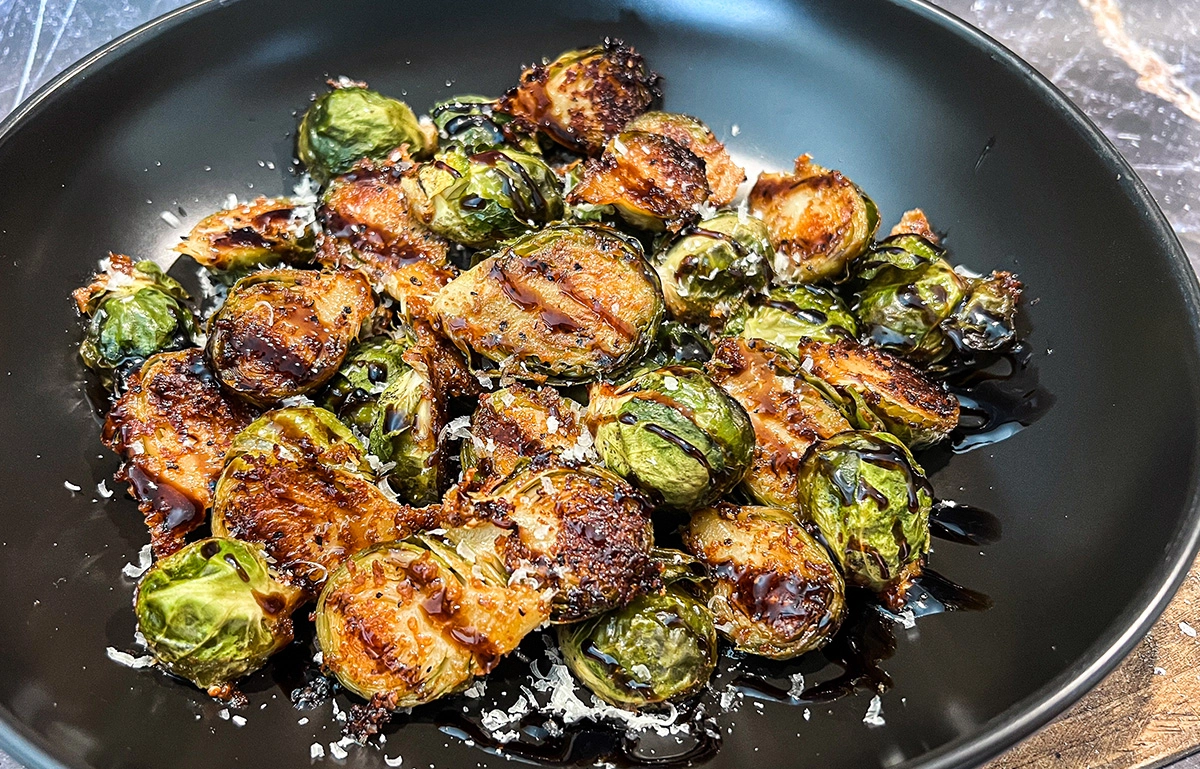
I like to serve it with extra compound butter and our easy horseradish sauce, which is creamy, tangy, and has a little kick that makes it perfect for pairing with rich prime rib.



Smoked Prime Rib Recipe
Follow this recipe, and you’ll have a perfectly smoked prime rib on your pellet grill for your next holiday gathering. This recipe delivers a perfectly juicy, medium-rare roast with a rich crust that will wow your guests. Don’t forget to leave a 5-star rating if you give this recipe a try and share any questions about prime rib in the comments below.
Tips for success
- Use a thermometer the entire cook – Prime rib is too expensive to guess. Cook to internal temperature, not time.
- Bone-in roasts are more forgiving – The bones help protect the meat during the higher temperature stages and reduce the risk of overcooking the ribeye cap.
- Dry brine for better crust – Salting the roast ahead of time improves surface dryness and helps the rub and butter adhere better during smoking.
- Plan your sides around the rest – Prime rib can rest for 20–30 minutes after cooking. Use that window to finish vegetables and sauces.
- Slice after resting – Letting the roast rest before carving keeps juices in the meat instead of on the cutting board.

Perfect Smoked Prime Rib Roast

Ingredients
- 1 bone-in prime rib roast - 3 bones, about 10–12 lb, see note 1
- ¼ cup Kosher salt - for dry brine
Rub
- 1 tbsp cracked black pepper
- 1 tbsp ground pepper
- 1 tbsp garlic powder
- 1 tsp Kosher salt
Compound butter
- 2 sticks butter - room temperature
- 2 sprigs rosemary - minced
- 2 sprigs thyme - minced
- 2 sprigs parsley - minced
- remaining rub seasoning
Instructions
- Trim off any loose or hard pieces of fat from the roast. If there is a thin membrane lifting on the surface, peel or trim it away.
- If you want a cleaner presentation, trim the meat away from the tips of the bones by cutting down between each bone about 2 inches, then removing the meat around the bone ends. This step is optional.
- Carefully cut the rack of bones away from the roast, keeping it in one piece. Pull the bones back slightly as you cut toward them so the roast stays manageable. This makes carving easier later and helps the roast cook more evenly, but it is optional. Tie the bones back onto the roast with butcher’s twine, using one knot between each bone to hold everything in place.
- Season the roast and bones evenly with kosher salt. Place uncovered in the refrigerator and dry brine for at least 6 hours, preferably overnight.
- Preheat your pellet grill or smoker to 225°F. Use oak, hickory, cherry, or a mild pellet blend.
- Combine all rub ingredients, reserving about 1 tablespoon for the compound butter. Season the roast evenly, using less salt than usual since the meat has already been dry brined.
- Mix the softened butter with the herbs and remaining rub until fully combined. Coat the roast evenly on all sides.
- Insert a probe thermometer into the center of the roast, avoiding bone. Place the roast on the smoker and cook at 225°F for 1 hour. Then increase the smoker temperature by 25°F every 30 minutes until the internal temperature reaches 125°F. Do not exceed 350°F.
- Remove the roast from the smoker and rest for at least 15 minutes. Remove the twine, separate the bones, and slice into ½-inch slices against the grain.
Notes


Nutrition information is automatically calculated and should be used as an approximation only. If you’re worried you could always add a side of kale.

About Your Pitmaster
Rosalie Bradford, is a recipe developer and grilling expert specializing in bold, approachable barbecue. She has created recipes for Grill Masters Club and Snake River Farms and partners with Traeger to share expert grilling techniques.
Rosalie also runs barbecue classes at Heights Meat Market in Tampa, helping home cooks master restaurant-quality results. Whether she’s crafting recipes or teaching techniques, she’s passionate about making great barbecue accessible to all.
I find the reverse sear technique superior to the high heat blast at the beginning,no grey meat on the edge`s.Take that sucker out to rest, crank the smoker as hot as possible and sear it.No grey edge,works for me IMO.
This Roast looks heavenly. I can smell the Herbs and Garlic already. I’ll do this but I’ll have to do it on a Rotisserie in my Big Green Egg because I do not own a pellet smoker.
Cheers Warren, Can’t go wrong with a Rotisserie!
Can I do this on a weber grill?
It’s doable – we have a guide on smoking on a gas grill with a few options.
Hello,
The ingredients shown here state 3 tbsp “prime rib rub” for a 10.5 lb. prime rib, but when you click the link it takes you to “The Best Prime Rib Rub”. That recipe states the ingredients are for a 4-5 lb. prime rib. I’m going to smoke an 8 lb. prime rib this Christmas Eve and just want to know do I increase the recipe of “The Best Prime Rib Rub” to accommodate the 8 lbs. or just use only 3 tbsp of the mixed rub and store the rest?
Thank You,
Hey Bernie,
Thanks for pointing that out. The prime rib rub should make more than enough for any sized prime rib. I’ve updated the rub recipe description so it’s less confusing.
How to select – You forgot to mention chuck end vs loin end! A whole packer will have 7 ribs which the butcher will cut down to 3-4 ribs usually. One is the chuck end and one is the loin end. The chuck end will be a bit more tender, a bit more marbled, and it will have significantly more of the spinalis muscle (ribeye cap). So choose the chuck end!!! Leave the loin end for the other guy. Merry Christmas
I downloaded your smoking time and temp chart which indicates to smoke it for 15 minutes per pound. At that rate it would take a 6 lb prime rib two hours to smoke but your recipe for Perfect Smoked Prime Rib states it would take five hours, not two. Most websites are estimating 30-45 minutes per pound. I plan on smoking one for Christmas and am trying to determine what time I need to start it. Do you have a more accurate estimate for pounds per minute for smoking?
It depends on what temperature you are cooking at and the weight of the prime rib.
I usually dry brine for a day or two or three. Then out of the fridge, remove the bone for separate cooking, and completely cover the meat with a heavy coat of rub. (no additional salt). Then, I spray coconut oil all over the rub, which helps hold the rub in place, and prevents the ‘wetness’ of spritzing. Any time you put a liquid on meat in a cooker, that liquid has to evaporate, which is a cooling action. Using spray oil does not do that, and it helps build bark as well as reducing evaporation from the meat itself.
I have a small (5lb) smoked prime rib, what’s the best way to prepare/cook/reheat it?
Follow this recipe and make sure you cook to temperature and not time and you will be golden. The cook time will be shorter so factor that into your plan.
I don’t have a pellet grill so I tried this recipe in my oven. Didn’t have any smoke flavor but it was still the best Prime Rib I have ever made. Thank you for this recipe.
I’ve been cooking prime rib for my restaurant for the past 4 years and most of my life. My father taught me as part of his BBQ business the art of smoking prime rib. That being said, this receipt is hands down the best flavor I’ve had and will add it to my next prime rib adventure. Thank you for sharing…
Love to hear it John! I bet your dads Prime Rib was pretty darn good too.
Worked perfectly and taste was amazing
I have a Camp Chef woodwind pro pellet grill and I want to cook a boneless prime rib roast approximately 6 pounds to 8 pounds. Will this same graduated temperature method work for that application as well? If not, what are your recommendations?
Hi David, yes, the Climb Method will still work on a boneless prime rib, but you’ll want to make a few adjustments.
A boneless roast cooks faster and is less forgiving than bone-in, so I recommend starting a little lower and being more conservative with the temperature increases. Smoke at 225°F for the first hour, then increase the grill temperature by 25°F every 30 minutes, but cap it at 300–325°F instead of 350°F.
For a 6–8 lb boneless roast, expect it to reach medium-rare sooner than a bone-in version.
I haven’t tried this yet on a wood smoker.
I’m going to do the best I can but controlling the heat is going to be hard.
I’m in Pa. too and its winter so outside is a consideration for me.
I may be lucky this year… forecast is 50 degrees but rain and windy.
I’ll be under a tarp though.
Any suggestions I’d appreciate, but just going to wing it as I go.
Absolute garbage cooking approach, I seasoned perfectly and eventually after slicing and finishing in the oven, we ate. Just set a temp on the smoker and let it cook. After achieving 130 internal temp, let rest for 30 minutes and cooked the sides…sliced the end piece a it was purple, middle completely raw…BS
Hi Jeff, sorry to hear your prime rib didn’t turn out how you were hoping. Have you checked your thermometers accuracy recently? 130-135 is the universal temperature for medium rare, that’s not something we came up with, so if you say it was 130 there’s no way it could be “completely raw”. Also, did you check the temp in the middle, away from any bones?
I tried to shred it but got watermelon all over it.
My beagle loves to play with it.
My vulture loves to play with it.
My gentoo penguin loves to play with it.