
Hot And Fast Pulled Pork: Smoke a Pork Butt in Half the Time


SmokedBBQSource is supported by its readers. We may earn an affiliate commission at no extra cost to you if you buy through a link on this page. Learn more.
Low and slow might be the gold standard for smoking a pork butt, but sometimes you just don’t have 12+ hours to kill. That’s where hot and fast pulled pork comes in.
By smoking at 300°F instead of the traditional 225°F, you can cut your cook time nearly in half and you’ll still get that smoky bark, and tender shredded pulled pork.
Why smoke pulled pork hot and fast?
- Cuts cook time nearly in half – Go from 12+ hours to around 5–6 without losing tenderness.
- Still delivers bark and smoke ring – Higher temps don’t mean sacrificing crust or color.
- Perfect for last-minute cooks – Great for spontaneous BBQs, game days, or weeknight cravings.
- No special equipment needed – Works best on charcoal smokers but can easily be done on your pellet grill.
Hot and fast pulled pork
This recipe produces delicious, smoky, and tender pulled pork in around six hours, making it the perfect recipe for last-minute weekend cooks, backyard parties, or any time you want authentic smoked pulled pork without the overnight commitment.
For hot and fast cooks, I prefer to use a charcoal smoker like my Oklahoma Joe’s Bronco or Masterbuilt XT, which is what I used for this pork butt.
You can use a pellet grill if that’s all you’ve got, but I find that at higher temperatures pellet grills don’t make enough smoke to get the smoky flavor I want.

Ingredients you’ll need
- Pork butt/shoulder – I typically shoot for an 8-10-lb bone-in pork butt or shoulder for this recipe. Boneless will cook even faster.
- Seasonings – I like to keep the seasoning pretty simple when I’m cooking hot and fast. Many barbecue rubs, especially pork rubs, include ingredients like sugar that can burn at higher temperatures, so I stick to a blend of salt, pepper, and garlic during the initial part of the cook and then add a bit of sugar and smoked paprika during the wrap to add sweetness without risk of burning.
- Butter – I’m a firm believer that butter makes everything better, so I always like to add a few pats of butter when I wrap my pulled pork.

Equipment you’ll need
- Smoker or charcoal grill – I used my Masterbuilt Gravity XT charcoal grill for this recipe, but you can use any wood smoker or charcoal grill as long as it can maintain a steady temperature of 325°F for at least 6 hours.
- Wood and/or charcoal – I use a combination of charcoal and wood chunks for the fuel. I used oak wood chunks for this smoke, but you can use any wood you prefer, depending on the flavor you want and what you have available in your area.
- Aluminum pan – when I’m cooking hot and fast, I prefer to keep the pork butt in an aluminum pan throughout the entire cook. Smoking at high temperatures can cause flare-ups as the fat cap renders, plus the pan will catch all of the drippings that will act as your braising liquid during the wrapped portion of the cooking process.
- Meat thermometer – you can use any type of meat thermometer for this recipe, but I prefer an instant-read probe thermometer. A wireless or Bluetooth thermometer will work as well.
- Aluminum foil – you will need a bit of aluminum foil to cover the pan during the braising process.
Hot and Fast vs. Low and Slow
Now, I love low-and-slow pulled pork. I’ve cooked it more times than I can count in both competition and backyard settings, but it takes time and effort.
Not everyone has 12-16 hours to wait for pulled pork to be done. After lots of experimentation I’ve settled on this hot and fast method which cuts the smoking time by half while still producing delicious pulled pork with plenty of smoky flavor and a rich black bark.
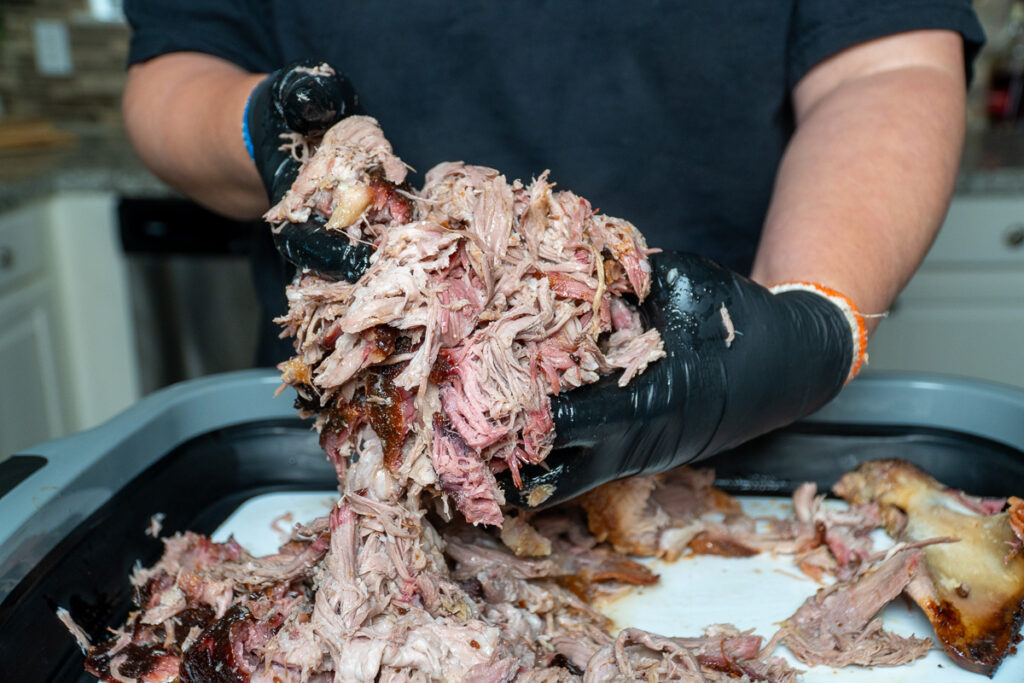
The main difference between hot and fast and low and slow BBQ is the smoke flavor you can infuse into the meat. When I’m doing a hot and fast pork butt, I prefer to use a wood smoker (like an offset or barrel) or a charcoal smoker, like a Masterbuilt Gravity-fed Grill)
Pellet grills are fantastic for low and slow cooking because they give the pellets time to infuse plenty of smoke flavor into the meat, but I find that cooking hot and fast on a pellet grill can reduce the amount of smoke flavor you can get into the meat.
Bone-in or boneless pork?
I prefer to use bone-in pork butt as I find that the bone adds amazing flavor.
If you want to use a boneless pork butt, then you can, but keep in mind that the pork will cook faster, so you will need to keep an eye on your temperatures and adjust cooking times accordingly.
Should I cook the pork in a pan or directly on the grates?
When I’m cooking hot and fast, I also like to cook my pork but in an aluminum pan during the entire cook. Pork butts contain a lot of fat, and as that fat renders, it can drip down into the fire and cause flare-ups
A great way to prevent this is to cook the pork in a pan.
Those drippings will also provide the moisture you need to braise the pork at the end.

If you prefer to place the pork butt directly on the grates, then I recommend adding a bit of apple juice or beef broth to the pan when you wrap the pork.
How to make hot and fast pulled pork step-by-step instructions
1. Season the pork butt
One thing to keep in mind when cooking hot and fast is that you need to be careful what seasonings you use. Many BBQ rubs, especially ones made for pork, contain ingredients like sugar that can burn at higher temperatures. These rubs are great for cooking low and slow, but when you are cooking at higher temperatures, it’s best to keep it simple.
I use a combination of Kosher salt, coarse black pepper, and a bit of granulated garlic to whip up an easy SPG-style rub.

Sprinkle this mixture all over your pork butt, and it will add flavor, build a beautiful bark, and prevent the outside of your pork butt from burning.
This simple Texas-style pulled pork seasoning is seriously underrated. If you like your pork a little sweet, you can always serve it with your favorite barbecue sauce.

We’ll add some sugar later in the wrap, so don’t worry. You’ll still get that porky sweetness, you know, and love it!

Once your pork is seasoned, place it in an aluminum tray, fat cap down, and it’s ready to hit the smoker!
2. Smoke your pork butt
Preheat your smoker to 325°F.
I used my Masterbuilt Gravity XT. It’s a gravity-fed charcoal grill with an integrated fan that keeps the temperature steady throughout the cook.

You can use wood, charcoal, or a combination of the two for fuel. I used classic charcoal briquettes and a few chunks of oak wood for added flavor.
Once your smoker is preheated, place the pan on the grates and let it smoke. The first part of the cook will take around three hours.
3. Wrap and braise the pork
After about three hours, your pork butt should be around 170°F internally. You can check the internal temperature with a meat thermometer. I love to use my Thermoworks Thermapen to check temperature when I’m smoking a pork butt.
At this point, your pork should have a nice, firm bark on the outside. This is key because you want to ensure the bark can stand up to the braising portion of the cook. A good test to see if your bark is set is if you poke the butt with your finger, the outside should feel firm.
Remove the pan from the smoker and sprinkle on the brown sugar and smoked paprika. This will add a touch of sweetness and smoky flavor to your pork. You can also use your favorite BBQ rub; grab something with a bit of sugar in the mix if you want the typical sweet pulled pork taste.

Top the pork with pats of butter, then wrap the entire pan in aluminum foil.
Once the pork is wrapped, you can place the pan back on the smoker for another 1½ to 2 hours or until the internal temperature reaches 200°F in the thickest part.
4. Let it rest
After your pork reaches 200°F, it should be done and ready for removal from the smoker.
You want to let the pork rest for around 30 minutes. This will let the juices redistribute throughout the meat and make the shredding process more manageable, and you won’t burn your hands.

Once the pork has rested at room temperature for about 30 minutes, you can pull out the bone.

If the bone comes out completely clean, you’ll know you did it right! Then you can shred it and serve it immediately.

Got leftovers? No worries! We have tons of great Leftover Pulled Pork recipes for you to try!
What to serve with pulled pork



Check out more of our hot and fast recipes
Hot and Fast Pulled Pork Recipe
Looking to enjoy tender, smoky pulled pork without spending 16 hours by the smoker? This hot and fast pulled pork recipe has you covered. With just six hours on the smoker, you’ll get that juicy BBQ flavor without the wait.
Give this recipe a try, and if you love it, please leave a 5-star rating and drop any of your hot and fast questions in the comments below.

Hot and Fast Pulled Pork

Ingredients
- 8 lb bone-in pork butt/shoulder
- 2 tbsp course black pepper
- 2 tbsp Kosher salt
- ½ tbsp granulated garlic
- 1 stick salted butter - cut into pats
- 2 tbsp brown sugar
- 1 tbsp smoked paprika
Instructions
- Preheat the smoker to 325°F.
- Combine the coarse black pepper, granulated garlic, and Kosher salt in a small bowl.
- Season the pork butt on all sides with the seasoning blend.
- Transfer the seasoned pork butt into an aluminum pan with the fat cap facing down.
- Place the pan on the smoker and let smoke for 3 hours, or until the internal temperature reaches 170°F internal.
- Remove the pan from the smoker and sprinkle the brown sugar and smoked paprika over the top, then place the pats of butter all over the top of the pork.
- Wrap the pan in aluminum foil and place back on the smoker for another 2 to 2-½ hours, or until the internal temperature reaches between 200°F-203°F.
- Let the pork rest at room temperature for 30 minutes, then shred and serve.
Notes
Nutrition
Nutrition information is automatically calculated and should be used as an approximation only. If you’re worried you could always add a side of kale.

About Your Pitmaster
Breanna Stark is a Texas-based competitive pitmaster and barbecue educator. She grew up cooking over charcoal and open flames while camping with her father, sparking a lifelong love of barbecue. Since 2014, she has competed in over 100 IBCA, KCBS, and CBA events, earning recognition for her award-winning chicken and Texas-style barbecue.
Passionate about recipe testing and development to create approachable dishes that help backyard cooks level up their barbecue skills. Breanna shares her expertise with over three million followers on social media.
You need to edit this into the description which is MISSING the # of hours:
3. Wrap and braise the pork
After about__________ about hours, your pork butt should be around 170°F internally. You can check the internal temperature with a meat thermometer. I love to use my Thermoworks Thermapen to check temperature when I’m smoking a pork butt.
Thanks David, we fixed the typo. It also says the number of hours in the recipe box with the ingredients and steps.
Will it work in a pellet smoker? Or will that be too hot to generate smoke?
It’ll still work you just miss out on a little bit of smoke flavor. You should still be able to get good bark, smoke ring and perfectly moist pull apart pork though, so it’s a good trade off if you’re short on time.
This turned out great. I had some temperature issues but I have a charcoal barrel grill and have to manage the coals and vents with my best guesses. I’m still new to smoking and learning each time I fire it up. I used less butter and probably less brown sugar. My butt was only 7.6 lbs, with my temp issue, it only added about an hour, I foil wrapped when my temp was 158 and two hours on the braise still got me to the recipe destination. Good stuff.
Thanks Damon, using charcoal is definitely a bit more work but it’s going to give a better result with the host and fast method for sure!
Do you have any recommendations for trimming or scoring the fat cap for this method?
I didn’t trim or score the roast I had. I just followed the instructions they gave here. I admit to not doing the seasoning measurements they suggested, but mine worked out great.
HI Joe, I haven’t done this yet but I am going to try to smoke it heavy for an hour at 225 and then continue on with the fast cook. On my pellet smoker it should add some smoke to the butt. That will get me to about 6 hours I am hoping.
Upon checking my recipe book, I do have and have tried this recipe! It was 5 star great but a little more smoke can’t hurt from my pellet grill. lol
Hey Jim, thanks for the 5 star rating! I 100% agree with you, on a normal pellet grill I would recommend running at 225 (or even lower) for an hour or two before cranking. I’m usually using the Woodwind Pro these days, which means I can use the smoke box to get a lot more smoke flavor even at hotter temps so that is quite helpful for hot and fast.
An 8lb pork shoulder is just too much food for my wife and I. I bought a 5 lb one. How should I adjust the cooking time?
Hey Rick, I understand the struggle. I’ve got mostly little kids and they often don’t want to eat BBQ so it can be a struggle to get through large cuts. I wouldn’t change much about this recipe, but when you get to the braise step, you could start checking around the 2 hour mark, but you’re still mainly aiming for that finished temp around 200-205f. Be sure to also check out our list of leftover pulled pork recipes.
So I followed this recipe with a 6 lb boneless pork shoulder. 3 hrs for the initial cook and then about 2 hrs for the braise. It was so damn good. Juicy and tender. This is now my go-to pulled pork recipe.
When shredding – do you include the Fat Cap or remove the Fat Cap after it has cooled? Also what is the best way to reheat.
Thanks Jim
It’s personal preference. When I made this last weekend I left the fat cap on while shredding as it had rendered really nicely. If it’s more on the soggy fat side I would leave it off.
To reheat you can freeze in zip lock bags with a little of the cooking liquid and then heat in water, or I’ll often do in a foil pan with some bbq sauce mixed through for 30 mins on the smoker or oven at 250.
Would you shred it in the used pan? Or new pan?
Shredding it in the used pan is fine. It depends if you want to add all of the cooking juices. Sometimes I like to shred in a different pan, and then pour over 1/2 of the cooking juices.
Giving it a shot!