
Smoked Salmon on a Pellet Grill


SmokedBBQSource is supported by its readers. We may earn an affiliate commission at no extra cost to you if you buy through a link on this page. Learn more.
This is the best way to smoke a whole salmon fillet on a pellet grill. You get a lightly smoky, tender fillet with a silky texture and clean flakes, without drying it out.
After testing both hot and fast and low-temperature methods, this approach hits the right balance. A quick dry brine seasons the salmon and improves the texture, the low, steady smoke adds depth, and a simple glaze brings everything together.
Why this pellet grill salmon method works
Smoking a whole salmon fillet makes for an impressive centerpiece and is perfect for feeding a crowd. It’s just as good served warm for dinner as it is cooled and used on bagels.
While hot smoking salmon works well for a quick dinner, it doesn’t give you that true smoked salmon flavor. This method takes a little longer, but it produces a much better result.
- Low temperature for more smoke – Pellet grills produce the most smoke at lower temperatures, so this method takes advantage of their design by smoking at 180°F for most of the cook. This allows the salmon to absorb more smoke while cooking gently and staying moist. At higher heat, it cooks more like baked salmon with much less smoke flavor.
- Finishing hotter improves texture – Increasing the heat toward the end helps set the surface and gives the salmon just enough structure while keeping the inside soft and tender.
- The dry brine improves flavor and texture – It seasons the salmon more evenly and helps the surface dry slightly, which allows the smoke to stick better during cooking.
- The glaze brings everything together – Added at the end, it creates a lightly sweet, glossy finish without burning or overpowering the fish.
- Easy to customize the flavor – This method works well with different flavor profiles. Try a hot honey glaze, swap in orange or lime instead of lemon, or adjust the sweetness and spice to suit your taste.

Ingredients for pellet grill salmon
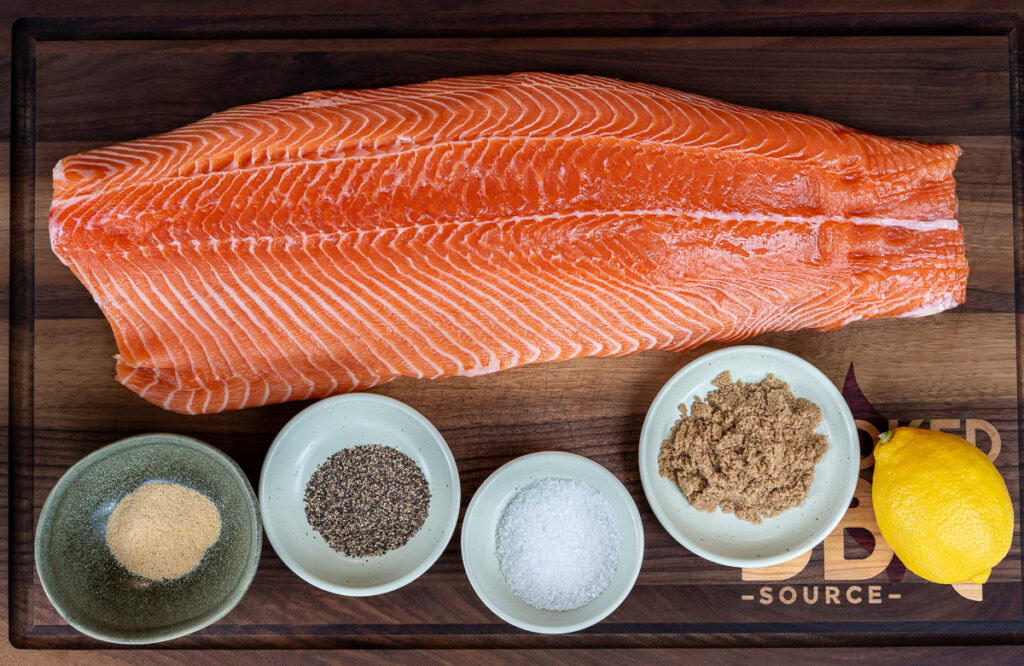
- Whole salmon fillet – Use a whole fillet (about 2½ to 3 lb). Skin on is best as it protects the salmon from the heat and makes it easier to handle, but skinless will still work.
- Brown sugar – Used in both the dry brine and glaze. It balances the salt and helps the surface caramelize during cooking.
- Kosher salt – Used for the dry brine to season the salmon and improve texture. Stick to kosher salt, table salt will be too strong.
- Black pepper – Adds a mild bite and some texture to the finished salmon.
- Garlic powder
- Lemon – You’ll use the zest in the dry brine and the juice in the glaze. Adds a light citrus note that balances the richness.
- Unsalted butter – Forms the base of the glaze and helps it coat the salmon evenly.
- Maple syrup (or honey) – Adds sweetness and gives the salmon that glossy finish.
- Soy sauce – Adds a small amount of salt and depth to the glaze.
Dry Brine vs Cure: What’s the Difference?
This recipe uses a dry brine, not a full cure.
A cure uses more salt over a longer time (12 to 48 hours), pulling out more moisture and giving the salmon a firmer, almost silky texture. A dry brine is shorter, usually 1 to 4 hours, and lightly seasons the fish while helping it retain moisture.
If you cured the salmon instead, you’d end up with a much firmer, saltier result that’s closer to gravlax than this style of smoked salmon.
Equipment you’ll need
- Pellet smoker – I used my Camp Chef Woodwind Pro, but this recipe works on any grill or smoker that can cook with indirect heat and maintain steady low temperatures. Pellet grills are ideal because you can dial in the temperature precisely.
- Pellets – I suggest using hickory, oak, apple, or cherry pellets. I used the Kirkland Competition Blend.
- Sheet pan and rack – To allow air flow around the salmon while it’s brined in the fridge.
How to make smoked salmon on a pellet grill
1. Trim and check for bones
Trim off the thin tail end of the salmon, along with any uneven edges that are much thinner than the rest of the fillet. These pieces will overcook before the thicker center is done, so removing them helps the salmon cook evenly.

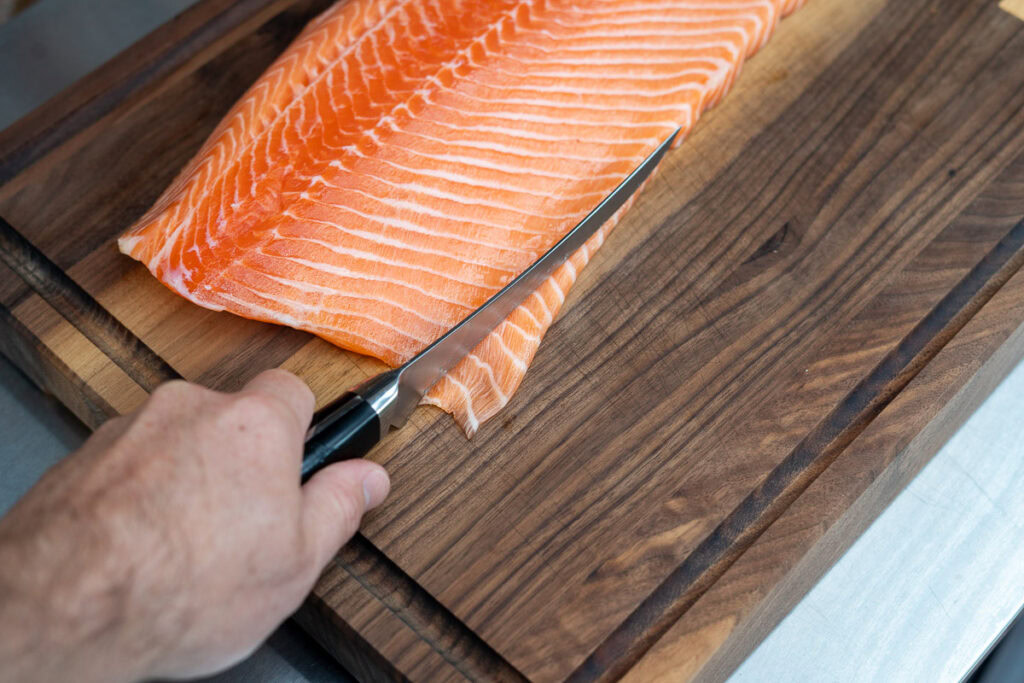
You can save the trimmed pieces and cook them separately, they’re great pan-fried or used for a quick salmon snack.
2. Dry brine the salmon
In a small bowl, mix together the brown sugar, kosher salt, black pepper, garlic powder, and lemon zest.
Sprinkle the mixture evenly over the salmon, making sure to cover the entire surface.
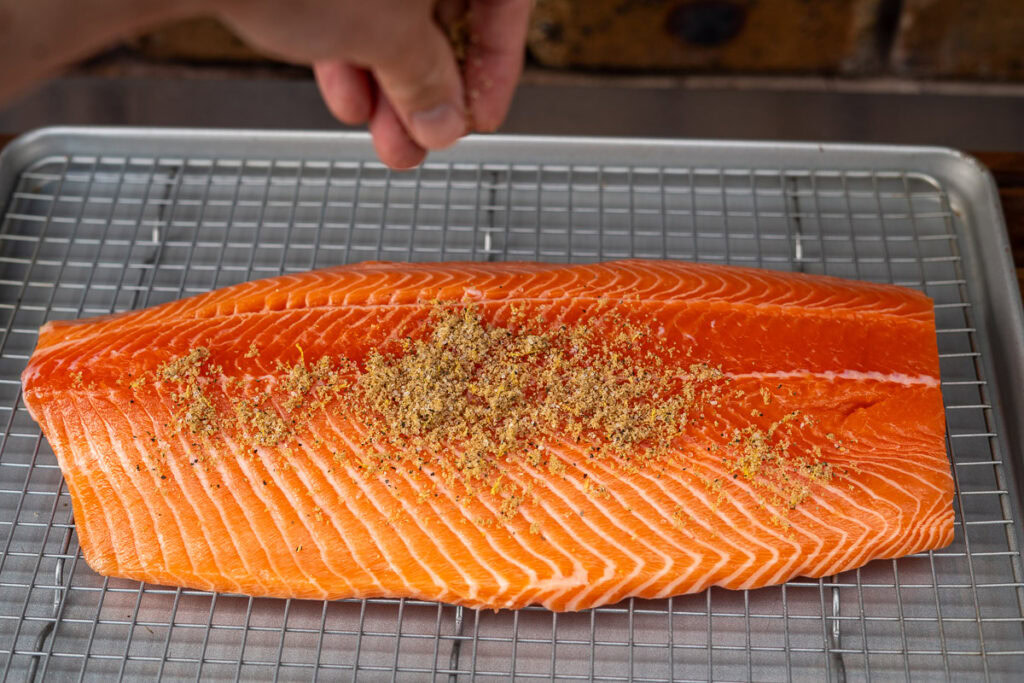
Place the salmon on a wire rack set over a tray and refrigerate uncovered for at least 1 hour, or up to 4 hours. You can do overnight but it does start to change the texture of the salmon.

The salt and sugar draw out a little moisture, then pull it back into the fish, helping season it more evenly and improve the texture before smoking.
After the dry brine, the surface of the salmon will look slightly tacky. This is called a pellicle, a thin, sticky layer that forms as the surface dries and helps with smoke adhesion and improves color and texture.

3. Preheat the pellet grill
Preheat your pellet grill to 180°F.
This lower temperature is key for building smoke flavor without overcooking the salmon. Pellet grills work especially well here since they can hold a steady temperature with very little effort.
Use a mild smoke wood like apple, alder, or maple so the smoke doesn’t overpower the salmon. Stronger woods like hickory can be used, but go lighter as they can dominate the flavor.
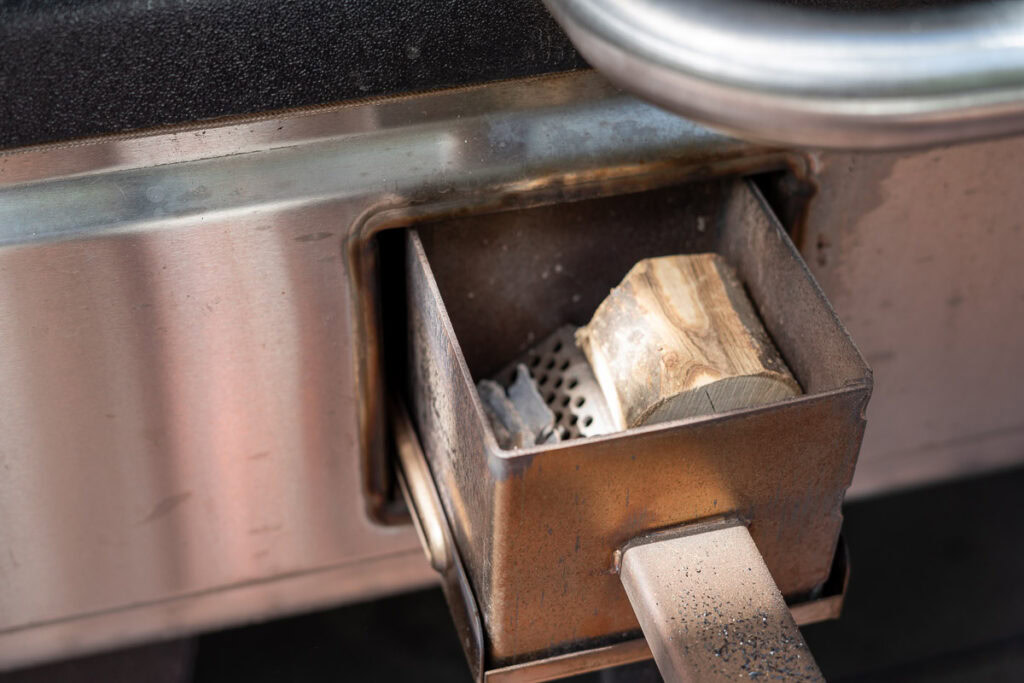
One reason I like using the Woodwind is that you can add extra chunks of smoke wood that smolder and produce extra smoke to complement the wood pellets.
4. Smoke the salmon
Place the salmon on the grill skin side down with the thin end pointing towards to hottest part of your grill. On most pellet grills this will be the side closest to the pellet hopper. If you’re not sure just rotate the salmon once or twice during the cook.
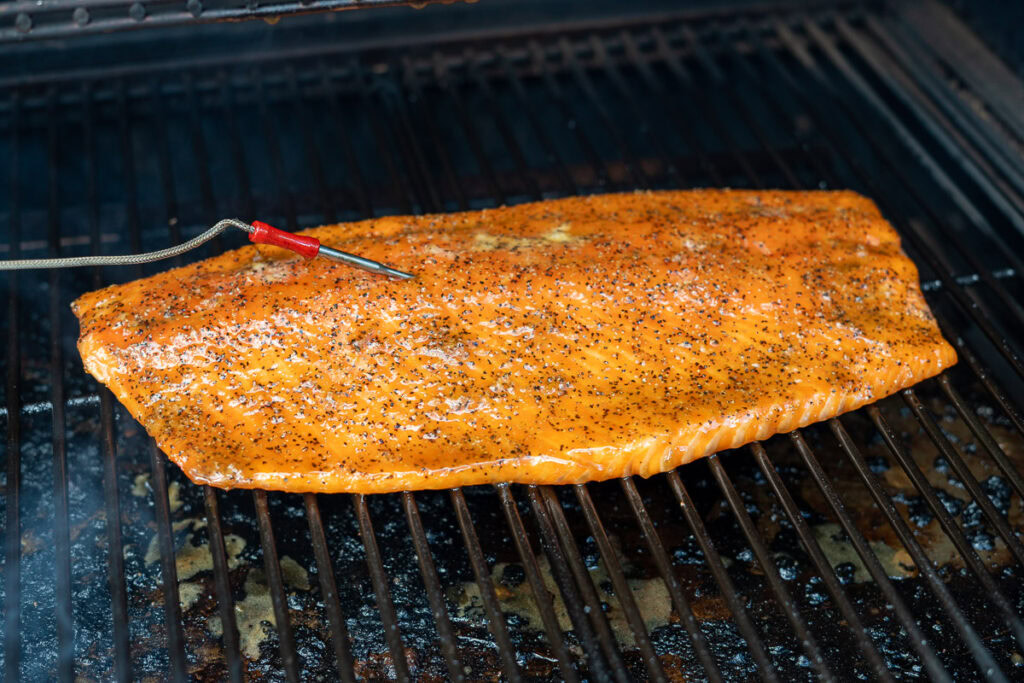
Smoke at 180°F for 35 to 45 minutes, or until the internal temperature reaches about 100 to 110°F in the thickest part.
This low temperature allows the salmon to absorb smoke while cooking gently, helping it stay moist and tender.
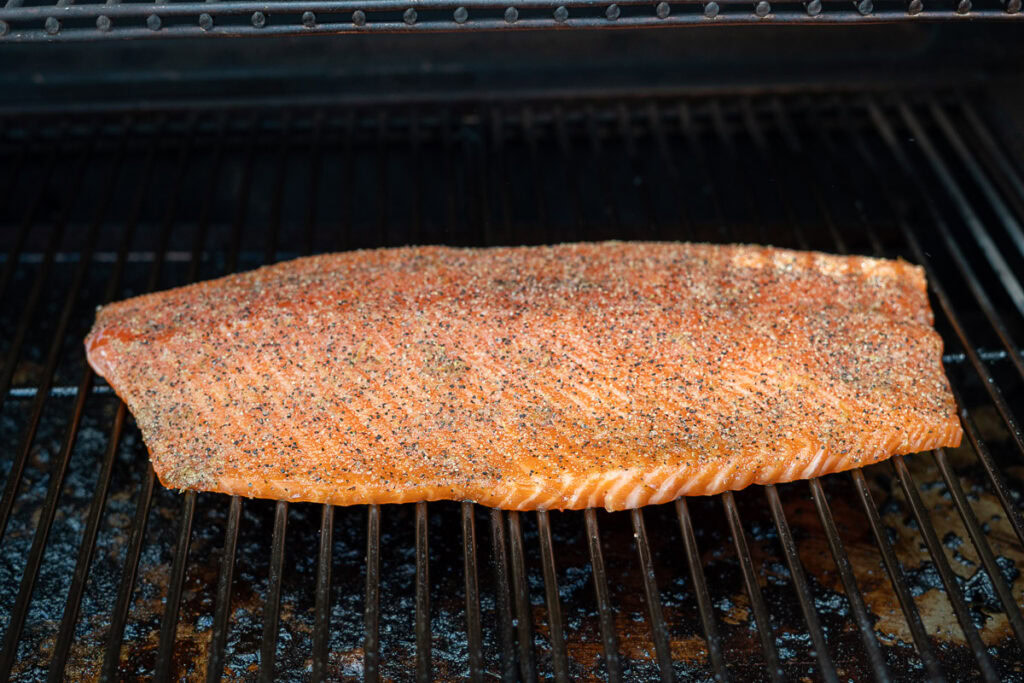
I recommend inserting a leave-in probe into the thickest part of the salmon, as it can be quite easy to overshoot the temperature even on a whole filet.
While the salmon is smoking you can go on to the next step and make the glaze.

After around 45 minutes, the salmon should have taken on a deeper color and the surface will look slightly tacky rather than wet and you’re ready to apply the glaze.
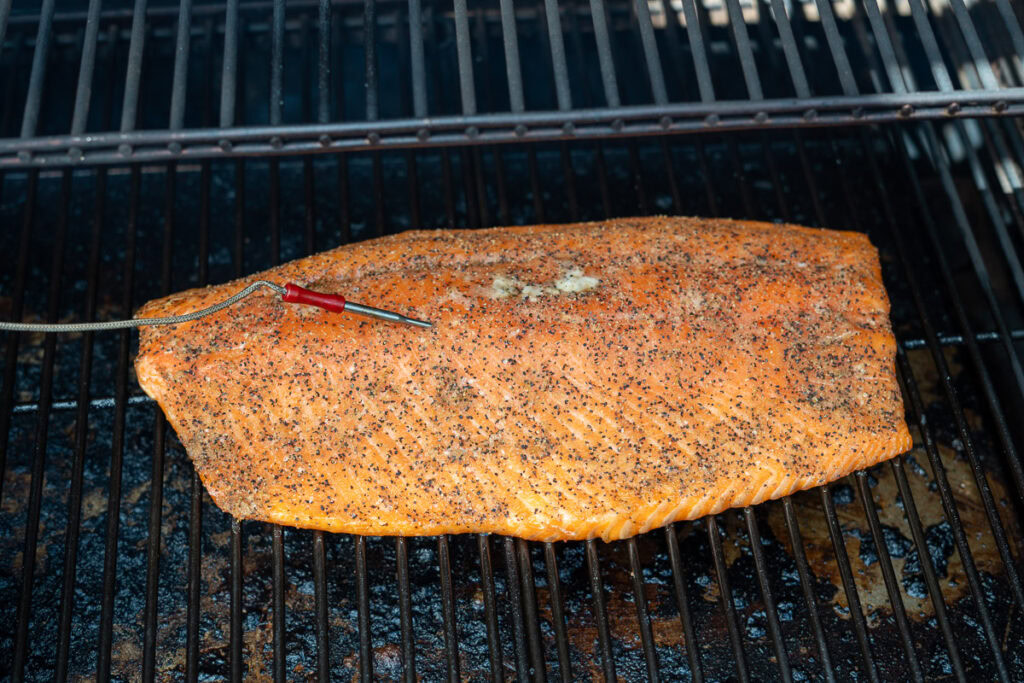
What is the white stuff on smoked salmon?
That gross looking white substance is called albumin. It’s a natural protein that gets pushed to the surface as the salmon cooks. It’s completely safe to eat and doesn’t affect the flavor.
A small amount is normal, but if you see a lot of it, that likely means you had the heat too high or the salmon cooked too quickly.
5. Make the glaze and finish the salmon
While the salmon is smoking, add the butter, maple syrup, brown sugar, lemon juice, and soy sauce to a small saucepan.
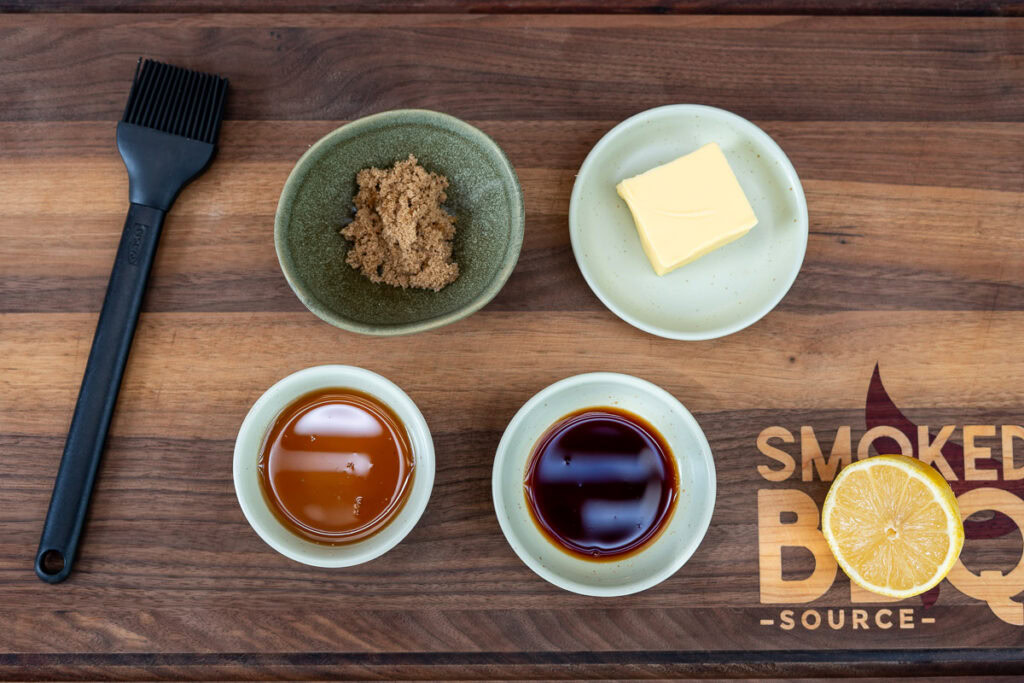

Warm over low heat, stirring, until the butter is melted and the sugar dissolves, about 1 to 2 minutes. Remove from heat and set aside.
Increase the grill temperature to 225 to 250°F.
As the salmon approaches 120 to 125°F internal temperature, brush a light layer of glaze evenly over the surface.
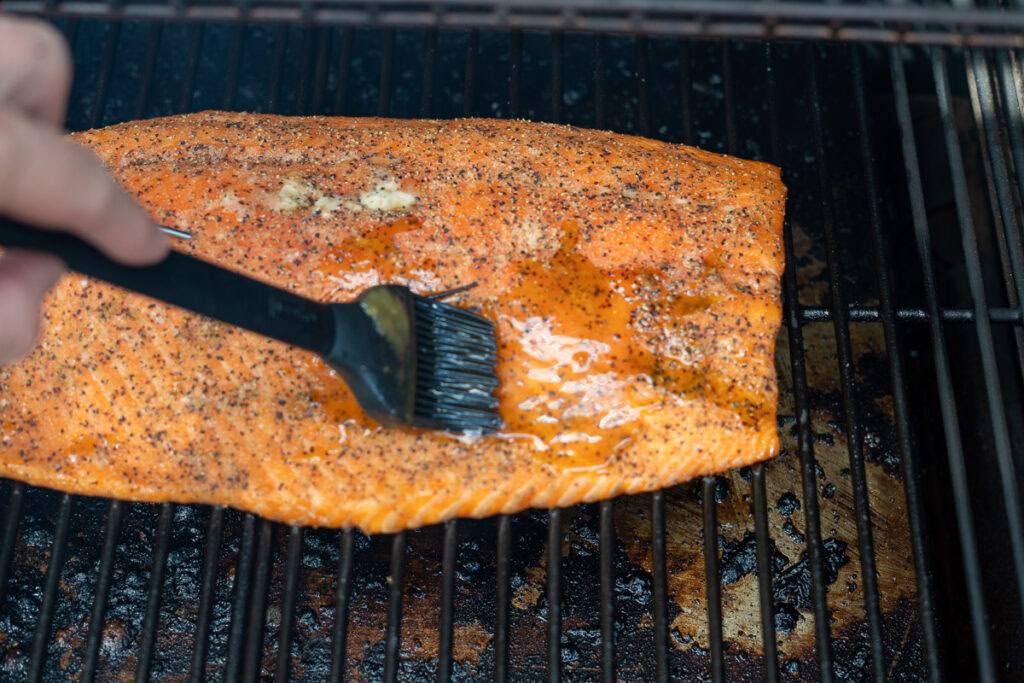
Keep the glaze layer thin so it sets properly and doesn’t run off.
Continue cooking until the salmon reaches 130 to 135°F in the thickest part, about 10 to 15 minutes more.
Brush on another light layer of glaze during the final few minutes.
The salmon is ready when it flakes easily and still looks slightly glossy in the center.
6. Rest and serve
Remove the salmon from the grill and let it rest for 5 to 10 minutes before serving.

I love eating the salmon still warm straight off the grill as the centerpiece of a meal. Serve it with potato salad, grilled vegetables, or a fresh green salad for an easy dinner.
It also works well as an alternative protein on a festive spread alongside other BBQ dishes or sides.

Once cooled, the salmon is just as good served at room temperature or chilled. Flake it over salads, use it in wraps, or serve it on bagels with cream cheese for an easy lunch.
What to serve with smoked salmon


This smoked salmon will keep in the fridge for 3 to 4 days in an airtight container.
If you try this recipe, please let us know if you’re a convert in the comments below, and remember to leave a rating.

Smoked Salmon on a Pellet Grill

Ingredients
- 1 whole salmon fillet - (about 2½ to 3 lb), skin on
Dry Brine
- 2 tbsp brown sugar - or sweet BBQ rub
- 1 tbsp kosher salt
- 1½ tsp coarse black pepper
- 1 tsp garlic powder
- zest of 1 lemon
Maple Citrus Glaze
- 3 tbsp unsalted butter
- 2 tbsp maple syrup - or honey
- 1 tbsp brown sugar
- 1 tbsp fresh lemon juice - from about ½ lemon
- 1 tsp soy sauce
Instructions
- Pat the salmon dry with paper towels. Remove any pin bones with tweezers, and trim off any very thin edges so the salmon cooks evenly. Leave the skin on.
- In a small bowl, mix the brown sugar, kosher salt, black pepper, garlic powder, and lemon zest. Sprinkle evenly over the salmon. Place on a wire rack set over a tray and refrigerate uncovered for at least 1 hour, or up to 4 hours.
- Preheat your pellet grill to 180°F.
- Place the salmon on the grill skin side down. Close the lid and smoke for 35 to 45 minutes, or until the internal temperature reaches about 100 to 110°F in the thickest part.
- While the salmon is smoking, add the butter, maple syrup, brown sugar, lemon juice, and soy sauce to a small saucepan. Warm over low heat, stirring, until the butter is melted and the sugar dissolves, about 1 to 2 minutes. Remove from heat and set aside. If it thickens, warm it briefly before using.
- Increase the grill temperature to 250°F. When the salmon reaches about 120 to 125°F internal temperature, brush a light layer of glaze over the top.
- Continue cooking until the salmon reaches 130 to 135°F in the thickest part, about 10 to 15 minutes more. Brush on another light layer of glaze during the final few minutes.
- Remove the salmon from the grill and let it rest for 5 to 10 minutes before serving.
Notes
Nutrition
Nutrition information is automatically calculated and should be used as an approximation only. If you’re worried you could always add a side of kale.

About Your Pitmaster
Joe Clements is the founder and editor-in-chief of Smoked BBQ Source, a leading barbecue resource that has helped tens of millions master grilling and smoking. Growing up in a vegetarian household, his love for barbecue was unexpected. Determined to master the craft, he launched Smoked BBQ Source in 2016 to document his journey from amateur to pitmaster.
Joe leads a team of expert barbecue creators and oversees the largest collection of in-depth grill reviews and a library of tested, foolproof recipes. Whether he’s firing up a pellet grill or charcoal kettle, he’s passionate about making barbecue approachable and enjoyable for all.
I would like to try this recipe. It sounds great. One quick queston: you never mentioned needing any salt. But then you said: During this resting time, the brown sugar and salt work together to draw out a little moisture,
how much and what type of salt?
thanks
Hi Roger, sorry for the confusion. The BBQ rub you use should contain salt, which is what we were referring to. Almost all store bought rubs will include salt, or if you use our salmon seasoning that the recipe links to that also contains salt.
Well I took a leap of faith and prepared a dinner for a group of 20 without trying the recipe beforehand. I wanted to serve Salmon and your recipe sounded tasty and simple. I followed it to the letter using my Treager 650. My guests were delighted as was I. Everyone asked for seconds. I always cook more than I need. No one goes hungry when I cook. Thank you!
That’s awesome to hear! Cooking for 20 without a test run is bold, but clearly it paid off, a salmon is a good way to feed a crowd. Thanks for sharing your experience Jack.
The cook time in the recipe is erroneous and needs correction. It shows as 25 minutes. But the steps show
Step 4: 45 min
Step 6: ?? min
Step 7: 10-15 min.
So total is something over one hour??
Sorry Eric, you are spot on. We recently updated this recipe and forgot to change the totals. I’ve corrected it now. Thanks for poiting that out.
Never had salmon better than this – sublime!
Love to hear it, glad the salmon turned out good. Thanks Erin.
Is it necessary to rinse off the salt, etc before you cook the salmon?