
Smoking Your First Brisket – Advice From Aaron Franklin


SmokedBBQSource is supported by its readers. We may earn an affiliate commission at no extra cost to you if you buy through a link on this page. Learn more.
Brisket is notoriously difficult cut of meat to master.
Many amateur pitmasters have turned a 4lb brisket into a 4lb hunk of beef jerky.
You shouldn’t let these horror stories put you off, though. There is no greater accomplishment than slicing a juicy, perfectly cooked brisket after 12 hours tending to your smoker.
If you want to learn how to smoke a brisket, there’s no better teacher than Aaron Franklin, the owner of the world-famous Franklin Barbecue restaurant.

Fast-track your brisket skills.
I’ve taken all of the most important information from our 37+ brisket recipes and guides and packed it into one free 25-page eBook.
Inside, you’ll get 6 step-by-step lessons to help you choose, trim, smoke, and slice brisket with confidence.
His brisket is so legendary that people willingly line up at 6:00 am to queue for a taste.
In this guide, we go through his whole process from selecting the brisket, trimming and preparing it, to managing the fire during the long cook.
There is a lot of great advice, whether you are smoking your first brisket or you’ve done this many times before.
1. The brisket – how to properly trim and add a rub to your brisket
The problem most people have with brisket is that it’s a tough cut of meat. This makes it perfect for low and slow cooking.
Great brisket isn’t about fancy rubs, mops, marinades, or BBQ sauce.
Selecting the right brisket from the butcher shop and preparing it properly will set you up for success well before you even fire up your smoker.
Tips for selecting a brisket
While some people swear you need to buy Wagyu brisket, for practice cooks it’s fine to buy your brisket from places like Costco, Sams Club, or ask your local butcher.
If you want to go straight to the good stuff, Snake River Farms sells top-quality American Wagyu brisket and delivers everywhere in the continental United States. Check out our full review.
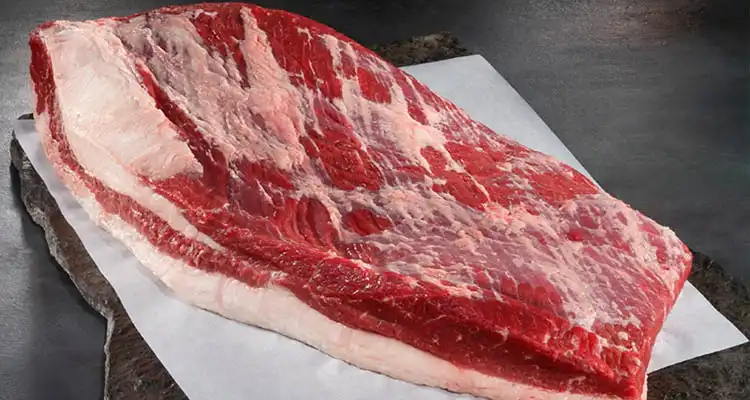
- Welled marbled American Wagyu makes for super juicy, tender brisket
- Choose from 9-20+lbs
- Excellent consistency
- Expensive
- In the video series, Aaron is cooking the whole brisket (also known as a packer brisket). This means the flat and the point parts of the brisket are together.
- We recommend buying a whole packer brisket, which gives you full control over the trimming process. However, if you don’t want to buy a whole brisket, we have recipes for smoking just the flat or point.
- When selecting your brisket, look for marbling in the meat and a thick flat so the leaner part will cook at almost the same rate as the larger point.
- Look for USDA Choice, Prime or Certified Angus Beef
- Allow for ½ to ⅓ of a pound of cooked brisket per person.

How to Trim a Brisket
- Use a good boning knife like our Smoke Kitchen 6.5″ boning knife for trimming the brisket (using a blunt knife is a good way to stab yourself).
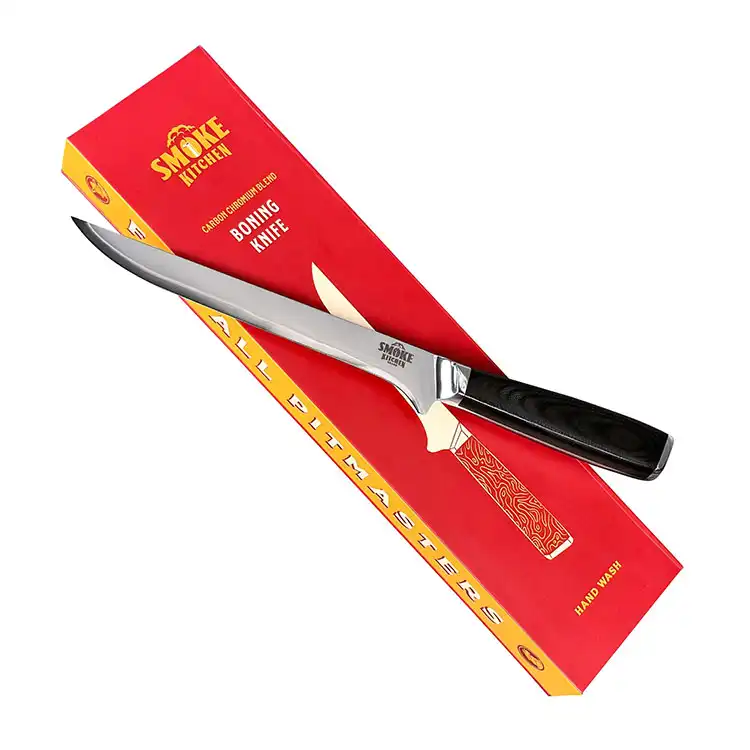
Trim the fat cap off a brisket or square up a rack of ribs in seconds.
- Designed by us for BBQ trimming.
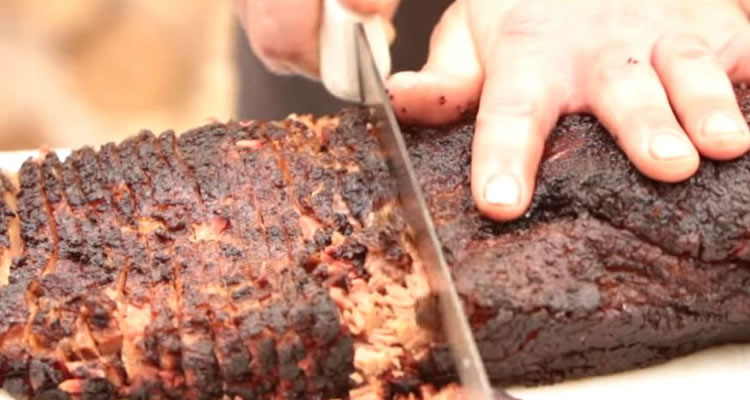
- If you don’t trim any fat off the brisket, it will taste too fatty, but trimming too much will make your brisket dry. Aim for around 1/4″ of fat.
- Brisket is much easier to trim when it’s still cold, so trim it right after you take it out of the fridge.
- There is a thick membrane called the deckle that will not render out during cooking, you will need to cut out (some butchers will have done this for you)

- Trim off any bits that are significantly thinner than the rest, as they will cook too fast and burn.
- Think about where the heat will be coming from and how the brisket will be placed on your cooking surface. Areas that run hotter can have a little more fat to help protect the meat.
- So long as you leave around 1/4″ of fat and get a good shape, don’t worry too much about trimming. Practice makes perfect.
- Don’t throw your trimmings away! Keep them to make your own beef tallow.
BBQ brisket rub
Many people use complex rubs with chili powder, cumin, and paprika on their brisket.
For true Texas-style brisket rub a lot of people will tell you you can only use even parts salt and black pepper. This simple style rub will still give you great bark, while still letting the beef flavor dominate, but most pitmasters like to add a few extras.
You can add a little garlic powder and some paprika and still call it a Texas brisket. You can apply it the night before if you like, or get it on while your smoker is heating up.
If you are wondering how to grind all that black pepper, the best option is to use a burr coffee grinder like the Cuisinart Supreme Automatic Burr Mill.
Aaron Franklin Texas Style Brisket Rub

Ingredients
- ½ cup Kosher salt
- ½ cup black pepper - freshly ground
Instructions
- Mix ingredients in a bowl or rub shaker and then apply to your brisket
Nutrition
Nutrition information is automatically calculated and should be used as an approximation only. If you’re worried you could always add a side of kale.

- The biggest mistake people make is putting on too much rub. You want to be conservative with the rub so that the meat flavor stands out.
- Make sure you swirl the mixture as you apply it, as the salt can settle to the bottom.
- Apply rub to the edges of the brisket, using your free hand to catch rub and push it back on.
- Let the brisket warm up to room temperature for an hour before putting it on the smoker for a more even cook.
Editors Note
We think rules are made to be mastered and then broken. Aaron’s simple salt and pepper rub is perfect for your first brisket, or if you want to focus on Texas-style barbecue.
If you want to be a bit more adventurous, there is a whole world of rubs and injections. If you want to go homemade, we suggest investing in a rub shaker to help get an even coat on your brisket.
If you don’t want to buy a bunch of spices, then head to our guide of the best store-bought BBQ rubs (all available to buy online).
2. The cook – how to manage the fire and treat the brisket while it’s cooking
While Aaron uses an offset smoker in these videos, the techniques he uses for preparing, smoking, and slicing the brisket can still be used if you are using a charcoal grill or smoker like the Smokey Mountain, converted Kettle, or pellet grill.
Positioning the brisket on your smoker
Fat side up vs fast side down is a surprisingly controversial topic. While how much this actually matters is up for debate, the right way depends on your smoker setup.
- Aaron recommends placing the brisket on the smoker fat side up.
- Depending on your smoker, if the heat is coming from below, consider smoking fat-side down to protect the muscle from drying out too much.
- Place the fattier point of the brisket closer to the fire. The extra fat will help insulate it.
- The flat end of the brisket should be closer to the smoke stack.
- Always use a water pan to help keep moisture in the cooking chamber and avoid burning.
How long to cook brisket
Ask any experienced pitmaster how long to cook a brisket, and they’ll roll their eyes and tell you to cook until it probes tender.
Two similarly sized briskets can have very different cook times based on a number of factors.

However, none of this helps you if you’re planning a dinner party and need to have everything ready by 6:00 p.m.
- A good rule of thumb for working out how long a brisket will take to cook is one hour and 15 minutes per pound (0.45kg) of brisket at 250°F (120°C).
For example: 10lb Brisket x 1.25 hours = 12.5 hours cooked at 250°F.
You can also cook a brisket hot and fast and finish it in less time, and still get great results, so give that method a try if you are short on time.
Managing your brisket during the cook
- You need to keep a close watch on your smoker and keep the temperature steady.
- When the lid of the smoker is open, you’re losing heat and smoke, and it’s going to take a while to recover the heat. “If you’re looking, you ain’t cooking”.
- Check it as little as possible, and if it’s looking dry consider spritzing it using a spray bottle with some apple juice or apple cider vinegar.
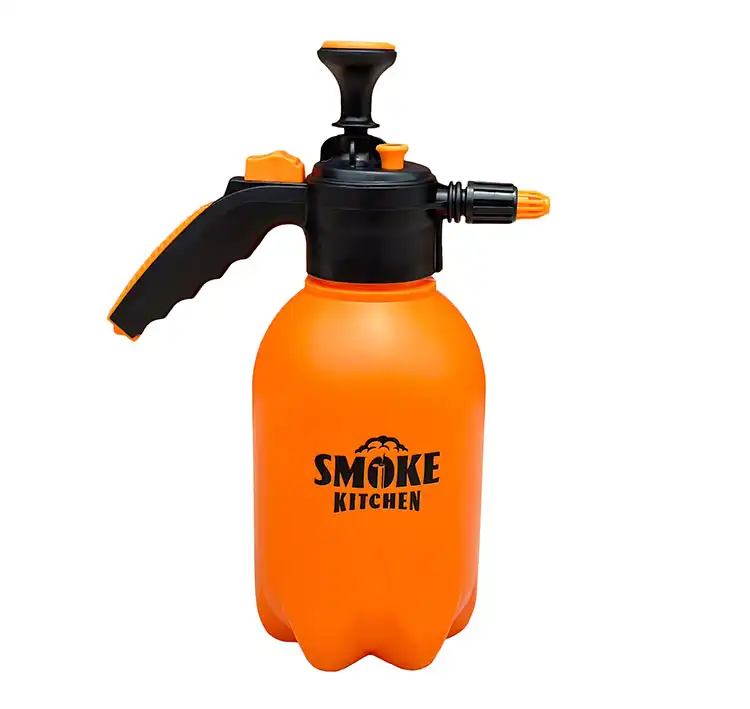
Keep your barbecue nice and moist with this 68 OZ pressurized spritz bottle.
- Control spray from a fine mist to a solid stream
To ensure a steady temperature and avoid opening the lid too often, make sure you have a quality wireless thermometer setup with dual probes so you can measure the temperature of the smoker, as well as the internal meat temp.
- Try and avoid choking off the oxygen too much which can cause a ‘dirty fire’. This can create creosote (a thick, oily substance left over by fire) which causes a bitter, oversmoked taste.
- Wood choice for brisket is important, so try and avoid green wood or overly cured wood. Not mentioned in this video but elsewhere Aaron recommends using a very dry wood like Post Oak that has been cured for 9-12 months.
- You want to see clean heat coming out of the smoker and not a lot of smoke.
- Knowing your cooker and how to manage your fire only comes from a lot of experience so try and maintain an even temperature but don’t freak out if you don’t get it perfect on your first brisket.
How to Keep Your Brisket Moist
- Keeping a water pan in the smoker is the best way to retain moisture.
- After the first 2-3 hours, start spritzing your brisket with water, apple juice, hot sauce, or apple cider vinegar every 30 minutes to an hour. This helps keep it moist and stops it from burning.
- Some people use a liquid mixture to mop the meat, but this causes a bunch of mess and can interfere with the bark on the brisket.
Wrapping your brisket and dealing with the dreaded stall:
- Wrapping the brisket in foil (the Texas Crutch) or butcher paper is an optional step that can help you in some circumstances.

- It can help the brisket retain moisture push through the stall faster.
- If your smoker is giving off too much smoke wrapping can also help.
- Wrapping in foil can help accelerate the cook time if your guests are getting impatient.
- You can wrap the brisket after around 4-6 hours or you can cook for 11 or 12 hours and never need to wrap it. It all comes down to fire management and personal preference.
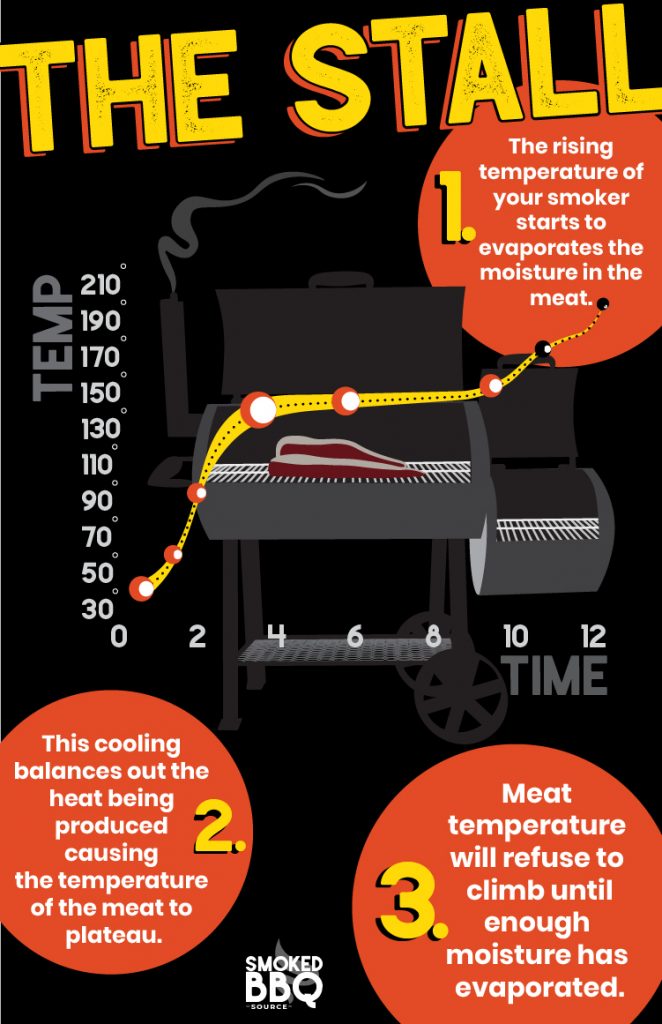
- When the internal temperature of your brisket hits around 150°F -170°F the temperature can stall as the brisket tightens up and squeezes out moisture. Patience is key.
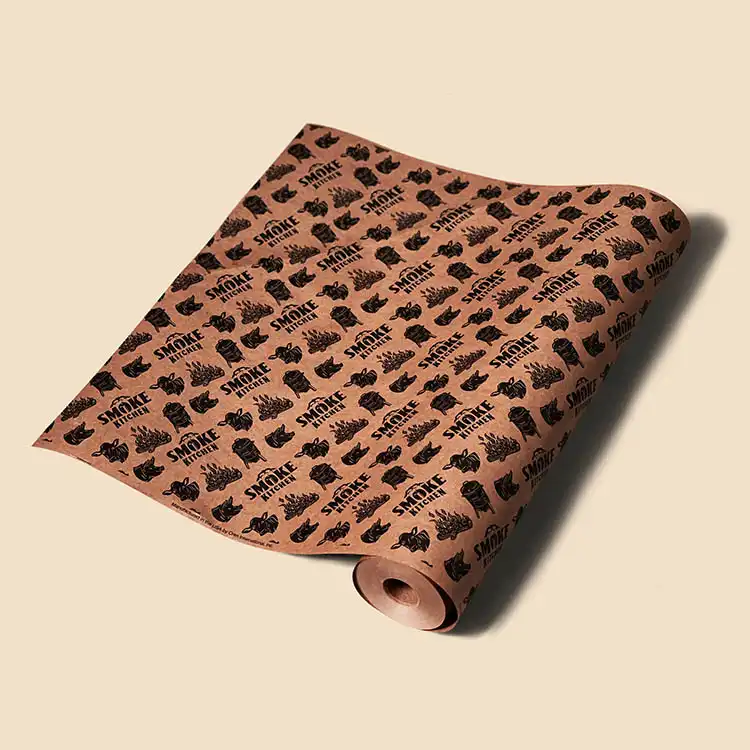
100% FDA-approved food grade butcher paper designed for wrapping barbecue. Made in the USA
3. The payoff – wrapping, resting and slicing your brisket
Finishing your brisket
- When your brisket has a nice bark formed and is still soft and pliable, you might want to wrap it.
- In this video, Aaron wraps the brisket with butcher paper.
- At this point, you might want to start preparing your Texas BBQ sauce and sides
- Once wrapped, put the brisket back on at 250°F until done. Aaron uses appearance and feel of the brisket to measure when it’s done but he has smoked thousands of briskets. We recommend using one of the leave-in thermometer reviewed here and taking it off when it’s at an internal temperature of 195-203°F.
Slicing your brisket
- Once you’ve taken the brisket off the cooker and let it rest for about an hour, you are ready to slice.
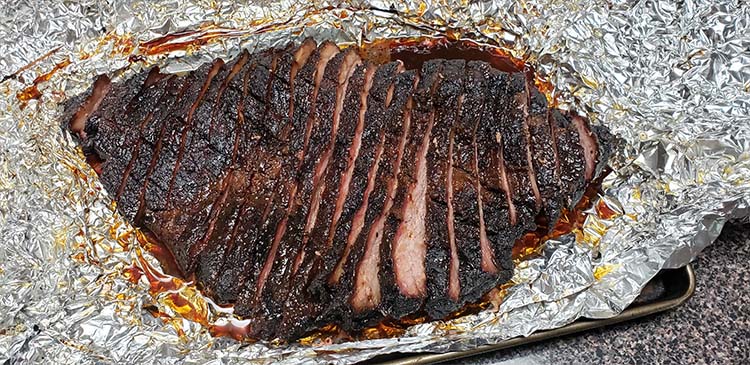
- The proper way to slice a brisket is to cut against the grain on the flat side until you get to the point. And then turn the brisket 90 degrees and then cut against the grain.
- Try and avoid scraping off the bark.
- Use a long slicing knife like our Smoke Kitchen 12″ Slicing Knife, or check out our breakdown of the best brisket slicing knives for more in depth reviews.
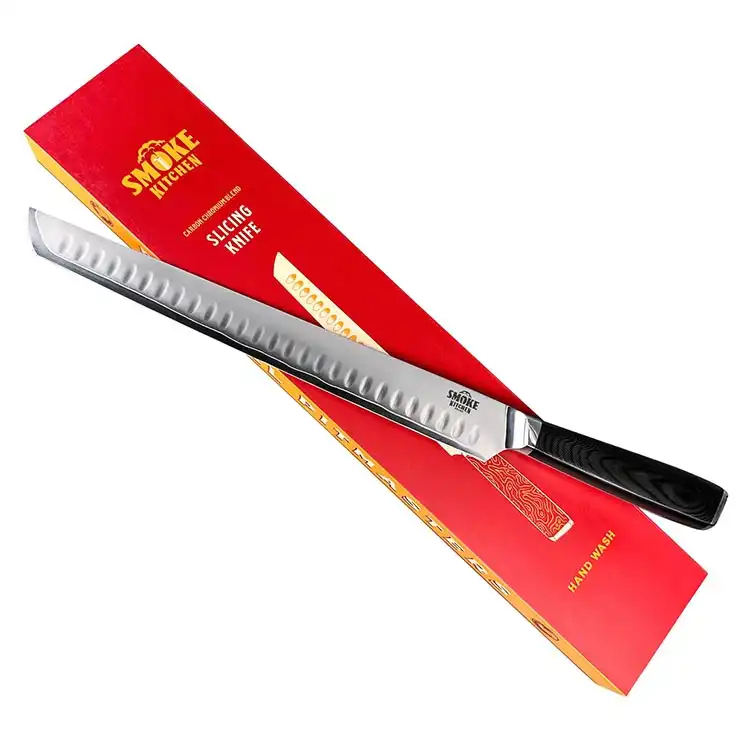
Make perfect cuts every time you're slicing brisket or any larger cut of meat
- Cut each slice around the thickness of a big pencil on the fattier part and a small pencil on the leaner part.

- If you’re not going to use it right away, leave the brisket whole and cut it just before serving so it doesn’t dry out. Make sure the finished brisket is wrapped in butcher paper, in foil and then a towel and hold in a cooler for a few hours.
- Brisket is a very uneven cut of meat. Some parts are fatty, some are lean some are thick and some are thin. That’s why it can take so long to master it.
You’re done! Time to relax and enjoy your barbecue brisket with a few drinks. And if you’re lucky enough to have leftovers, check out our guide on what to do with brisket leftovers and how to reheat brisket without drying it out.
Advanced BBQ Brisket Techniques
If you’re still mastering the basics of barbecue brisket, you can probably ignore this next section.
The videos and steps above are an excellent introduction for beginners and will give you all the info you need.
Advice for Buying Brisket
If you’re cooking brisket in a barbecue competition or want to make the best brisket humanly possible, you need to understand how beef grades work.
In the United States, beef handled at a USDA-inspected facility grade their meet on the marbling and the age of the animal slaughtered. The three most common beef grades that you’ll see (from highest to lowest level of marbling) are:
- Prime – Highest quality and most intramuscular fat or marbling
- Choice – Most widely available, less marbling than prime
- Select – Leanest of the commonly available grades, not as juicy or tender
These grades can be further broken down into Upper, Middle and Lower grades.
To give you a practical example, Certified Angus Beef must be graded as Upper Choice
Because meat is graded based on the marbling of the ribeye, a totally different part of the animal, there’s no guarantee the brisket will be marbled in the same way.
However, there’s a good chance meat from the same carcass will have similar marbling.
Aaron Franklin prefers to use Prime Angus, but due to the limited supply, he also uses Upper Choice Angus beef.
Some other things to look out for include:
- Look for meat that is hormone and antibiotic free
- Certified natural and humane
What about Wagyu beef?
It’s a common misconception that Wagyu is a grade of beef. This is incorrect.
Wagyu is beef that comes from Wagyu cattle. While the type of beef originated in Japan, Wagyu cattle these days has often been born and raised in the US.
While most people picture the highly marbled A5 Wagyu style, plenty of Wagyu will actually resemble choice or prime.
With that out of the way, there’s no denying the prevalence of Wagyu brisket on the competition circuit.
You can generally expect more marbling, but more importantly, the quality of the fat is higher. This gives you better moisture.
If you want to give Wagyu a try, Snake River Farms is a very popular producer.
- Welled marbled American Wagyu makes for super juicy, tender brisket
- Choose from 9-20+lbs
- Excellent consistency
- Expensive
Cooking only the brisket flat or point
A whole packer brisket typically weighs between 8 and 16 pounds, which is a substantial amount of meat.
If you’re only cooking for a few people, this just might not be practical.
Many briskets will sell just the flat or point. Try and get the point as it has more marbling and will result in a more tender end product.
If you get just the flat, you won’t get much marbling. These cuts are more commonly used for slow cooking in liquid.
Technique will be the same for cooking just the point, but allow for less time.
Using a Beef Brisket Injection
The advice above says not to use any kind of injections.
However, there’s no denying plenty of pro pit masters use a beef brisket injection.
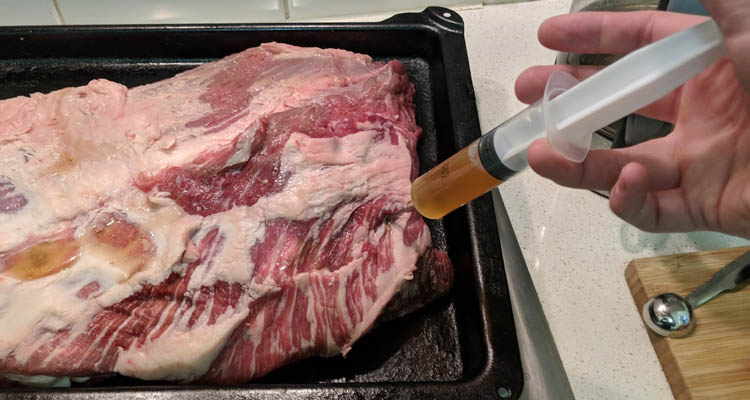
Malcolm Reed from howtobbqright.com recommends injecting beef brisket, as it “gives your meat more flavor and helps to keep it moist during and after the cooking process.”
Meathead from amazingribs.com says “I almost always inject briskets with beef broth”.
This is a good basic brisket injection recipe courtesy of howtobbqright.com
Beef Brisket Injection Recipe
- Beef Base (1 heaping tsp)
- Worcestershire Sauce (1 TBS)
- Soy Sauce (1 TBS)
- Accent (1 tsp)
- Water (2 cups)
Heat ingredients together and mix then use a good meat injector to inject into your brisket before you add your rub.
Apply salt and rub the night before
If you can, it’s best to trim your brisket the night before you plan on cooking it. This way you can apply the salt and rub and give it plenty of time to work its way in.
The added advantage of doing this is that everything is prepared already so you can focus on getting your smoker going nice and early.
Keeping your brisket warm
Trying to time a brisket to be ready at the exact time you want to serve dinner is asking for failure.
Your best option is to aim to have it ready at least an hour early. When the brisket temperature gets to around 203°F, wrap it in foil and an old towel, and then place it in a beer cooler.
The faux cambro technique is a lifesaver.
- Before the meat is ready, pour some hot water into the cooler and close the lid to allow it to heat up.
- Dump the water out and line it with a few old towels to help insulate and in case of leaks.
This technique will allow you to keep meat safe for up to three hours.
Wrapping it up
One of the best things about BBQ is that there are so many different opinions.
But, don’t feel like you need to stick to the videos and advice in this guide.
Some cook fat side up, others cook fat side down. Some use a mop, some use a spritz.
Want to add some bourbon to your water try? Give it a try! (And let me know how it goes in the comments below).

About Your Pitmaster
Joe Clements is the founder and editor-in-chief of Smoked BBQ Source, a leading barbecue resource that has helped tens of millions master grilling and smoking. Growing up in a vegetarian household, his love for barbecue was unexpected. Determined to master the craft, he launched Smoked BBQ Source in 2016 to document his journey from amateur to pitmaster.
Joe leads a team of expert barbecue creators and oversees the largest collection of in-depth grill reviews and a library of tested, foolproof recipes. Whether he’s firing up a pellet grill or charcoal kettle, he’s passionate about making barbecue approachable and enjoyable for all.
Wow! I feel like a freshman at BBQU in Smoking101 class. What a work and process of art. I still haven’t tried a brisket. I have been too chicken. Also, I need a smoker. I really enjoyed these videos. I’ll stay tuned for more tips. Thank you!
Yes that is a VERY informative video. Now i know 1 of my mistakes was a “dirty fire” hopefully i can slow the air down & clean it up.
Mary , it has taken me a long time to work my way to the top , but I am finally here ! my first brisket will be in the smoker tomorrow , a 13 lber ! wow ! im going for that brass ring ! I do not expect it to turn out like an Aaron brisket , but it will . time , patience and practice , until then it will be a randall brisket . so go ahead and get that brisket in that smoker and don’t look in that rear view again . we couldn’t ask for a better teacher than Aaron ! go full brisket ahead !!!!
Depends on the weight after you trim it and the cooking temperature.
What is the proper time to smoke a 18 lb packer brisket.
I have done 2 briskets so far and both turned out great! I spritzed with apple juice and brought the meat up to 170 and wrapped in butcher paper and took of at 198 and let the temperature rise
It took 16 hours to reach 198 at 250-275 degrees on a ceramic Kamado Joe Cooker
The meat was moist and tender and tasted like good beef
Great Tips!. I’ new in this stuff. I will try it this weekend. Keep posting.!!
Question… is there to much difference using Aluminium Foil vs Butcher Paper?
I smoked a brisket last week. 3rd or 4th one. 11# and I smoked it for about 5.5 hours and cooked in the oven another 60-90 minutes. Wrapped in foil after 4 hours. Pulled it when temp was around 201. Refrigerated it after 40 minutes and cut the next day. Wife said it was best one I’d done (also the largest and longest cooked). I sliced it thin and it melted in your mouth. Please don’t be intimidated by it. My first one was really good, too. If you’re comfortable cooking and/or smoking, you’re already steps ahead. I’ve read probably 20 different “guides” like these for doing brisket and everyone has their own suggestions. Fat up/fat down, etc. I can’t imagine 11+ hours for a brisket when mine came out the way it did after 6+. I did cut it in half, and put the thicker cut on the shelf beneath the thinner half. I rubbed it, and used a combo of cherry and pecan woods chips; electric smoker. Water bath beneath. As stated above, watch the grain when you cut, or you’ll ruin all your work.
I like your method as it’s not always possible to time a brisket for serving guests. Did you reheat it the next day and if so, how? Thanks!
@Allison – I reheat mine in a sous vide, and I think it would also be fine to do so in a pot of boiling water. The key factor is having it in a vacuum-sealed bag for protection. I want to avoid exposing the meat to more extreme temperatures during a reheat so that I don’t take parts of it way past that comfy 200 degree range. That’s why I think even just putting it in [near]-boiling water is ok since that’s not far off from desired temp.
The last flat I did I smoked it for 6 hrs in my vertical wood smoker, then sous vided it at 205 for 2 hrs. Came out perfect melt in your mouth delicious.
Thanks, Mark. What temp did you set your oven to? I like your approach compared to the 11+ hours. Also, did you cook the thicker half and thinner half the same amount of time, but only varied their location on your shelf? Thanks again.
Brisket is by far my favorite thing to cook as a relative novice.
It is also the EASIEST, a very forgiving piece of meat. I have had burns go out, etc. but I have learned a few things that I would like to share that works for ME and all my friends and neighbors (no one EVER complains, quite the opposite)…..again, I am not a pro, I am a Joe.
1. I have found that unless you buy a high quality brisket, you won’t be taking it to the “next level”. Once you go Wagyu…you won’t ever go back. For the time and waiting it takes to smoke a brisket, I only use Wagyu now. Seriously, you will spend the money but you will most certainly know where that money went.
2. Simple rub (salt, pepper, garlic) all over brisket, the night prior. You don’t want to mess around in the early morning, you will be tired. And do not use sparingly, this is a HUGE cut of meat and can handle it.
3. Set temp at 250, put brisket on until deepest internal reaches about 160ish.
4. Then put in large aluminum pan and cover with foil, until temp reaches 203-205 at deepest probe. It will be higher at the thinner parts (temp 210).
5. Let rest AT LEAST 2 hours, I prefer 4 in a cooler, nothing fancy. the reason you use a pan is ease of transfer and NO MESS with a pan. After a couple hours…..
6. Prepare yourself for a 15 pound filet mignon!!!
As for warming up, you can use microwave but do NOT overcook, try 30 seconds or less. Cut pencil-sized slices. You do not need to do anything special, IF you use a great cut of meat. The meat does ALL THE WORK FOR YOU.
I have done a dozen briskets this way. Not much of a bark but believe me you won’t miss it at all IF you have the right cut of meat.
The meat does ALL THE WORK.
Happy BBQing!
Thank you very much for your added help!
Michelle, if it means someone got to enjoy their brisket, I’m very happy I could!!
Bless you ! I have read all kinds of stuff, but yours…. Is understandable and makes sense. I will do exactly your recipe today. Thank you!
Aluminum will basically “steam” your brisket. When you’re done, you’ll notice it in a pool of its juices. Butcher paper allows for a similar effect but not as drastic. I use aluminum but will take it out of the foil and back on the grill to the the bark crisp up a little. Either way, the more you do it, the easier it will get.
You got it! So many novice smokers, even at cook offs, leave the brisket drowning in accumulated liquid, failing to achieve a smoke line and bark on the bottom half. The liquid has to be dealt with one way or another! Good Smokin!
Just a note, for competition brisket, a “smoke ring” (or smoke line) means absolutely nothing to a judge (KCBS). It might look nice for guests, but in competition it doesn’t mean much at all.
Yep smoke rings are overrated.
I am a KCBS Certified Master Judge. We ignore the presence or absence of smoke rings.
Butcher Paper will still allow a little smoke to come to the meat. Foil cuts off all smoke . I use the butcher paper for wrapping at 150 degrees and put back on the smoker until the internal temp. of the meat is 195-200 degrees. It will usually go up another 7-10 degrees once off the smoker. Then I put the still wrapped meat into an old Styrofoam cooler , cove the meat with a couple of old towels and let sit for 2-3 more hours. Stays nice and warm, easy to cut, and continues to tenderize while in the cooler.
Allison, I like to reheat in a large covered skillet on low. What’s really good is crisping up some of it. Delicious! Last week, I warmed up about a pound-plus and sprinkled about 1/3 cup of brown sugar over it! Excellent!!
George F.,
I set the oven at 225, which is about where I had the smoker. I cooked both halves of the brisket the same amount of time, though in the oven they were on the same rack (as opposed to the different racks while smoking).
bought the book first,then built a couple of off set smokers,by the book. tried a brisket first, fantastic. we have never looked back. sold my larger on for a grand to a friend,after a great cook and a couple of cold ones. our smaller one has a 18by30 smoke chamber with a 16by20in fire box. thank you Aaron for the great book.
I got my first smoker 3 weeks ago, I attempted my first brisket on the 4th of July, a 15lb’er (go big or go home right). I smoked it at 250 for 12 1/2 hours, to 195* internal temperature, it came out surprisingly awesome for my first attempt, my only mistake was not trimming the fat, and I possibly should have gone to 200-205 internal
Trim the fat, you want it at 203 degrees when you pull it. 220 or 225 degrees for like 18 to 20 hours for a 16 pounder.
Thanks…great advice and very informative! I recently bought an electric smoker from Smoken-it and have smoked several things! No brisket yet! It is on my to-do list!
Lookin forward to more tips from you!
Cheers John, keep it up and get on to that brisket! You’ll thank me later…
Exactly where should one measure a brisket’s internal temperature? Measure it in the flat where it is thinner and with less fat, or in the fattier point?
I probe the thickest part of the point. The flat should reach temp a little sooner but not enough to worry about.
Smoking my first brisket… I smoked a whole chicken about month prior and sadly, I over smoked (with hickory..not good, but all I had) and over cooked it…fml… I’m feeling brave and adventurous in smoking a brisket… I’m going 4 hrs of smoke, alternating between apple and hickory…. Thank you for hand holding all of us noobies… Your website has a top spot in my bookmarked Smoker Shiz file 🙂
A thermometer alone will not tell how tender or flexible a done brisket is. Because of the restrictive nature in the paper, it’s difficult to flex it for tenderness while wrapped. If a probe is used, the paper again becomes restrictive and it becomes a guess. Unwrapping and testing is the only way to really tell but, then it has to be re-wrapped for resting.
I wrap in paper here in Australia, used to do foil until I did some research and discovered that if you do you better like some aluminium with your q. from memory it will impart around 3-400 ppm of aluminium, which is significant, and knowing how much dementia likes aluminium l prefer to avoid it.
Also imo paper gives a better result, and is much better for the environment.
I got my paper from office works over here,$10/100metre roll. Brown paper over here is unbleached and virgin, white apparently always has some recycled paper in it.
Great advice in this article! I typically like to smoke 8 lb flats because they fit perfectly in my Weber Smokey Mountain Cooker. For a dry rub, I just use McCormick Montreal Steak Seasoning, which I apply the night before. I have always smoked fat side up to allow gravity to do it’s work and let the juices sink into the leaner part of the meat. I usually wrap them with foil at 4-5 hours into the smoke and an 8 lb brisket flat usually only takes 8 hours to smoke using this method. When I pull it off the smoker, I wrap it in a towel and stick it in an unheated oven for 1 – 1 1/5 hours. Slicing against the grain is key! Always comes out juicey and delicious!
wow a lot of things i did not know. i am now fired up for this brisket today
I am smoking my first brisket tomorrow. It is 4 lbs. I am allotting 5 to 5 1/2 hours to smoke it and an hour rest
Salt and pepper only. Smaller offset smoker using oak and mesquite chunks
Wish me luck
Waaay too much salt and pepper for the rub. Don’t waste your seasoning. 1/4 cup each of salt and pepper at the most. I seasoned a 22 pound brisket(before trim weight) and had over half of the rub left.
Wow, there a lot to know. Great info. I’m wondering what is the purpose of wrapping the brisket in a towel after cooking? I haven’t tried to smoke one yet, and I’m trying to get some more information. Thanks in advance.
I have been studying brisket recipes for awhile now. I just moved to Texas two months ago and just got settled in. I bought the smoker that seems to fit my needs and bought my first brisket yesterday. I have seen so many recipes and it was very confusing, but this technique has given me the confidence to go for it. Today is the day!!!!! Thanks for your guidance. I will report
I made my first Beef Brisket today on a pellet smoker. I followed your directions and the brisket came out tender, moist and delicious!! Thank you. My family loved it!!
Shawn – I use a towel and place in a cool oven to rest. Wrapping in a towel helps the temp come down more gradually then if it is just placed in the oven. It can make a mess on a towel so don’t use the wife’s best towels 🙂 I usually just drape over the top.
I’d prefer to mix the salt and pepper in a bowl, rather than a bowel…ha ha, but I knew what the instructions meant.
I’m doing a 2 lb. brisket right now that was given to me. I guess it’s one way of trying to smoke a brisket.
Ugh that’s the worst typo and I make it way more often than I should! Thanks for pointing it out though 🙂 Hope the brisket cook turned out well!
I am still working on a 19.86.lb brisket (before trimming, after trimming probable at about 16.5-17lbs). Started smoking it on my Camp Chef on high smoke (225F) 23 hours ago….currently temp is at 185F. Going to pull it at an internal temp of 195F, I already used butcher paper at 150F internal temp and will place it in one of my offshore fishing coolers for another 2-3 hours. This is my third one. The second one my wife and kids loved. We won’t talk about the first one (I rushed it and it came out dry, bad idea to “time a brisket” for dinner at a set time). This is the longest I have slow cooked one, so I can’t wait to see the results of really slow smoking. Great video and I love watching Aaron, will visit his restaurant in Texas at some point! Keep smoking’ y’all!!!
I did my first brisket last Friday, 7.5lbs, 9.5hrs and following all of Aarons steps I nailed it. It was intimidating and I was nervous but it turned out fantastic because of this website so Thank You! You can do it too!
I’ve been smoking brisket for about a year now and most come out pretty tasty. I use a egg type smoker and usually oak or pecan wood. Although I get plenty of compliments, I’m not happy with the lack of a nice black bark. Im using a water pan about 3-4 inches below the meat, fat side up. After a few hours the fat side has a bit of Bark, but the meaty side has little and is kinda gray-brown in color. Any suggestions on how to get more bark? Cooking at about 210-225°
Cook at a little higher temp. Brisket places in Texas cook at 225-250. And the secret is they rest the brisket for 10-12 hours. Yes, it’s a 24 hour process! Check the Mad Scientist BBQ or Chud’s videos on YouTube.
Yo this Aaron dude is sharp… have my first brisket on a pit boss right now… 6lb…
When buying from butcher I was offered whole or competition size? I went with the smaller (competition) because small family… but what is the difference? – aside from more meat. I also figured I could reduce cook time with the smaller brisket…
Going with the Texas Rub 1/2 salt 1/2 pepper… added dash of garlic… also injected with allegro brisket marinade… ??
This was a fantastic resource for someone attempting their first brisket. All the points are well laid out. Following the steps you’ve laid out, I was able to make a brisket I’d only been able to get at BBQ joints. I used a BGE, cowboy hardwood charcoal and hickey wood chunks. Total cook time was approx 6 hours for a slightly over 5 lb brisket. Using a wifi thermometer meant I didnt have to go outside to check all the time. I used butcher paper as well and was happy with the result ( I typically wrap my ribs in foil after an hour). Glad to try a new technique.
Hi Tom,
Im using a Big Green Egg myself and tried my first brisket last week. I opted not to go with the water pan and instead relied on the diffuser plate alone. The results were a great bark and a great smoke ring – overall it came out better than what I’d hoped. My advise would be to skip the water pan and instead wrap the brisket after a few hours to retain further moisture.
The last flat I did I smoked it for 6 hrs in my vertical wood smoker, then sous vided it at 205 for 3 hrs. Came out perfect melt in your mouth delicious.
All good stuff on here. Just bought my first Traeger Silverton Smoker this year. Me and GF have been trying varieties of meat. Now for the brisket – the big kahuna!
We will be smoking a 6lb 1/2 brisket. Thanks to Meat Church I will use their injection mix as a dry rub with salt/pepper and a sprinkle of Traeger beef rub. My smoker seems to run hotter than listed so dual set at 180F. Plan to smoke for 3 hours then spritz every 30 mins fat side down, until internal temp reaches 200F per my Meater+ thermometer. Next, the meat will need to rest for at least 2 hours in a cooler (I like the hot water idea for steaming method).
Whoa – lucky it’s 730am and company doesn’t show up until 5pm.
Wish me luck!
I have made two 10 lb briskets following the guidelines to a “T”. Absolutely phenomenal results. First time ever doing this and this was the first article I saw and read. I will use this every time. A+ / 5 stars all the way!
Can you freeze part of brisket after smoking for later use?
You sure can, check out this article we did on how to store briskete and reheat.
I have Franklin’s book and it’s a great read. I hate reading but I couldn’t put it down. But I’m doing my first Traeger brisket tonight and I needed cliff notes to make sure I was doing this right. I have a company bbq tomorrow and I want this to be perfect. I have never owned a Traeger before, always used a Weber Kettle, but time to upgrade. This article was a huge help. I’m giving the author 5 stars. But I’m giving your website 1 star because I cannot navigate through the page or this review without being hit by dozens of pop up ads. Geez! I won’t be visiting here again. It was that much of a turn off. Please fix.
Hi Jason,
Glad you found the article helpful. The reason we were able to put time and effort into providing articles like this to you and hundreds of thousands of others is because the ads allow us to earn a living and pay writers, editors, designers, coderes and the many other people it takes to run a successful website.
I don’t love ads either, but I would rather give away the content for free with ads and let everyone access it than put it behind a Paywall where only a select few get to see it.
I have done several briskets over the past 10 years on an offset smoker. Just bought a reverse flow and have done a few shoulders with out much difficulty however doing an 18 lb brisket tonight into tomorrow hopefully will be done around 4PM
Love the article, but not the tips on resting your brisket.
Taking a hot brisket at 203F and wrapping it in foil + towel + cooler will continue to cook that well past the stage it should be. I bet you open up your brisket after a few hours and there’s a lot of liquid? Yeah, that should be IN your brisket. What you’re doing is continuing to cook and the meat fibers are contracting and squeezing the juices out.
Better advice would be to allow the brisket to rest at room temp with tented foil, while it’s still in the butcher paper. Allow it to cool down to 170-180F before placing it in a cooler. This ensures your brisket is on “cooldown” mode, not “cooking” mode. It’s even better if you pour boiling water into the cooler and drain it quickly to create a humid, warm environment before placing the brisket inside. Promise, you’ll be able to rest the brisket 4-6 hours with no issues, that sucker will stay above 145F and all of those juices you’ve squeezed out previously will remain in the meat.
I can’t recommend Aaron Franklin’s books and tutorial videos enough, he is a genius! I recently catered my son’s wedding rehearsal dinner, using Franklin’s rubs, techniques, wood choices, and an offset smoker (two briskets, two pork butts, and a pile of sausage), and I got rave reviews from the wedding party. The Preacher even offered to invest part of his savings to help me open a barbecue joint! I thanked him, but declined, saying I don’t want to work that hard. Anyway, it turned out great, and after ruining too many briskets over the years, I would like to encourage everyone to try Franklin’s advice. It will save you a lot of blood, sweat, and tears!
Well…I’m reading this article and comments whilst my 1st brisket hits the 10 hr mark on my pellet grill. 16.6 lbs trimmed out to 11.6 lbs into the smoke. I feel I may have been too aggressive on some of the hard fat deposits.
It went into the grill last night at 8:30, at a temperature of 190 degrees. I had asked advice from someone who has done 15-20 briskets and this was his suggestion. I was gun-shy about not having it finish in time for our company this evening. I figured I can always rest it for a longer period, rather than having an impatient crowd waiting to eat. Plan is to increase the temperature now to 225 degrees after paper wrapping for the finish temp of 203 degrees. It will receive the cooler treatment after the cook has stopped. Here’s hoping.
This site is “spot on.” And so is the author. My friends and lovers know me as the grill meister of choice.
Keep up the good work!!!!
Cooking a Pork Brisket on a Weber. Fingers crossed. Oak chunks for smoke. It’s been going for about 4 hours and will soon get wrapped up. Chubbs had a great video on doing a Pork Brisket. “It’s so cute”. I’m in North Carolina, so had to start with pork. Many a Butt and lots of ribs, so low and slow works for me.