
Weber Performer Smart Charcoal Grill Review

SmokedBBQSource is supported by its readers. We may earn an affiliate commission at no extra cost to you if you buy through a link on this page. Learn more.
Getting a low and slow cook right on a kettle has never been easy, especially if you are new to barbecue. For years, people have bolted aftermarket fans and controllers onto their kettles to take the guesswork out of it, some even drilling holes to do it.
With the new Performer Smart grill,
We ran it through steaks, a brisket, and a couple of racks of ribs to find out.
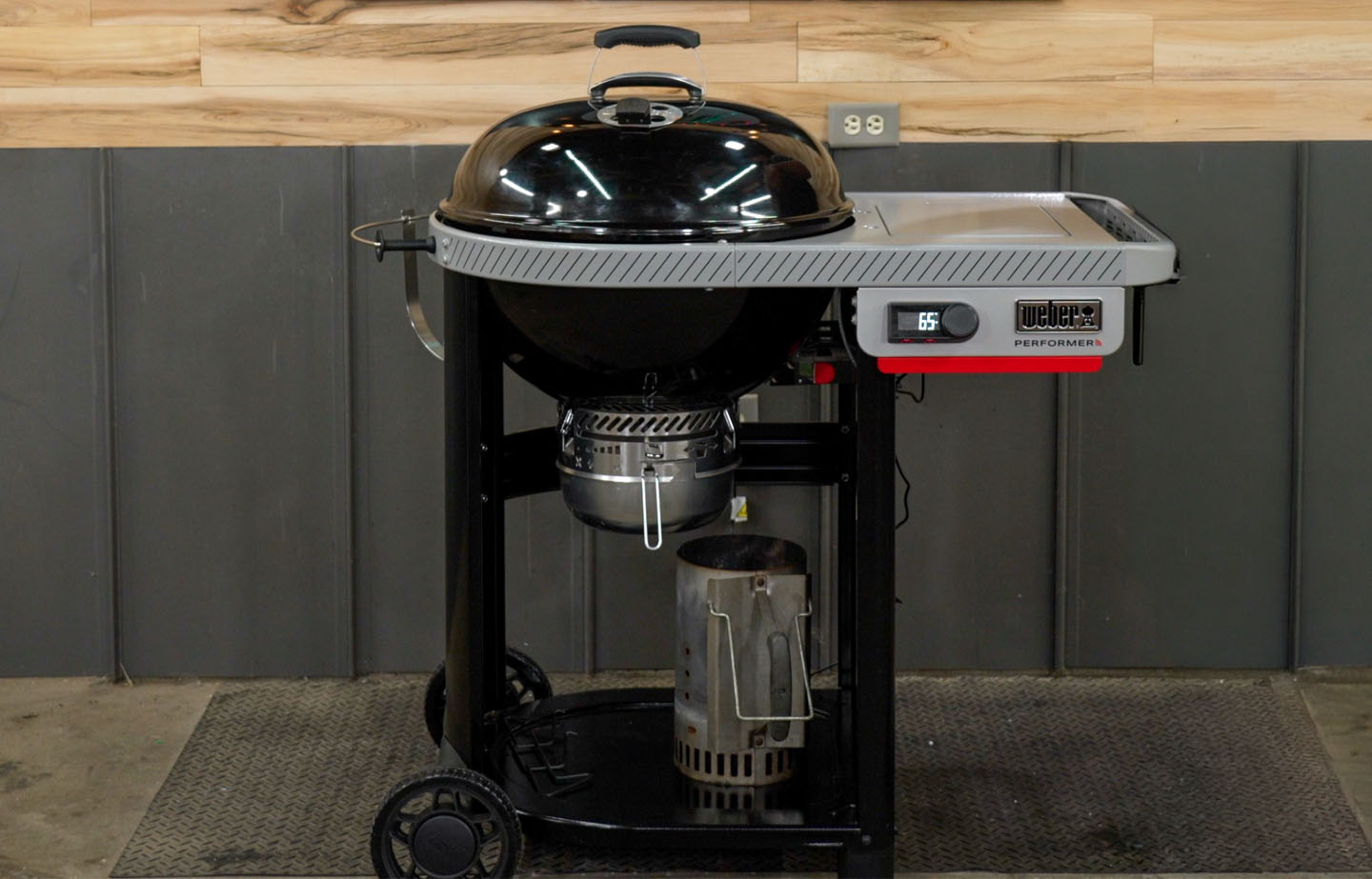
Weber Performer Overview & First Impressions
We’ve cooked on
And for good reason. It’ll sear, it’ll grill, and it’ll smoke, all on one simple design with minimal breakable parts, all for the price of a couple of really nice steaks.
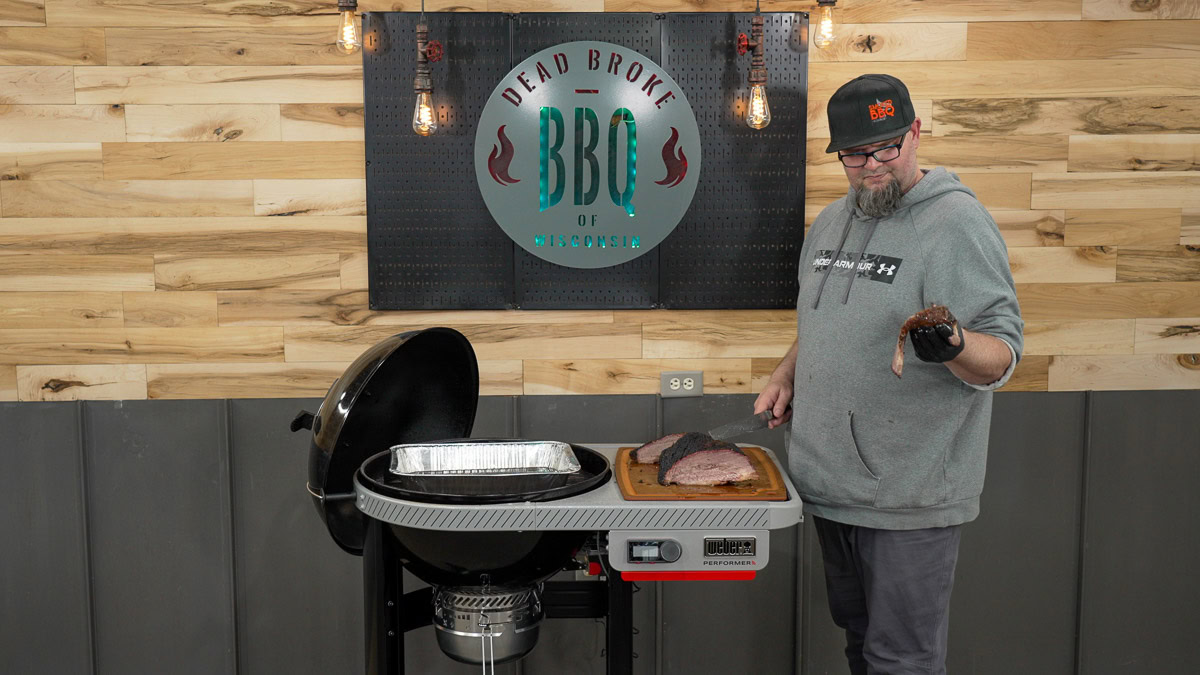
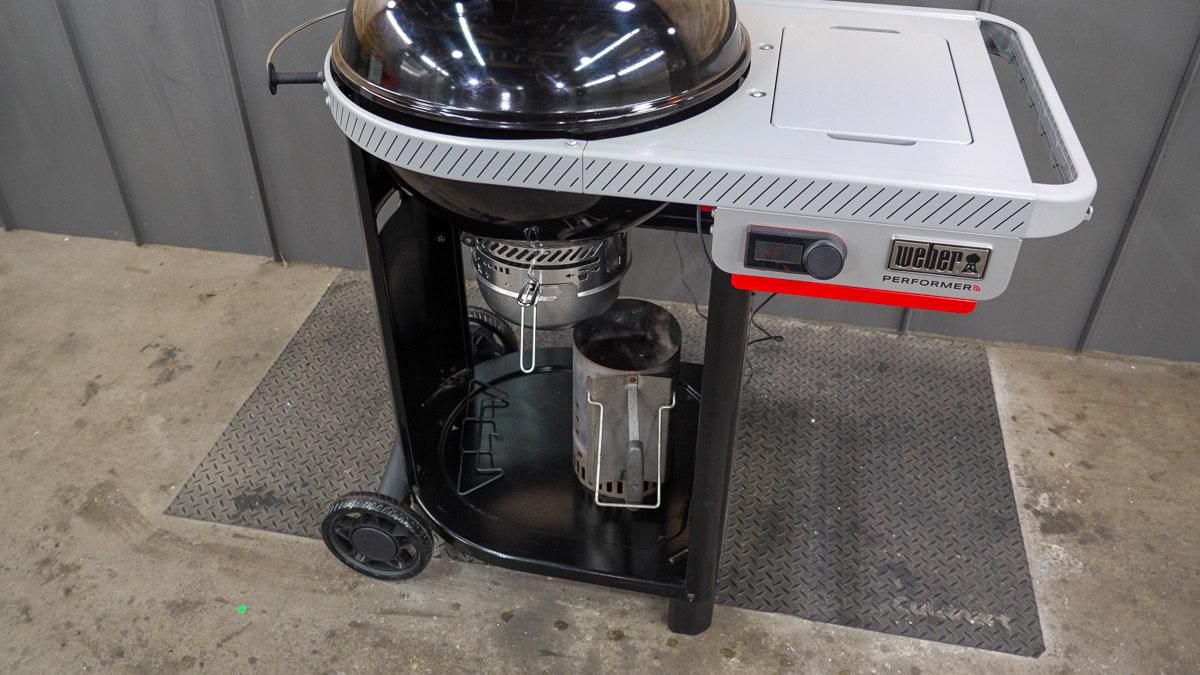
For 2026,
The new part? You can now get a Smart version, and that’s the one we’re reviewing.
It keeps that same Performer formula but adds the one thing kettle guys have been rigging up on their own for years. A built-in fan you can actually control.
For a long time, holding a steady low-and-slow temp on a kettle meant babysitting the vents. Some folks even drilled holes to add an aftermarket fan. We tried that once ourselves, and let’s just say it was a debacle. Wrong hole saw, and yeah, it did not go to plan. This time
One thing worth flagging for longtime Performer fans. The Smart drops the Touch-N-Go propane ignition the old models were known for. You light your coals the old-fashioned way now, with fire starters or a chimney. A little ironic on a grill that added a fan, and a real miss for anyone who loved that push-button start.
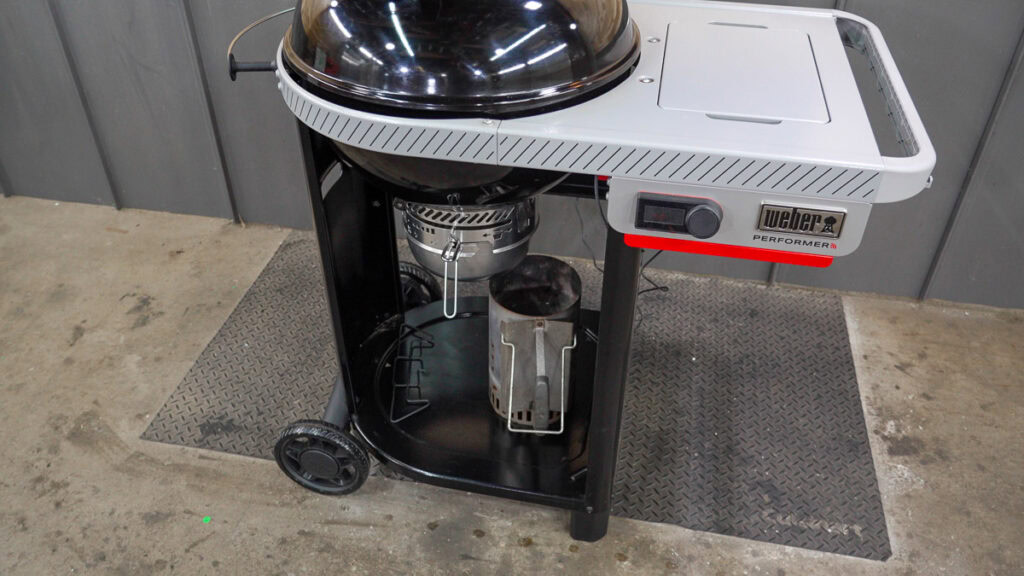
Now, the Smart comes in two flavors. The standard Performer Smart rolls on two legs and two wagon wheels. The Premium adds two locking casters, a bigger table, and an extra shelf.
Same cooking area, same smart features on both. So it really just comes down to mobility, table space, and price. We tested the standard one.
What you need to know:
| Weber Performer Smart | |
|---|---|
| Cooking area | 363 sq in |
| Temperature range | Up to 600°F |
| Fuel type | Charcoal |
| Controller | LCD Wi-Fi + digital fan |
| Connectivity | Wi-Fi + Bluetooth (Weber Connect app) |
| Meat probes | 2 ports (1 included) |
| Mobility | 2 legs + 2 wheels |
| Weight | 72 lb |
| Bowl & lid warranty | 10 years |
| Price | Check Price |
Once it’s together, the layout feels just like the kettle you already know. There’s just a control panel now, sitting up front where the table meets the bowl.
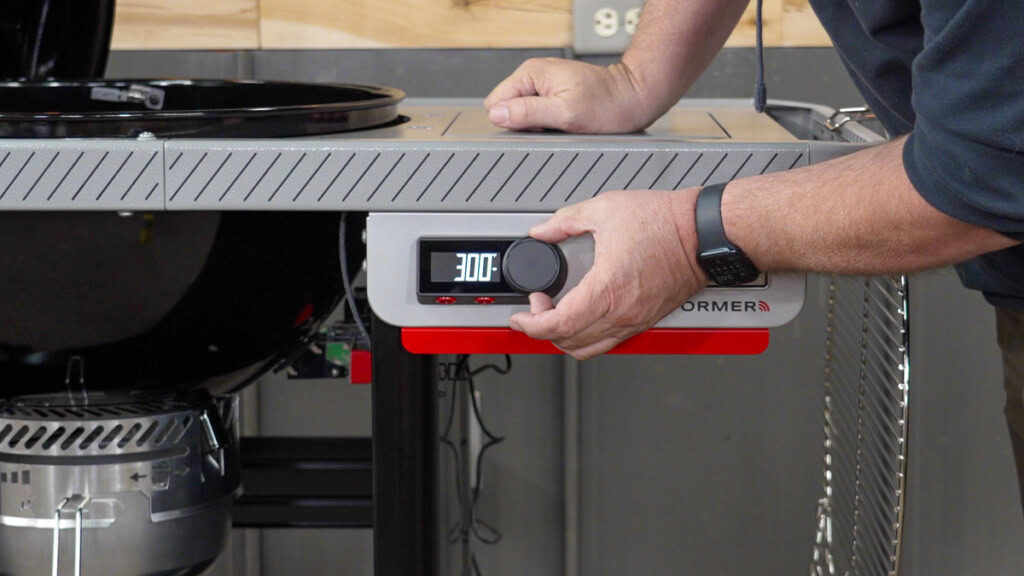
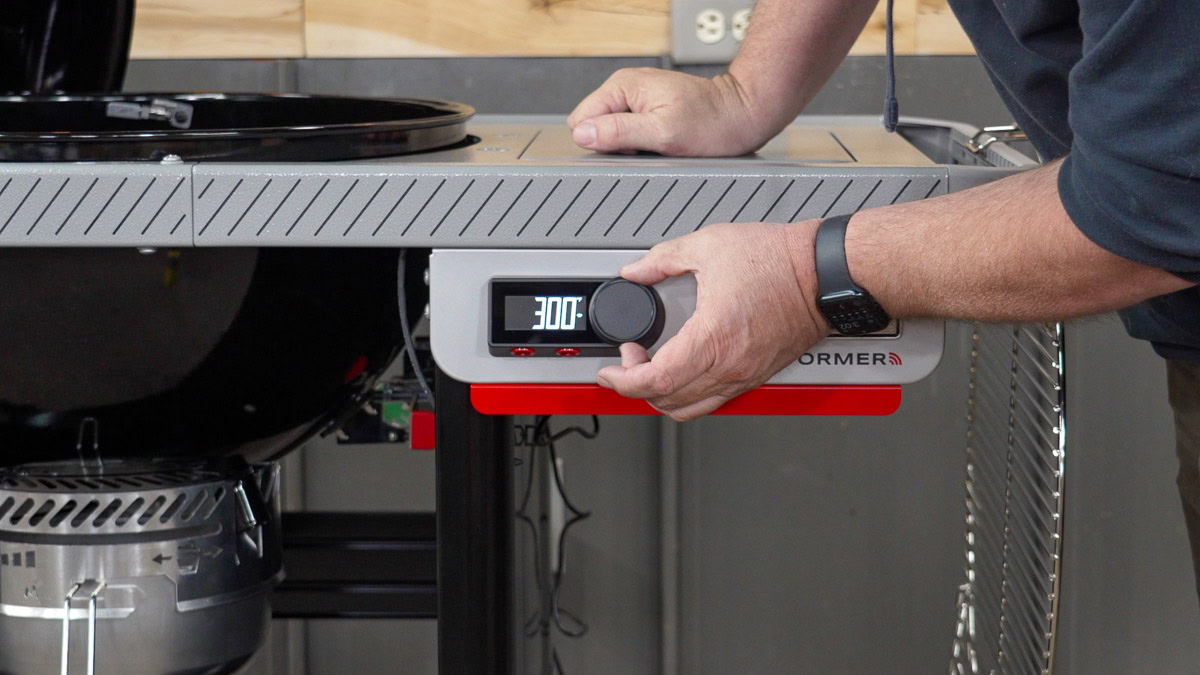
The big story here is that LCD Wi-Fi controller and the digital fan. You set a temp in five-degree increments, on the unit or in the app, and the fan feeds the coals to hold it right there. Set it and forget it.
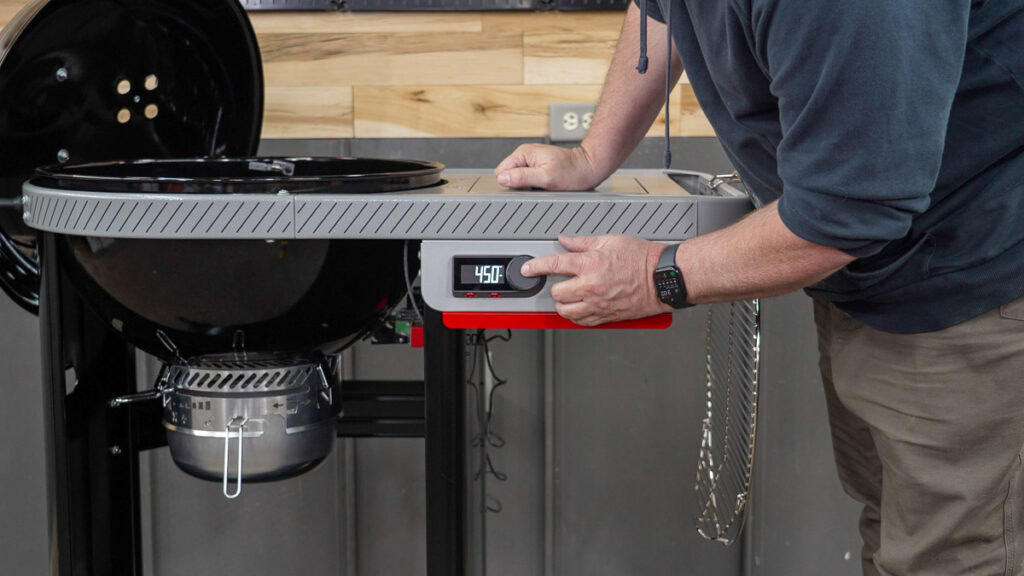
There’s a Rapidfire Assist mode that kicks the fan into high gear to bring your coals up faster once they’re lit, two probe ports on the panel, and one food probe in the box. We’d love to see them include two, but one is a start.
And the app is a nice surprise. It’s got a graph, reads pretty consistently, and it’s easy to use.
Build quality is right where you’d expect from
This feels like
Assembly & Burn-Off
First, credit where it’s due.
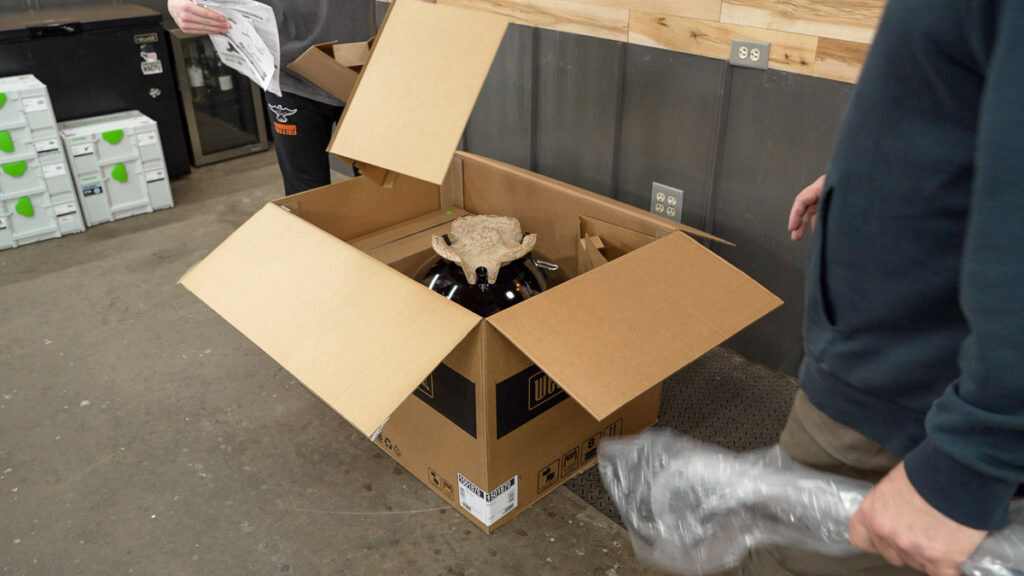
Now, the assembly itself. It’s not your typical kettle, so it’s going to take a little longer than you might expect.
And it’s not because you’re building a cart. It’s the little stuff, the brackets that hold the kettle in place and the bracket for the fan control. That’s the new part, remember this Performer comes with a fan you can actually control.
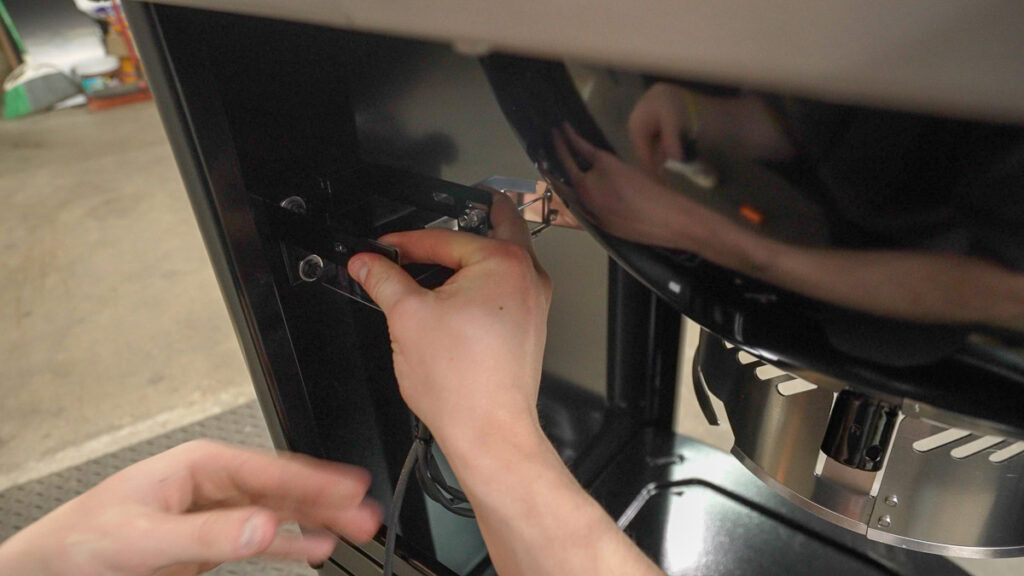
Everything fit together well, no fighting with the parts. But plan for about an hour to an hour and a half start to finish.
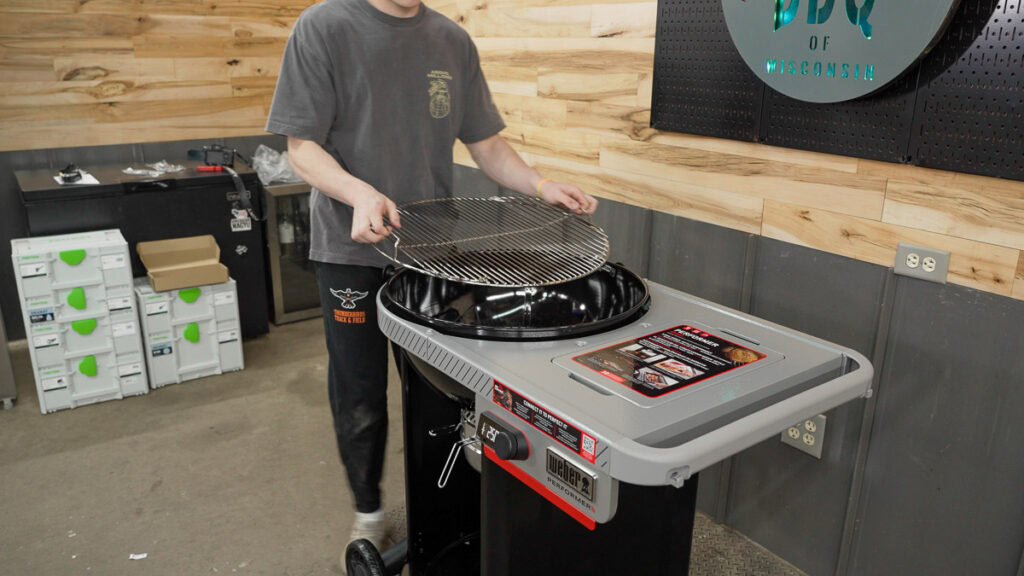
Before you cook on it, do your burn-off. Every new grill needs one.
There isn’t much machining oil on this one, really just whatever coating is on the charcoal grate, but you’ll still want to burn that off first.
Easy enough. We threw in some charcoal and a couple of tumbleweeds, lit them, and set the controller to 450°. Let it run, and you’re ready to cook.
Grilling on the Weber Performer
The first time we went to grill on the Performer Smart, we figured we’d let the new fan do all the work. We filled the charcoal grate, tucked a couple of tumbleweed fire starters into the coals, and lit them by hand.
Then we closed the lid and set the temperature. And then we waited. And waited. Thirty minutes in, we were still sitting at 190°. It eventually crawled its way up to 450°, but by then the better part of an hour was gone.
That’s when it clicked. This fan isn’t built to blast coals up to searing heat. it’s built to hold a steady for hours.
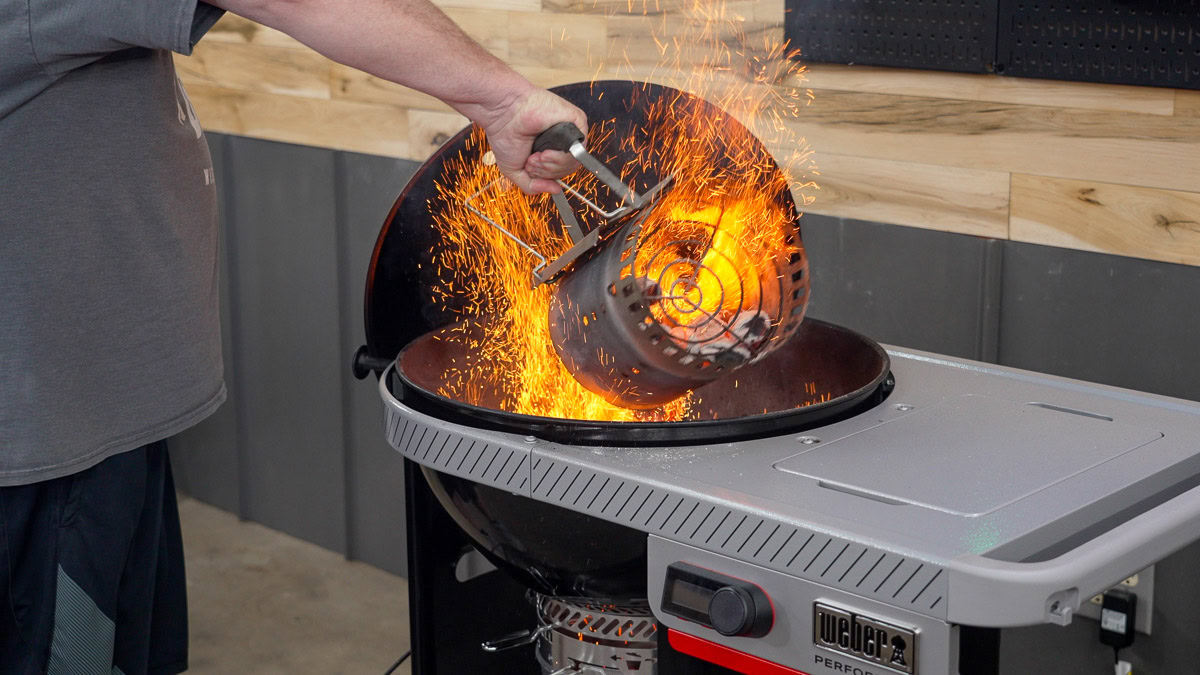
So for grilling, we went right back to what we’ve always done on a kettle and grabbed a charcoal chimney. Fill it up, light it, and in about 10-15 minutes you’ve got a bed of ashed-over, screaming-hot coals. Dump them in the center, set the controller to your target if you want the readout, and you’re off.
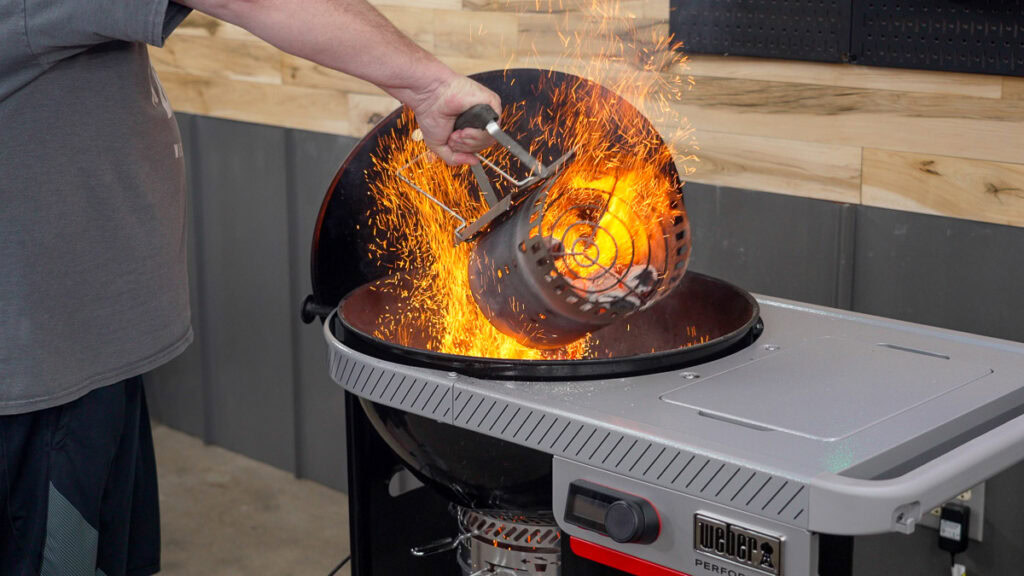
Our first real cook was a couple of New York strips. Cranked to 500°, laid them down for a front sear, and got a beautiful crust on them. Our only slip was leaving the lid on, which let the carryover push them a touch past where we like, but that was on us, not the grill. Lid off next time.
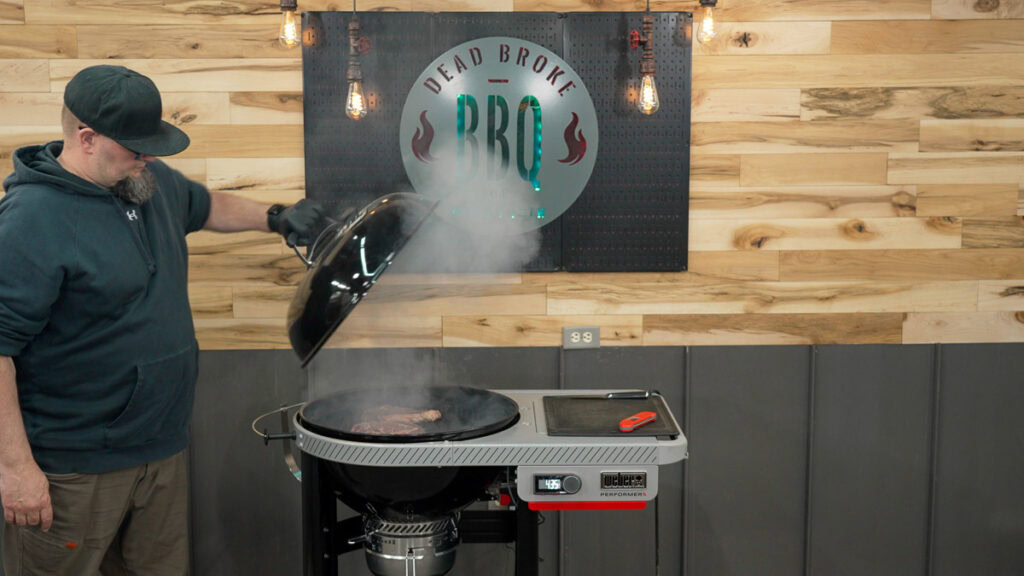
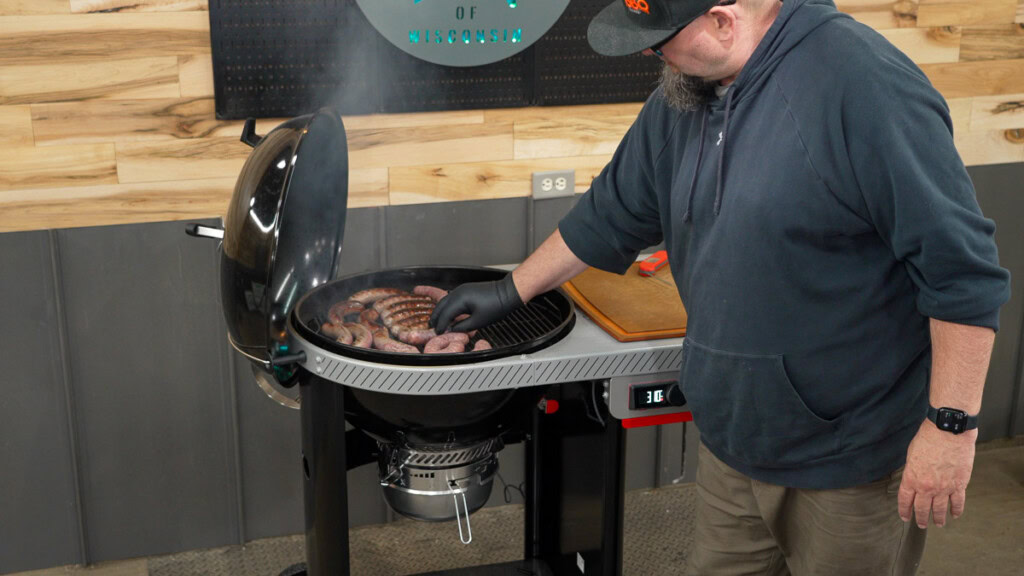
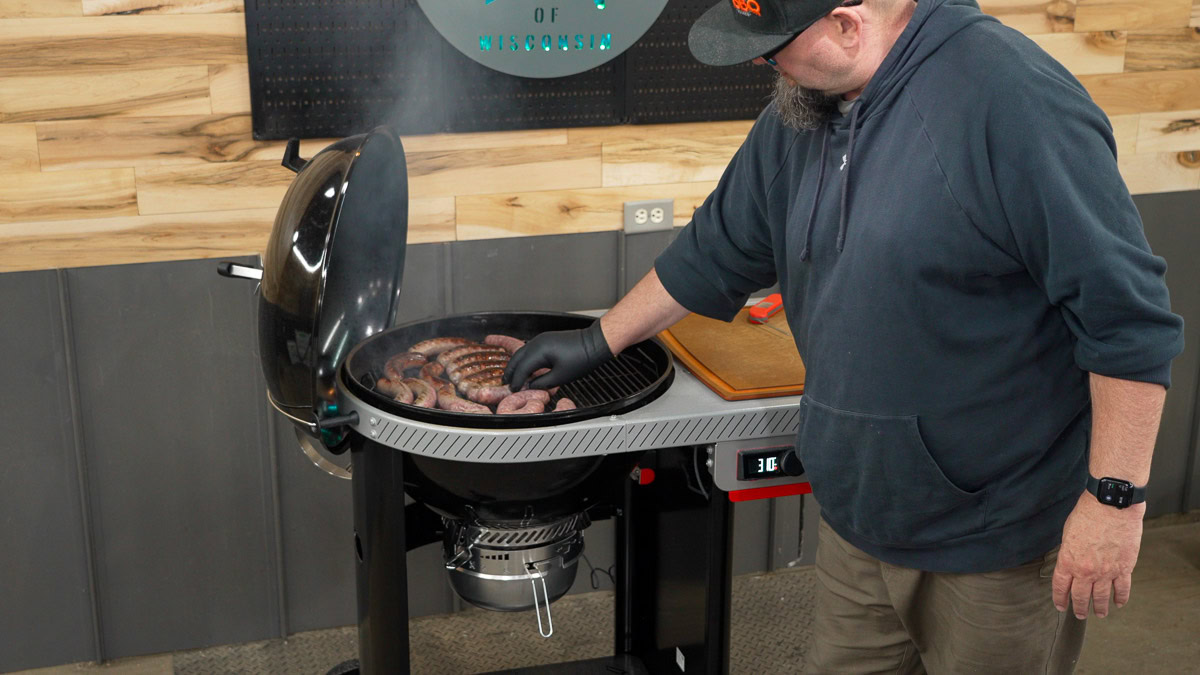
So that’s exactly what we did. A batch of ribeyes came off at a solid medium to medium-rare, some brats followed, and we had two proteins done in about 25 minutes of cook time. Then, with good coals to spare, we bumped it to 400° and grilled up some Polish kielbasa. Nobody else got any. Pitmaster’s privilege.
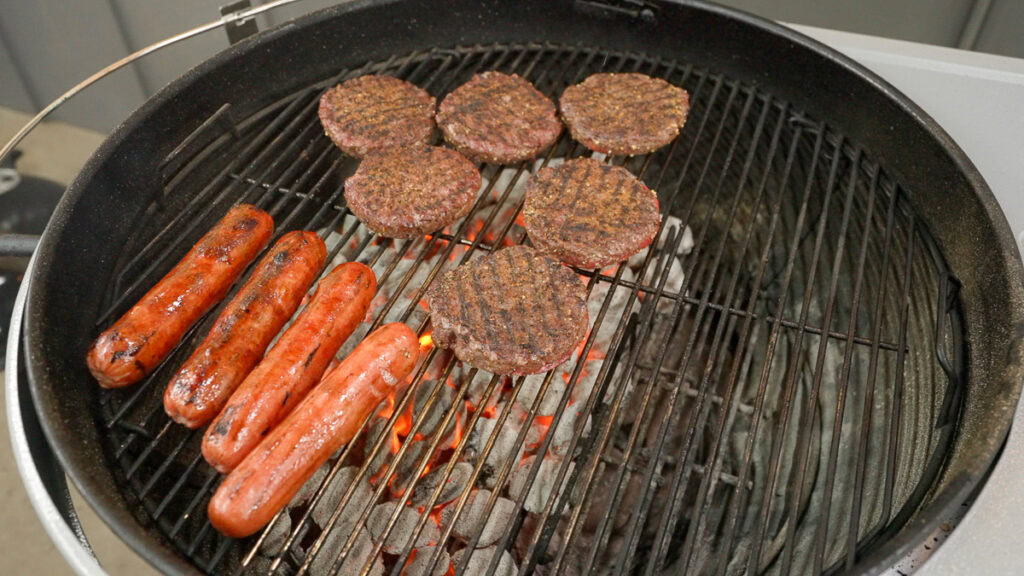
The point is, for grilling, this thing behaves like the kettle you already know and love. The smart features are nice to have, but the chimney and a hot bed of coals still do the heavy lifting.
Smoking: Where the Fan Earns Its Keep
Now for the part we were most curious about: low and slow, and whether that fan actually delivers.
Lighting for smoking is a little different than grilling. Instead of firing up a whole chimney, we piled our charcoal to one side, dropped a couple of wax cubes in, and lit just that one side, basically a lazy man’s snake method.
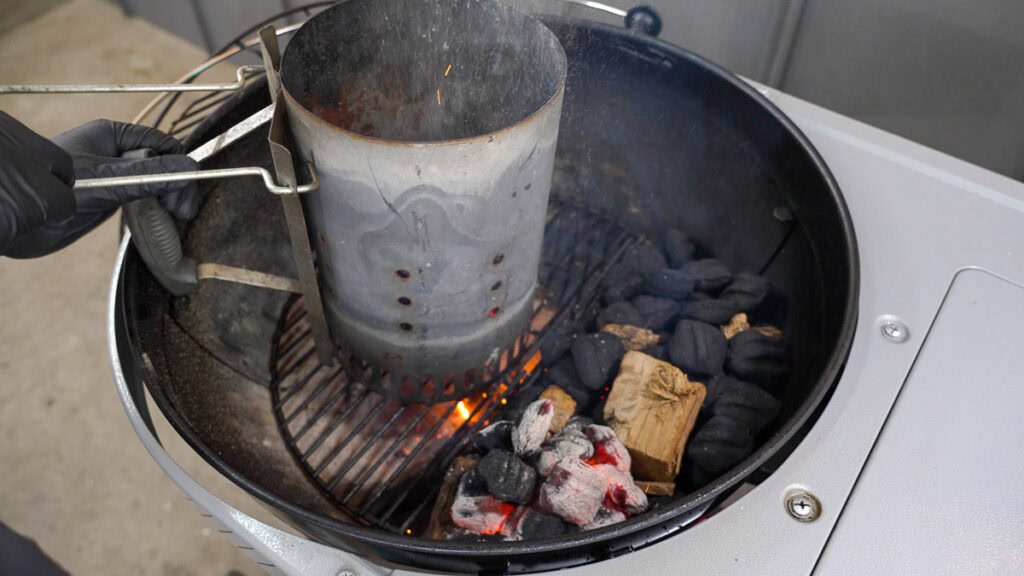
Before we get to the cooks, two things we learned the hard way. The manual tells you to keep your charcoal four or five inches from the fan, and we chased that rabbit for a while before realizing it doesn’t really matter, the charcoal grate already sits above the fan, so you’ve got separation built in.
The bigger one, never put your charcoal right up against the pit probe. We did it once to see what would happen, and the controller read 275° while our Fireboard thermometer showed the chamber was actually sitting at 80 to 100°. Keep the coals away from that probe, and it reads just fine.
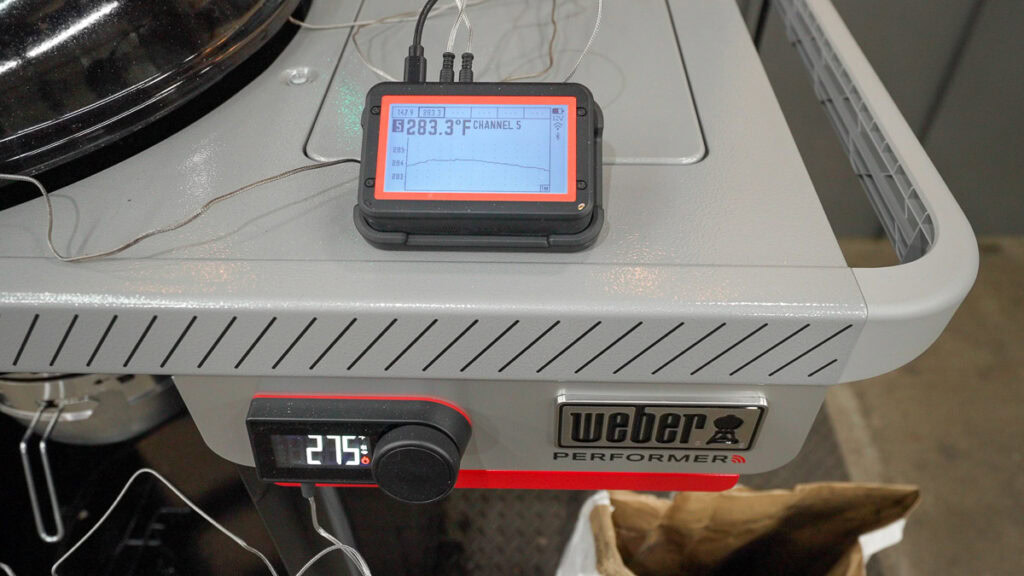
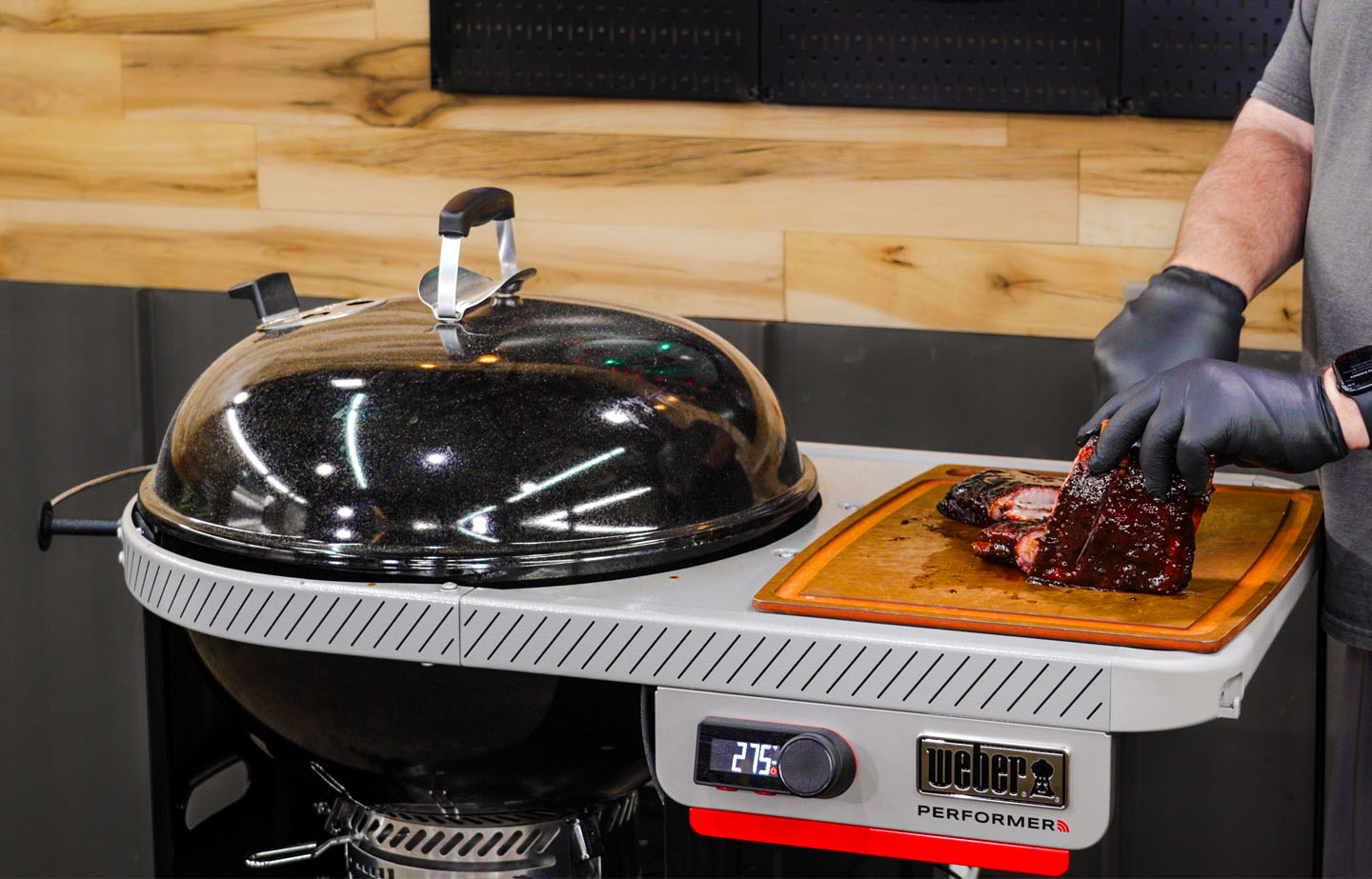
The main event was a 14-pound trimmed brisket. We tossed in a few chunks of wood for extra smoke, set the fan to 275°, and let it go. Once it leveled off, we saw only about 25° of difference from one side of the chamber to the other, which is well within tolerance for a round kettle.

We rotated the brisket at the 2.5-hour mark to even things out, and other than that we mostly left it alone.
Quick tip: every time you lift the lid to peek, the coals flare and your temps surge, so if you’re looking, you ain’t cooking.

The brisket hit 160° at about 5.5 hours, right on pace for a brisket that size. Once the bark hit the color we wanted, around 180°, we crutched it in a pan to finish, pulled it at probe-tender, and let it take a 2-hour nap. What came out was juicy, tender, everything a brisket should be, with that amplified charcoal flavor you just don’t get off a pellet grill.
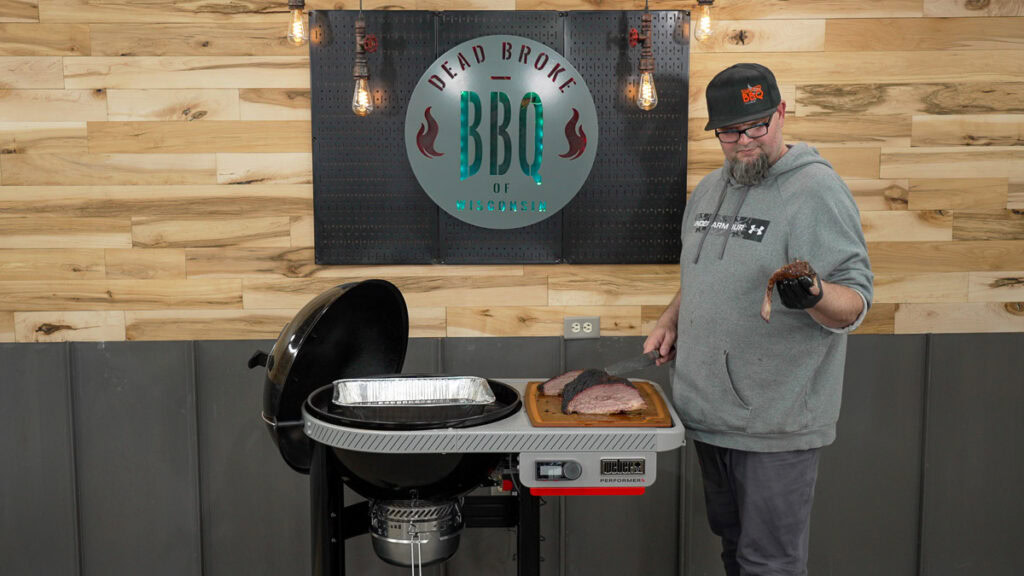
The ribs we cooked next told the same story, easy. Beef back ribs at 275° were done in 4.5 hours with a great bark, and a rack of St. Louis ribs, done muddy style with plenty of sauce, came off in under 5 hours with a clean bite right off the bone. Set the temp, give them a spritz once or twice, and let the fan do the babysitting.
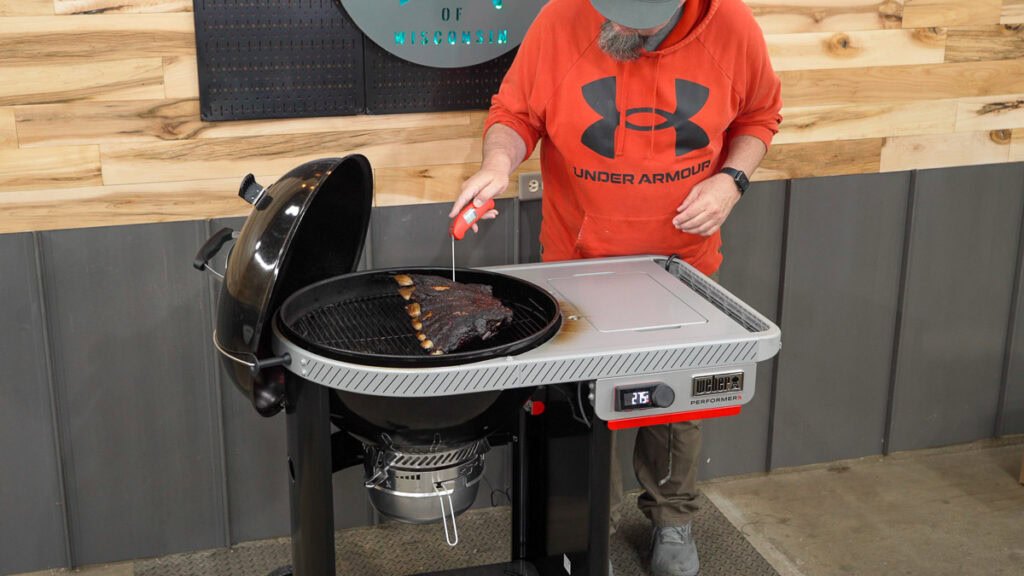
We do have one small gripe. There’s a little smoke sneaking out around the edge of the lid. Nothing that hurts a cook, but a gasket would tighten it right up, and it’s the first thing we’d add. Beyond that, this is the part of the review where the Performer Smart won us over. You genuinely can set it and forget it, and you still get real charcoal flavor. That’s the whole pitch, and it delivers.
The App and Controller: The Smart Part
This is the piece that earns the “Smart” name, and the thing we were most skeptical about going in. Is a fan and an app on a kettle actually useful, or just an excuse to charge you more?
The controller is a simple LCD screen with a knob, and you set your target in five-degree increments. No menus to dig through, and you can run the whole thing right there if you never touch your phone. The app connects over Wi-Fi and Bluetooth through
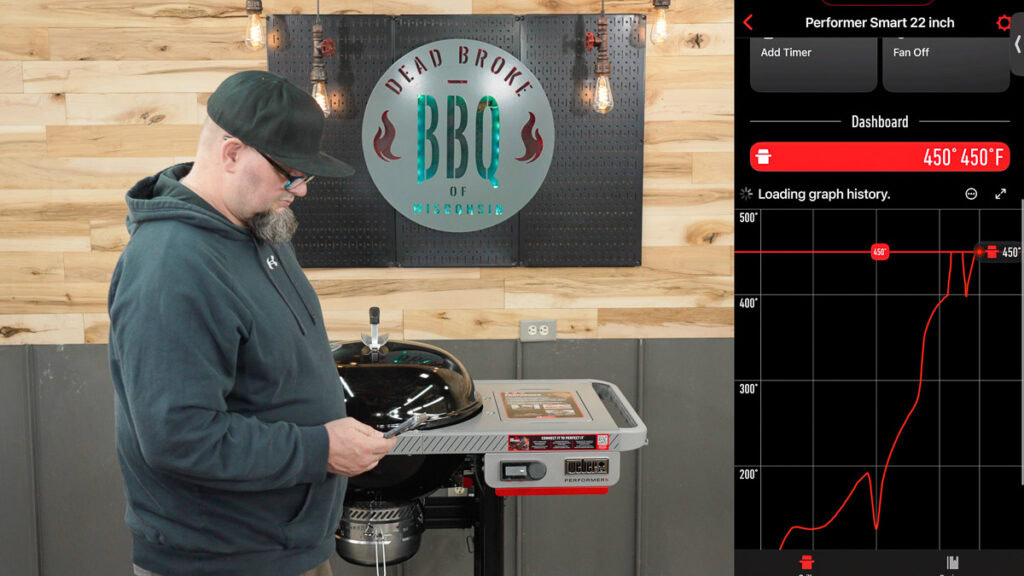
Our one gripe is the probes. There are two ports on the panel, but
Bottom line, the app and controller aren’t a gimmick. They’re the reason this grill does what it does, and they work.
Is the Performer Smart “Worth It”?
We’ve known plenty of people over the years who’ve modded a plain
So the fair question with the Performer Smart is, why not just build your own and save a few bucks?
So we ran the numbers.
- Start with a 22-inch
Weber Kettle Premium at $219 - Add a FireBoard 2 Drive controller at $259
- And a FireBoard fan for another $69.
You’ve already dropped $547, and you haven’t drilled a single hole yet.
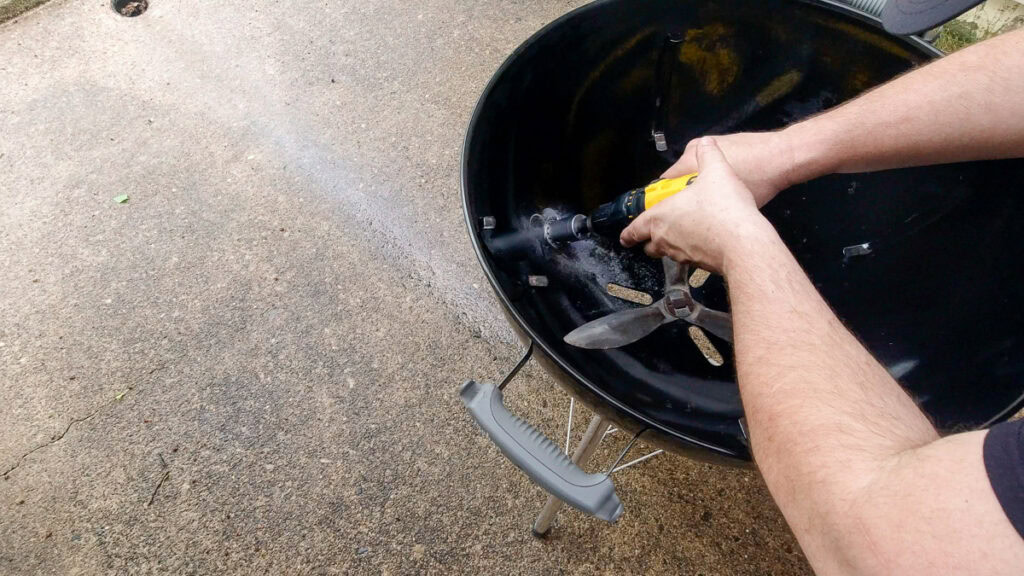
That’s basically the same as the Smart Performer, except now you’re on the hook for the time, the tools, and the drilling, and you still don’t have the cart, the work table, or the storage. Laid out like that, the built-in version is the easy call.
Who This Grill Is For (and the Alternatives to consider)
This grill would suit anyone who feels jealous looking at all the storage shelves and racks on their neighbor’s pellet grill, but doesn’t want to compromise on flavor.
The Performer Smart wraps the classic kettle in a proper cart with a table and storage, then adds the built-in fan and controller, so you get that outdoor-kitchen setup and hands-off cooking without giving up real charcoal flavor.
It’s also a solid pick for anyone who wants a single grill smoker combo, and for newer cooks who find low and slow intimidating.
If you’re regularly feeding a crowd, 363 square inches fills up fast. And if you only ever grill hot and fast with no interest in smoking, you’re paying for a fan you won’t use.
If you genuinely don’t care about the smart features, a standard kettle or the classic Performer will save you money and still cook beautifully. You’ll just be managing the vents yourself.

If hands-off convenience matters more than charcoal flavor, an entry-level pellet grill like the Pit Boss 850 DX is worth a look. And if you’d rather have the flexibility of cooking over both gas and charcoal, a combo grill is another way to get that do-it-all outdoor setup. For us, though, the trade of a little patience for real charcoal flavor is an easy one.

About Your Pitmaster
Jeff “Ricer” Rice is the face of the Smoked BBQ Source YouTube Channel, where he brings expert BBQ equipment reviews and mouthwatering cook videos to life. A lifelong barbecue enthusiast, some of his fondest memories have been made around a pit, and he’s passionate about sharing that experience with others.
Whether he’s testing the latest gear or firing up the smoker, Jeff takes a real, no-nonsense approach to barbecue, making it easy for anyone to fire up great BBQ at home.
Nice. But I guess I would prefer a MB gravity all the same.
Weber has lost their way. I have bought my last grill from them, my 10yr old Preformer will have to do.
Yes, I was wondering if you guys had a chance to check out the Kettle Smart Ring from Weber. It fits on a 22” kettle grill and I was considering buying one. I already have a Weber grill and would like to add to my arsenal of outdoor cooking options. Let me know. Thank you.
Hey Victor, we’ve actually got the Smart Ring sitting in its box waiting to test out and review. Hope to get on to it in the next couple of weeks! Thanks for your question.